Range & Distribution
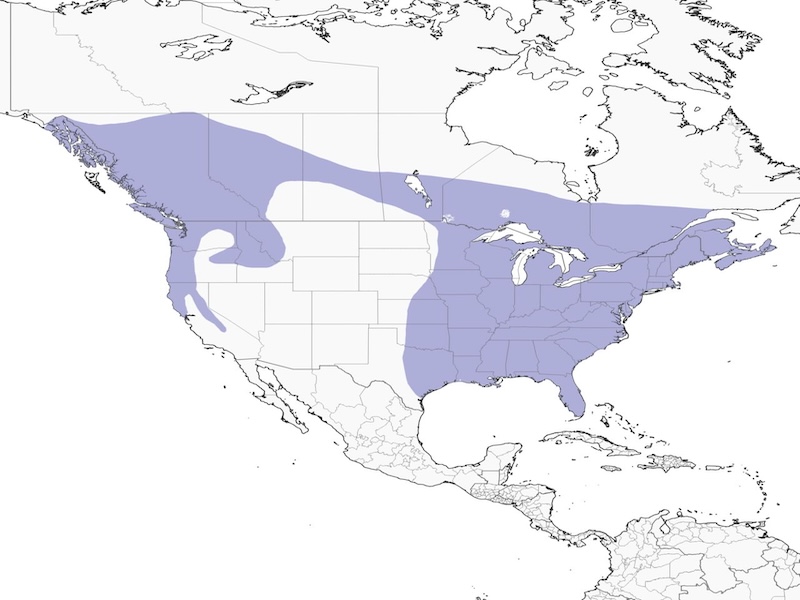
Year-round
The Barred Owl announces itself long before it's seen. Its call — a resonant, rolling series of hoots often described as "who cooks for you, who cooks for you-all" — carries clearly through the night forest and serves as the primary way to locate this species in the field. Most encounters begin by ear.
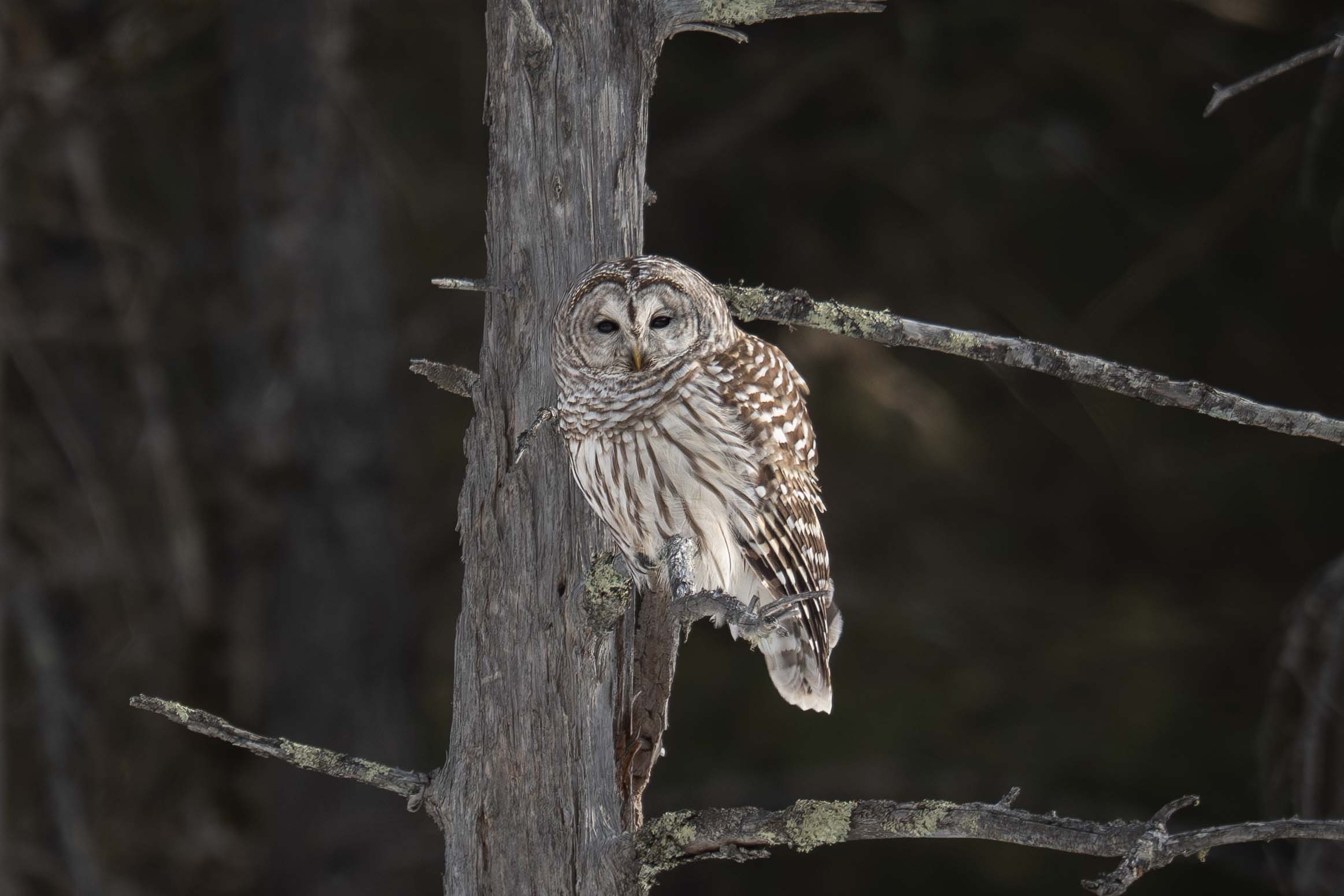
Dense mixed forest with large hardwoods near swampy lowlands, stream corridors, and wooded wetlands are their preferred habitat. These birds are notably tolerant of a slow, patient approach — remaining perched for extended periods when disturbed minimally, which makes them one of the more cooperative owl species to photograph.
Lacking the ear tufts of the Great Horned Owl, the Barred Owl has a smooth, rounded head and distinctly dark eyes — giving it a calm, almost expressionless quality that photographs exceptionally well.
The Barred Owl is widespread and stable across eastern North America, with populations generally increasing as forests mature. In the Pacific Northwest, it presents a significant conservation challenge — hybridizing with and competitively displacing the federally threatened Spotted Owl. It serves as a reminder that conservation problems are rarely straightforward, and that a thriving species in one region can be a destabilizing force in another.