Range & Distribution
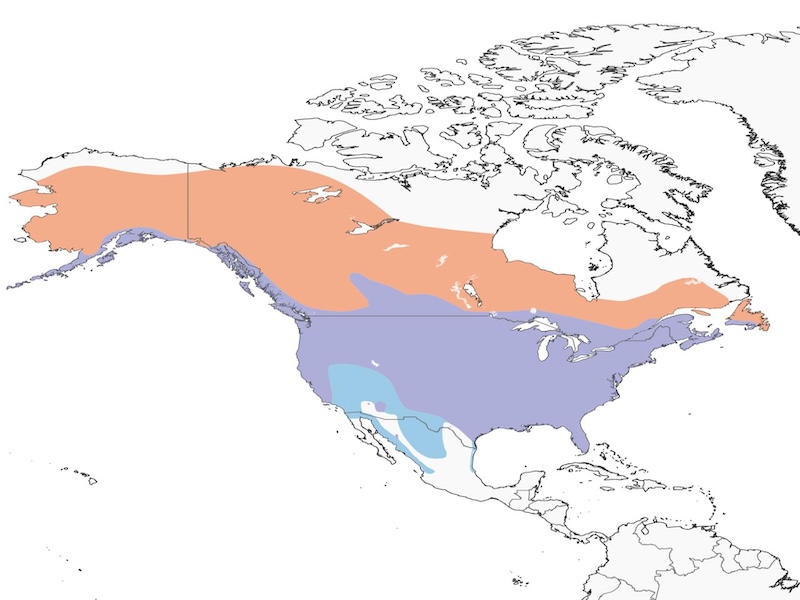
Year-round
Breeding
Nonbreeding
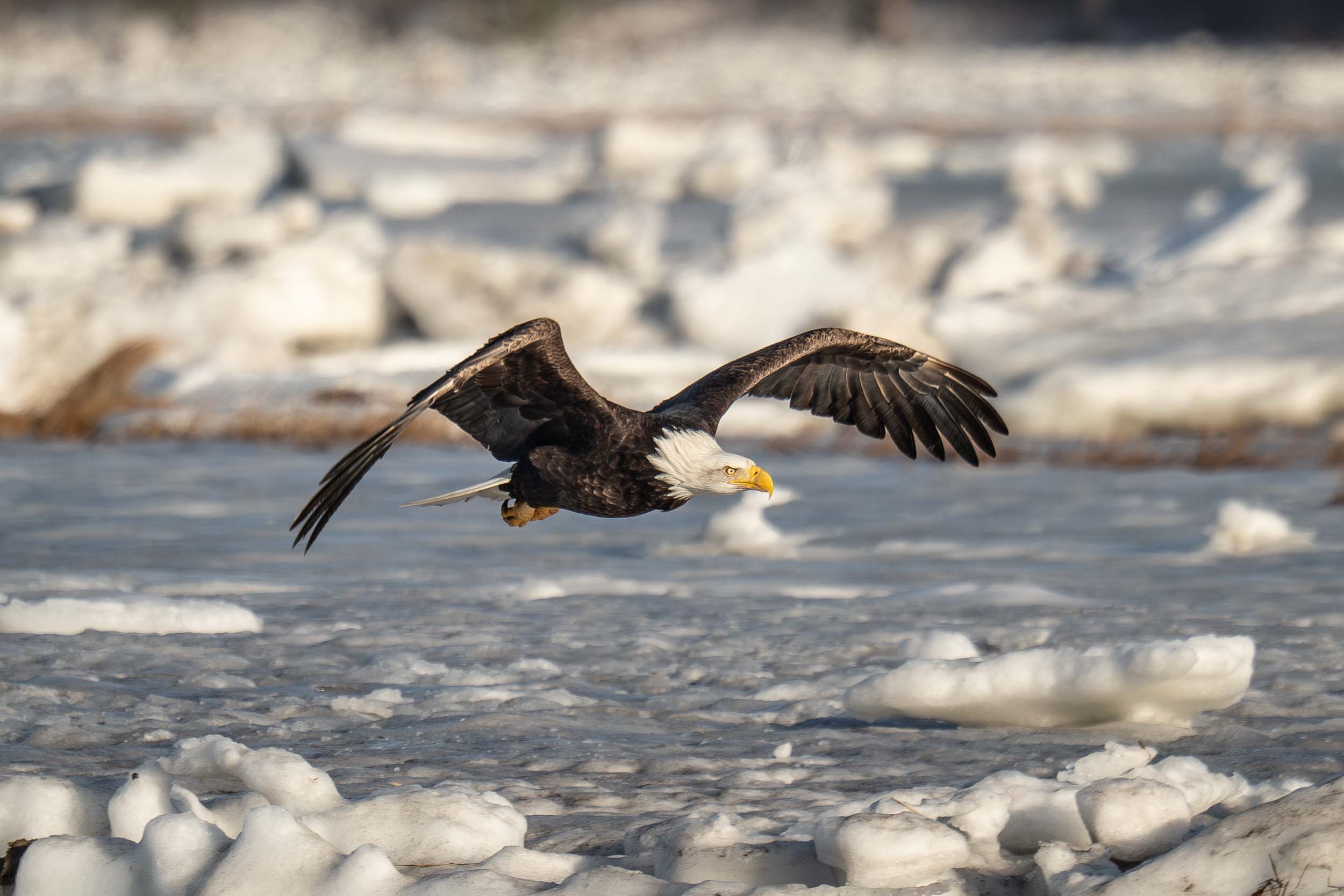
Few birds command a landscape the way the Bald Eagle does. With a wingspan stretching up to 2.4 meters, these birds are unmistakable in flight — the white head and tail of the adult contrasts sharply against dark body plumage. Juveniles and immatures are heavily mottled brown throughout with a plumage pattern that persists for up to five years before the full adult coloration is achieved.
Large bodies of water are their defining habitat feature — coastal estuaries, major river systems, and freshwater lakes all support significant populations. Fish make up the bulk of their diet, taken by shallow dives or by pirating catches from other birds of prey. Open perches near water — tall dead snags, exposed cliff faces — are favored hunting and resting positions and are usually worth checking.
The Bald Eagle's recovery from the brink of extinction in the lower 48 states is one of the defining conservation success stories of the 20th century. Populations collapsed under DDT, habitat loss, and persecution, but following protections and the banning of DDT in 1972, numbers rebounded dramatically. The species was officially delisted from the Endangered Species Act in 2007.
Once listed as Endangered across most of the contiguous United States, the Bald Eagle's recovery following the 1972 ban on DDT and legal protections under the Bald and Golden Eagle Protection Act stands as one of conservation's most celebrated outcomes. Populations are now stable and growing across most of the range. Lead poisoning from ingesting spent ammunition in carcasses remains a significant ongoing threat, particularly in wintering populations.