Range & Distribution
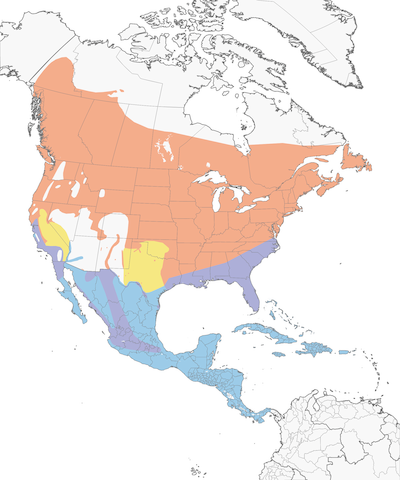
Year-round
Breeding
Migration
Nonbreeding
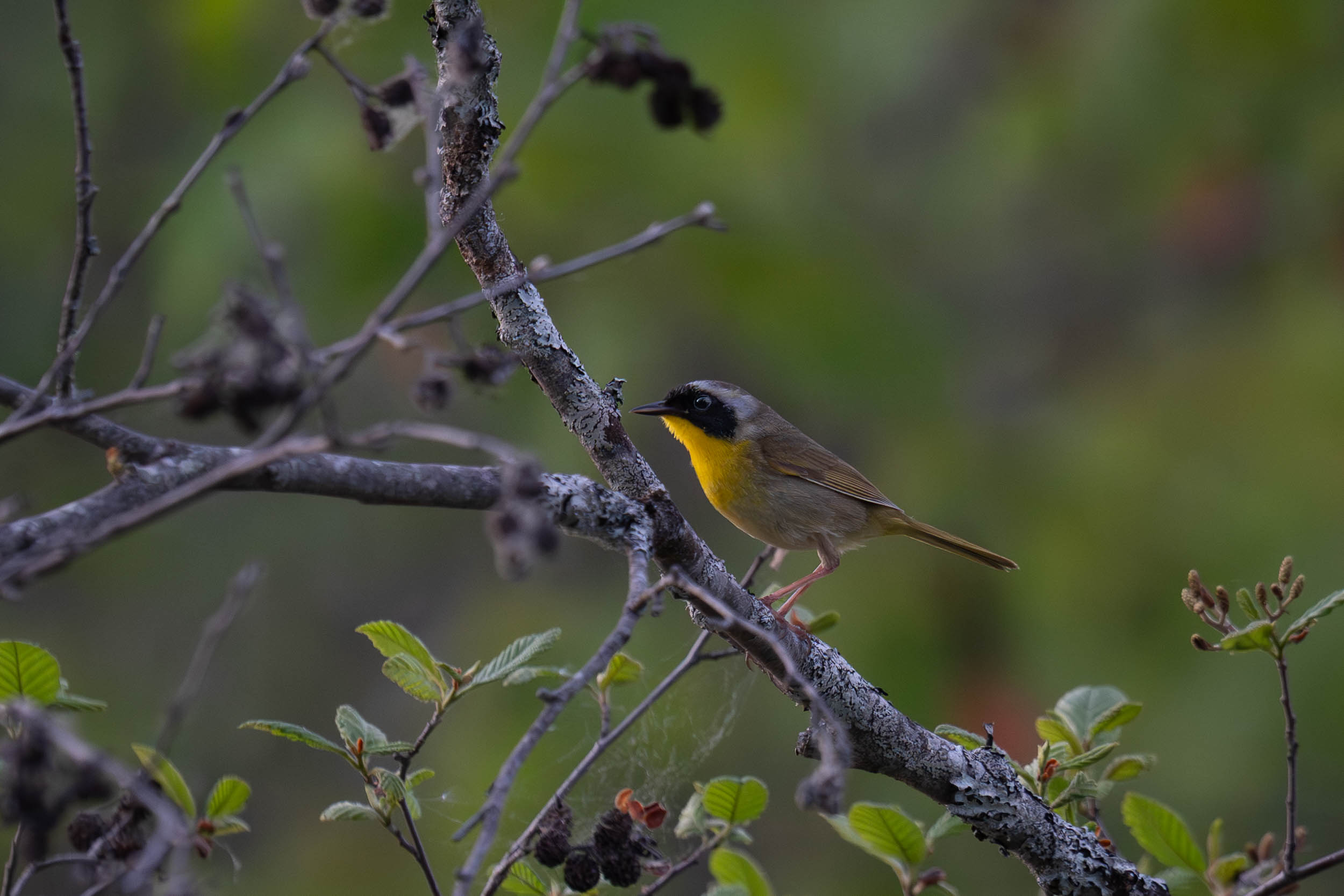
The Common Yellowthroat is a small, skulking warbler of low, wet cover, and the male is unmistakable: a broad black mask across the face bordered above with grey-white, a bright yellow throat and breast, and olive-brown upperparts. Females lack the mask and are plainer olive with a yellow throat, but share the warbler shape and the habit of staying low in dense vegetation, where they are heard far more often than seen.
It gleans insects and spiders from grasses, reeds and low shrubs, working the dense margins of marshes and wet thickets rather than the canopy. The bulky cup nest is built low in thick cover near the ground, where the female lays three to five eggs, and the male advertises from a reed or twig with a rolling "witchety-witchety-witchety" that is one of the characteristic sounds of a summer marsh. Most birds migrate to the southern US, Mexico and Central America.
In Maine the Common Yellowthroat is a common breeder in marshes, wet meadows, bog edges and brushy fields across the state. Because it lurks low in thick cover, the way to photograph it is to learn the song, set up at the edge of a likely patch, and wait for the male to climb a stem to sing — those brief, exposed moments are the opportunity. A clean reed or branch and patience do more than any amount of chasing.
The Common Yellowthroat is listed as Least Concern and remains one of the most abundant and widespread warblers in North America, helped by its use of common wetland and brushy habitats. Local declines follow the draining of marshes and the loss of damp, weedy edges, so the species' fortunes track the broad health of low wetlands. As a subject it asks only for patience at the edge of good cover.