Range & Distribution
Breeding
Migration
Nonbreeding
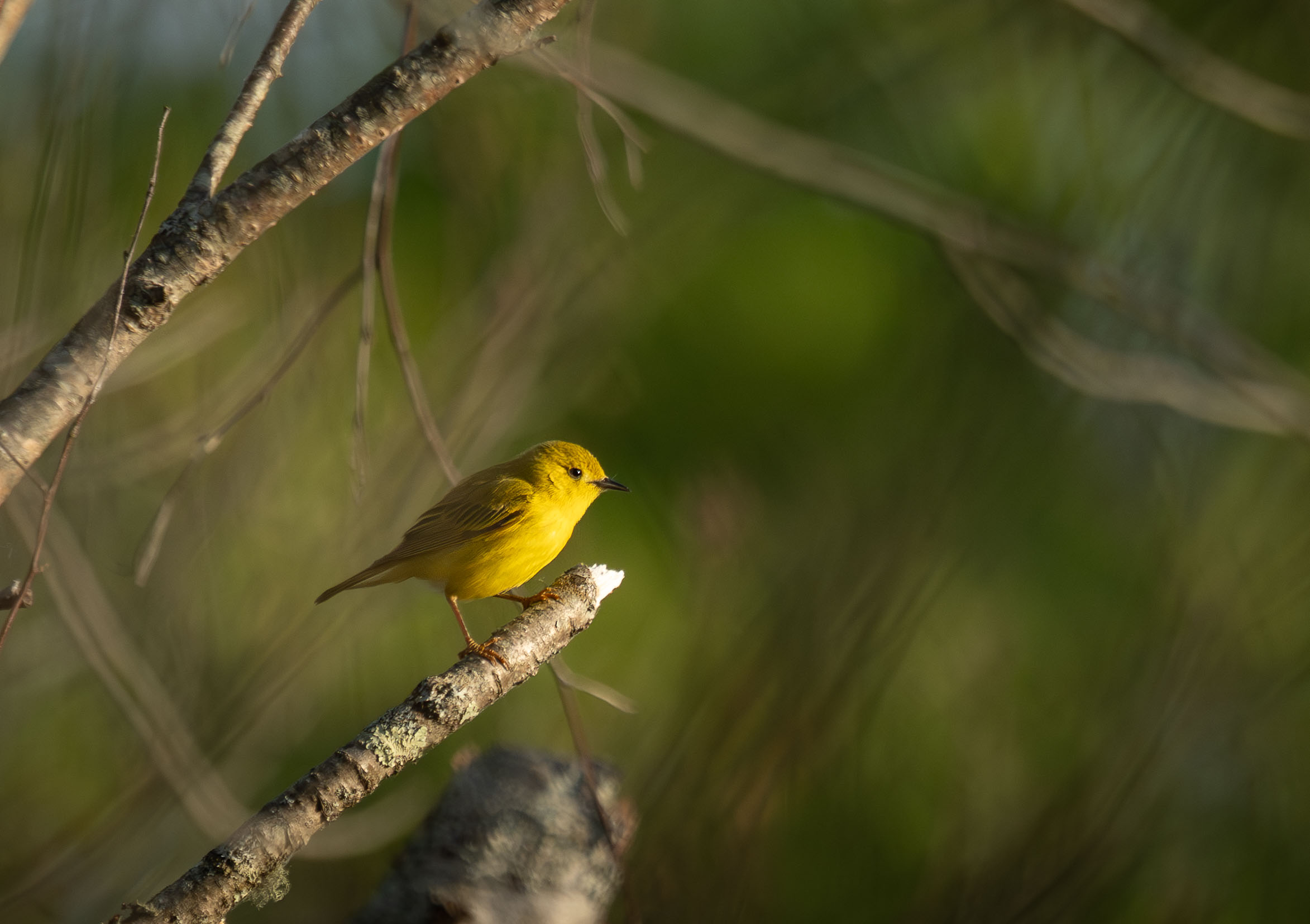
The Yellow Warbler is the most thoroughly yellow of the wood-warblers — males glow an even gold, brightest on the face, and wear fine chestnut streaks down the breast; females and immatures are plainer yellow with a dark, beady eye on an unmarked face. The lack of strong markings is itself the field mark: a small, round, all-yellow warbler with yellow edgings in the wings and yellow spots in the tail.
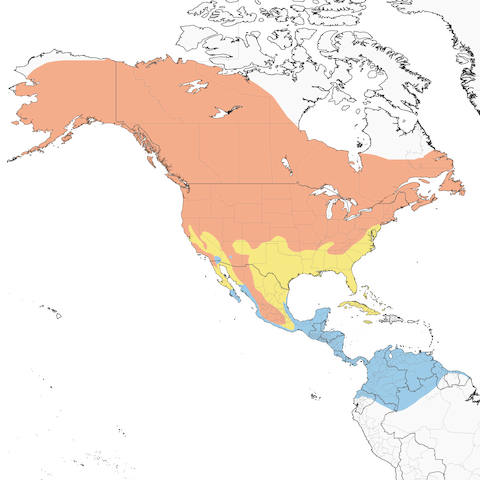
It feeds on insects, taking caterpillars in particular, gleaned and hover-picked from the foliage of streamside shrubs and willows. Its nest is a neat cup in an upright fork, and it is a favourite host of the Brown-headed Cowbird — a Yellow Warbler that finds a cowbird egg will often build a new floor over the whole clutch and start again, producing nests stacked several storeys high. It is a long-distance migrant to Central and South America.
The Yellow Warbler is among the most widespread breeding warblers in Maine, in wet thickets, willow and alder edges, streamsides and overgrown gardens, where the male's bright, hurried song carries well. Its preference for low, open shrubbery makes it one of the easier warblers to work — the challenge is exposure, since the saturated yellow blocks up in hard sun. Soft morning light holds the colour and lets the chestnut breast streaks register.
The Yellow Warbler is listed as Least Concern, abundant and widespread across an enormous range and adaptable to shrubby, second-growth habitats near water. Its main pressures are the loss of riparian and wetland thickets and the heavy cowbird parasitism it has evolved to counter; neither currently threatens the species as a whole. For a photographer it is a generous and accessible introduction to a difficult family.