Range & Distribution
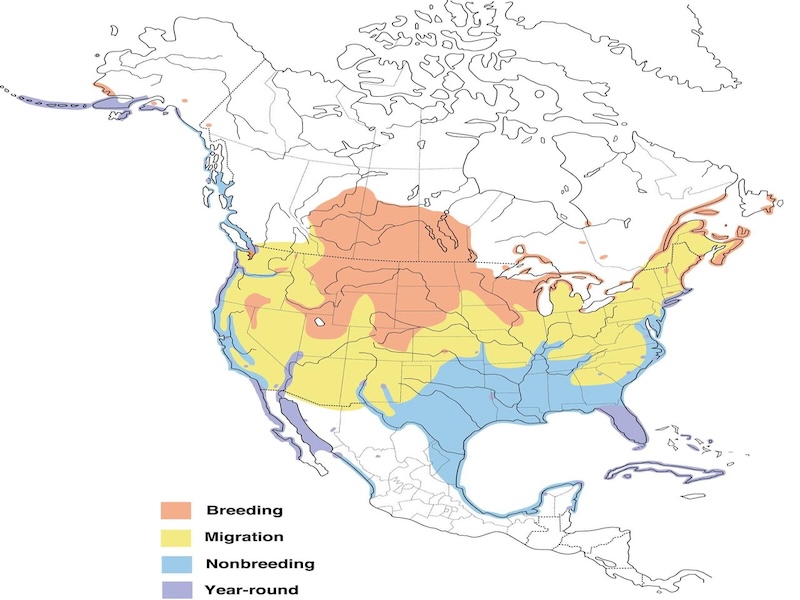
Breeding
Nonbreeding
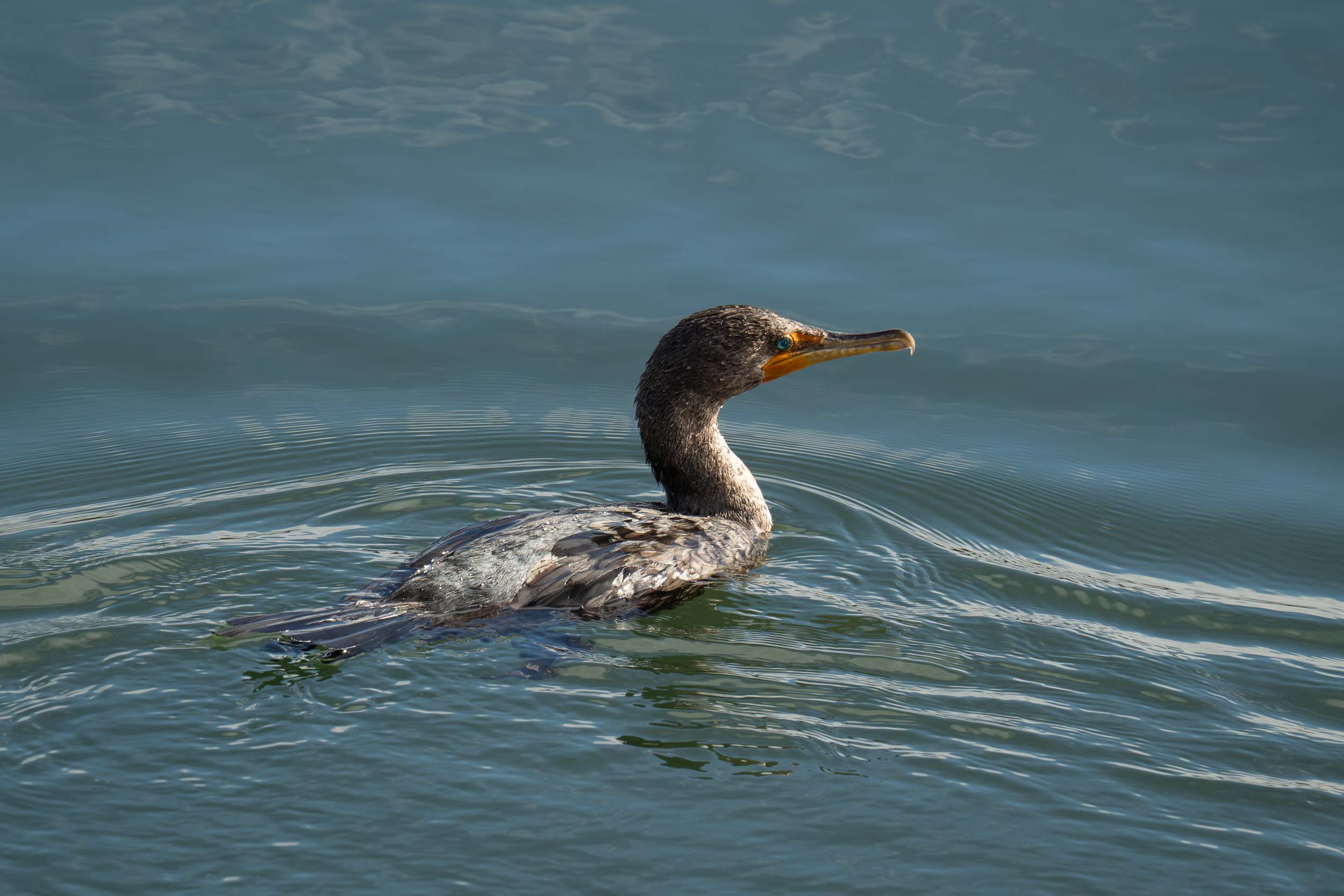
The Double-crested Cormorant is a large, dark diving bird most often seen perched with wings spread wide — a drying posture made necessary by the fact that, unlike many waterbirds, its plumage is not fully waterproofed. This makes it among the more approachable water birds when perched, as spreading its wings to dry is a prolonged and stationary behavior.
In flight, cormorants are distinctive — heavy-bodied, with a kinked neck and rapid wingbeats. They typically fly in loose lines low over the water surface. The orange-yellow facial skin and the namesake double tufts visible on the head of breeding adults are the clearest distinguishing features from similar species.
Colonial nesting sites, often on islands in large lakes or coastal rocky outcrops, can host hundreds to thousands of pairs and are conspicuous landmarks. Early morning at active colonies, when adults are departing on foraging flights and returning with fish, offers sustained and dynamic photographic opportunities.
Once severely impacted by DDT and direct persecution by fisheries, the Double-crested Cormorant recovered strongly following pesticide bans and legal protections. Populations are now stable to increasing, which has generated controversy in some regions where large colonies are perceived to conflict with aquaculture and sport fishing interests. The species remains protected under the Migratory Bird Treaty Act.