Range & Distribution

Breeding
Nonbreeding
The iconic wail call of the Common Loon is one of the most evocative sounds in the natural world — a sound that travels far across the surface of a lake in the stillness of early morning or at dusk. Breeding birds are unmistakable in their summer plumage: bold black-and-white checkered back, solid black head with a shimmering iridescent sheen, and a distinctive white necklace pattern at the throat.
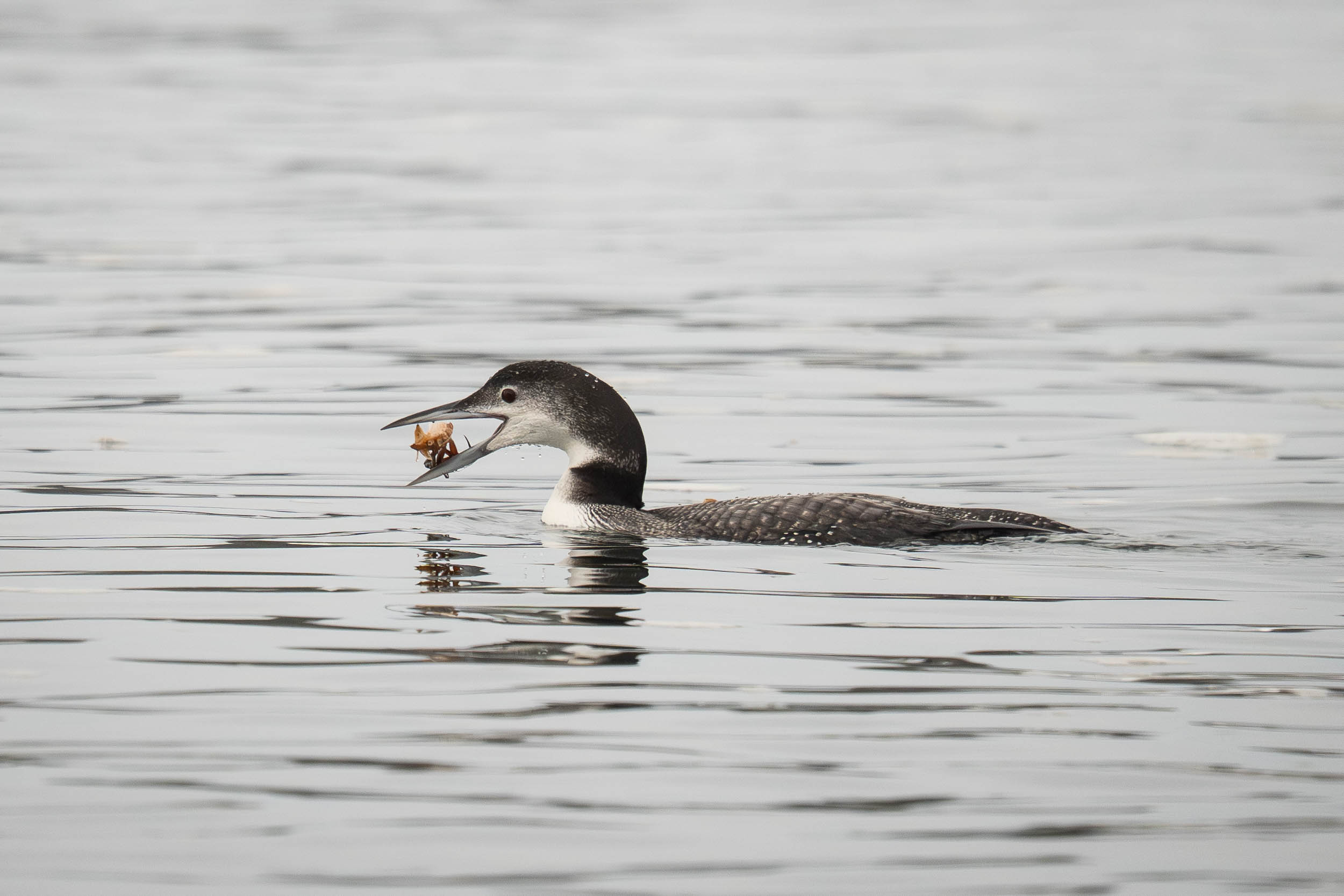
In winter plumage, birds are considerably plainer — dark above and white below — and are often encountered in coastal bays and harbors alongside other diving birds. The transition between summer and winter plumage happens gradually through autumn, and partially-molted birds can be encountered along migration routes.
Loons are built for diving, not walking — their legs are positioned so far back on the body that moving on land is extremely awkward, making nest placement at the very edge of the water a necessity rather than a preference. Underwater, they are supremely capable, using their feet to pursue fish at depths of up to 60 meters.
Globally stable, though the Common Loon is sensitive to mercury contamination in freshwater ecosystems — bioaccumulated mercury from acid rain and industrial pollution impairs reproductive success and neurological function. Nest sites are highly vulnerable to water level fluctuations caused by dams and boat wake erosion. Lead poisoning from ingested fishing sinkers is a documented mortality cause. Climate change projections suggest significant northward contraction of breeding range by end of century.