Range & Distribution
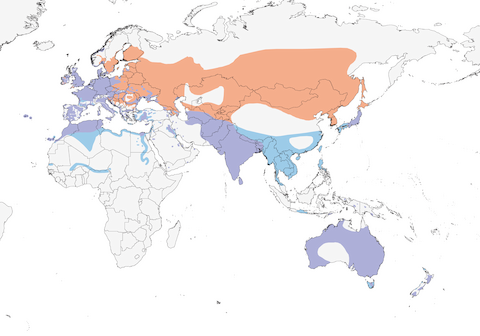
Year-round
Nonbreeding
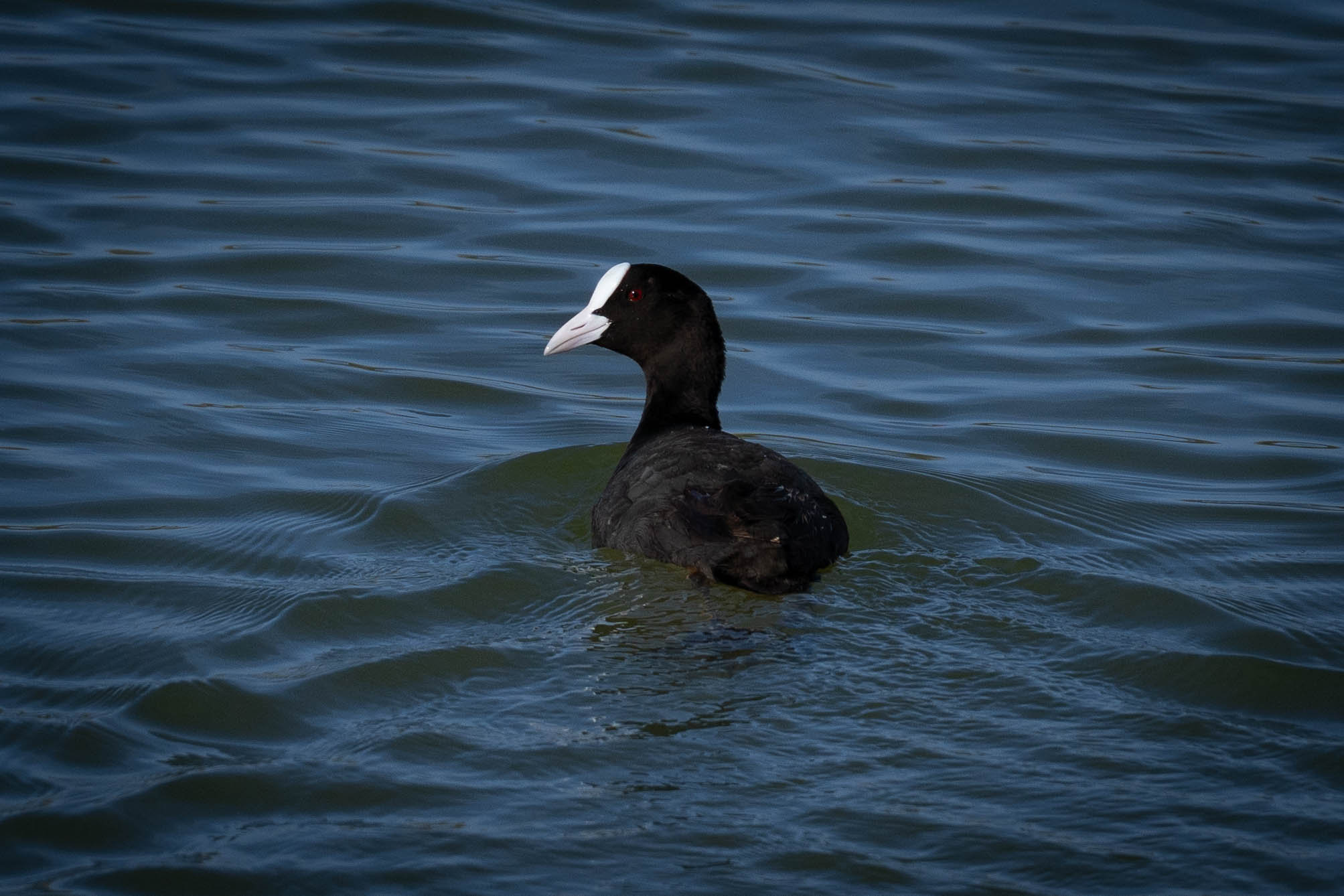
Wholly black with a chalk-white bill and frontal shield, the Eurasian Coot is instantly recognizable — a stocky, somewhat aggressive waterbird that is equally comfortable swimming in open water, diving for vegetation, or clambering through emergent reeds. The lobed toes, visible when the bird walks on shore, are a distinctive adaptation for swimming that distinguishes coots from ducks.
Territorial behavior in the breeding season is conspicuous and often dramatic. Rival birds engage in violent chases across the water surface, running upright with wings raised, and physical confrontations in which birds grapple with feet are not uncommon. This behavior can be excellent for action photography if anticipated — the birds are predictable in their aggression once a territorial dispute is underway.
Large winter aggregations on reservoirs and open lakes can number in the thousands and often mix with diving ducks. At these concentrations, kleptoparasitism — the stealing of food from other birds — is common and worth watching for. The contrast between the solid black body and white bill makes the coot one of the more graphic subjects in waterbird photography.
The Eurasian Coot is one of the most abundant and widespread waterbirds in the Old World and is under no significant conservation pressure globally. Populations are stable across most of the range. The species adapts readily to artificial and urban water bodies, including park lakes and reservoirs, and is often one of the most visible waterbirds in modified landscapes.