Range & Distribution
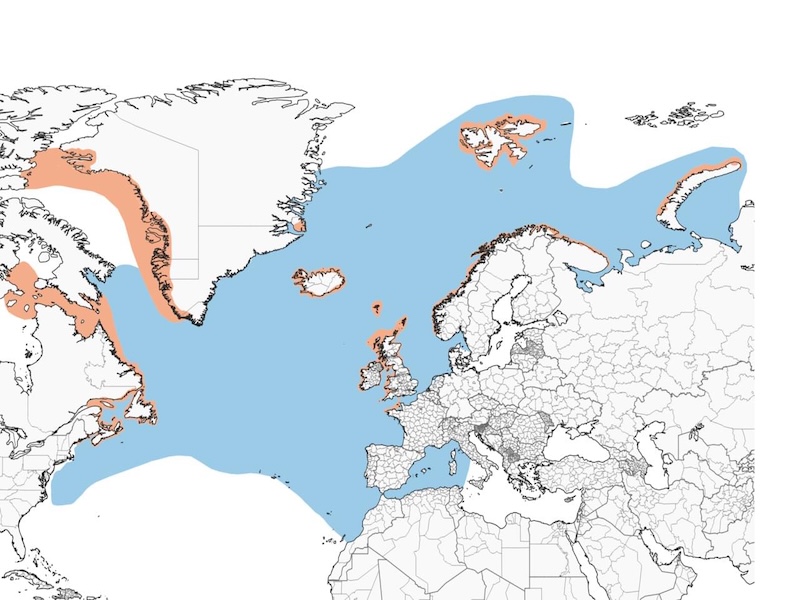
Breeding
Nonbreeding
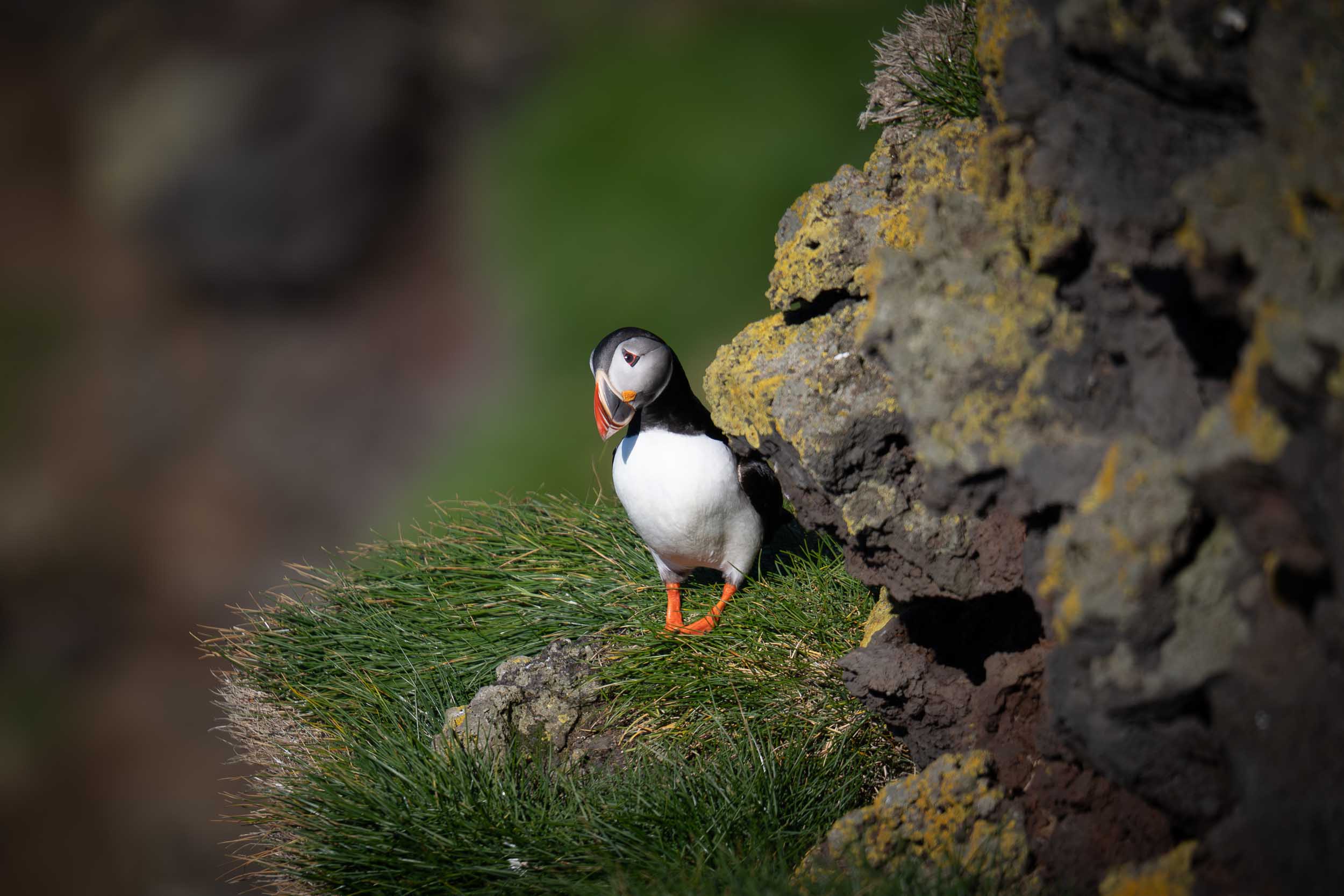
The Atlantic Puffin is one of the most immediately recognizable seabirds in the world, but the elaborate triangular bill — brightly patterned in orange, yellow, and blue-grey during the breeding season — is a temporary ornament. After the breeding season the colored plates are shed and the bill becomes smaller and duller for the winter months spent at sea.
Puffins are agile underwater swimmers, using their wings to 'fly' through the water in pursuit of small fish. A feeding bird can carry multiple fish crosswise in its bill simultaneously — held in place by a specialized tongue and backward-pointing spines on the palate — and return to the burrow with a full load. The record stands at 83 fish in a single bill.
The best access to breeding colonies in North America is through guided boat trips to offshore islands in summer, typically July and early August when birds are actively feeding chicks and making frequent return trips to burrows. The low, direct angle of morning light at northern latitudes in summer — particularly in Iceland and the British Isles — gives several hours of golden light ideal for photographing birds at burrow entrances.
Uplisted to Vulnerable on the IUCN Red List, the Atlantic Puffin has suffered significant population declines across much of its range. The primary driver is the collapse of prey fish populations — particularly sand eels — driven by warming sea surface temperatures and industrial fishing pressure. In some colonies, years of near-complete breeding failure due to food shortage have been recorded. The species is long-lived and slow to reproduce, meaning population recovery is slow even when conditions improve. Conservation of forage fish stocks and marine protected areas around breeding colonies are the most critical interventions.