Range & Distribution
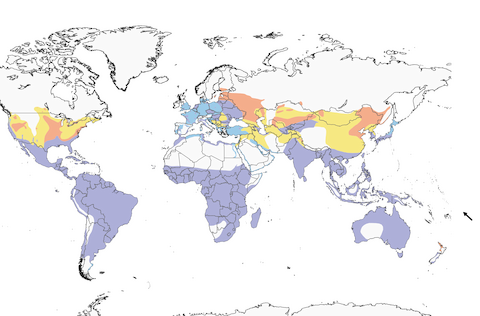
Year-round
Breeding
Nonbreeding
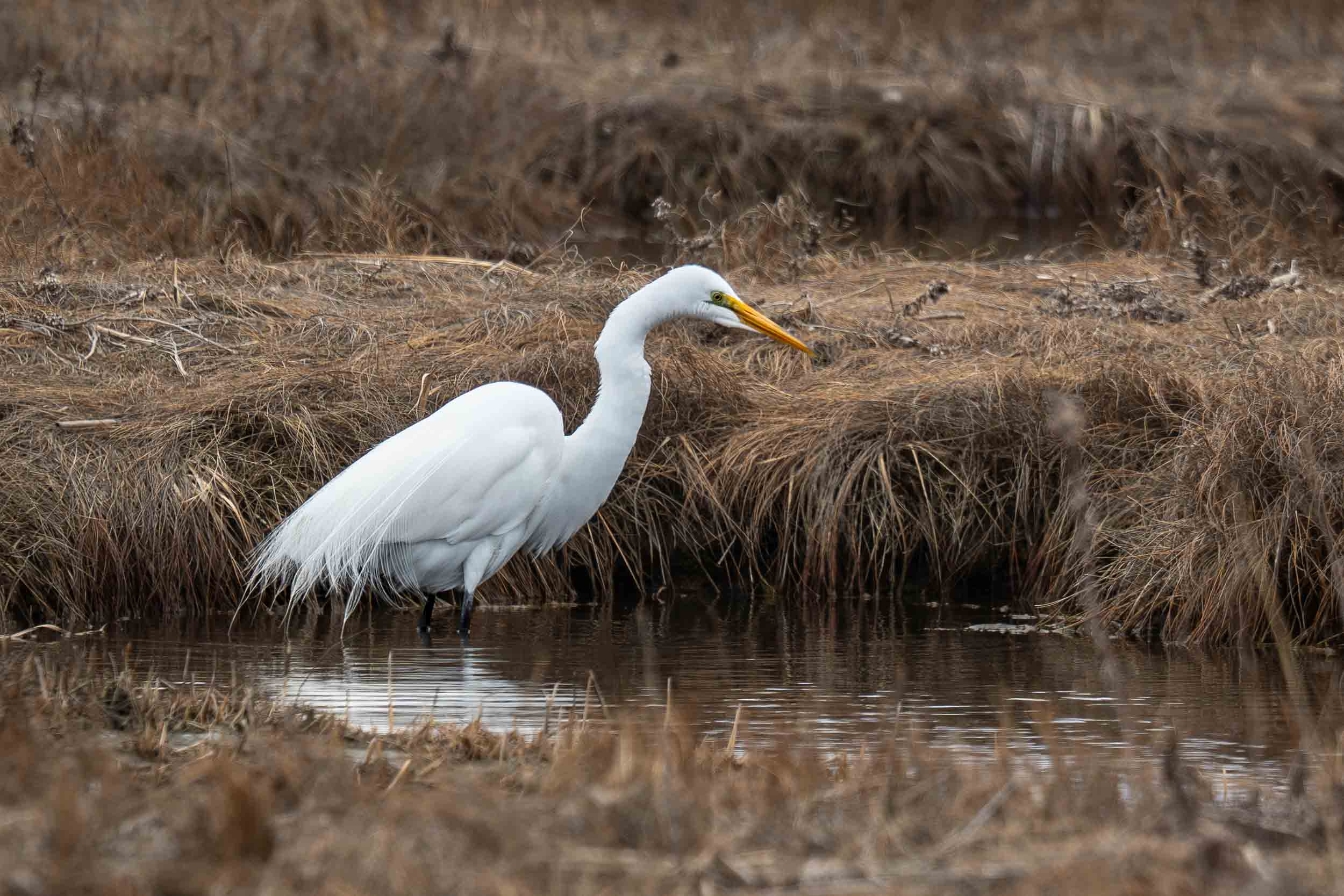
The Great Egret is a tall, all-white heron with a long S-curved neck, a heavy yellow bill and black legs and feet — the combination that separates it from the smaller, black-billed, yellow-footed Snowy Egret. In breeding condition it grows long, gauzy plumes (aigrettes) across the back and shows a lime-green patch of bare skin before the eye. It stands close to a metre tall and is unmistakable wherever it occurs.
It hunts by standing or stalking slowly in shallow water, then striking with a fast thrust of the neck to seize fish, frogs, crayfish and large insects. Great Egrets breed in mixed colonies, building stick platforms in trees and shrubs over water; both sexes incubate, and the long plumes feature in upright courtship displays. Away from the colony they are often solitary and territorial at a good feeding spot.
In Maine the Great Egret is mainly a late-summer and autumn visitor to coastal marshes and tidal creeks, dispersing north after breeding farther south. The white plumage is the central exposure problem — meter for the highlights or the feather detail burns out in bright sun, and soft overcast or the warm ends of the day render it best. Get low to place the bird against water rather than bright sky, and give a hunting egret room so it keeps working rather than flushing.
The Great Egret is listed as Least Concern and has recovered strongly across North America since the late nineteenth century, when the plume trade for the millinery industry devastated colonies and helped spark the modern bird-protection movement — the species is the emblem of the National Audubon Society. It still depends on wetlands for feeding and on protected sites for breeding, both vulnerable to drainage, disturbance and contamination. Because colonies will desert if disturbed during nesting, keeping well clear of active rookeries is essential fieldcraft.