Range & Distribution
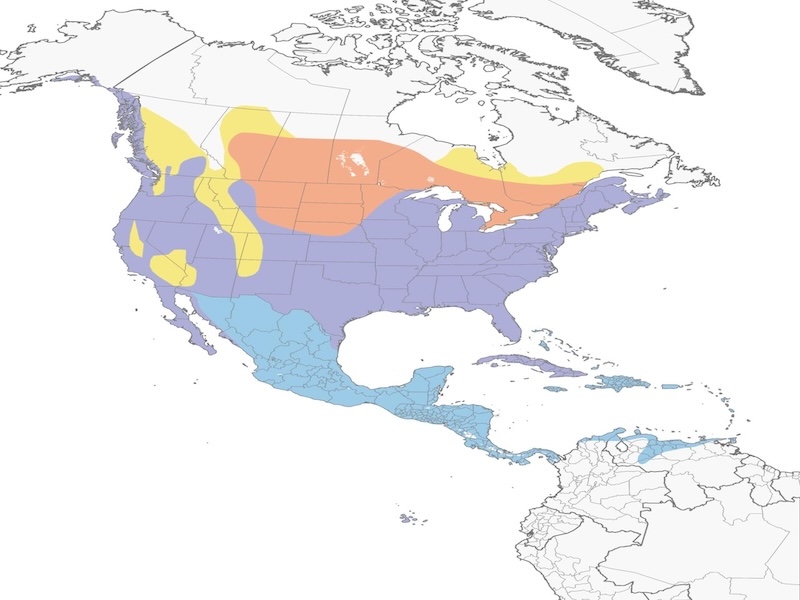
Breeding
Nonbreeding
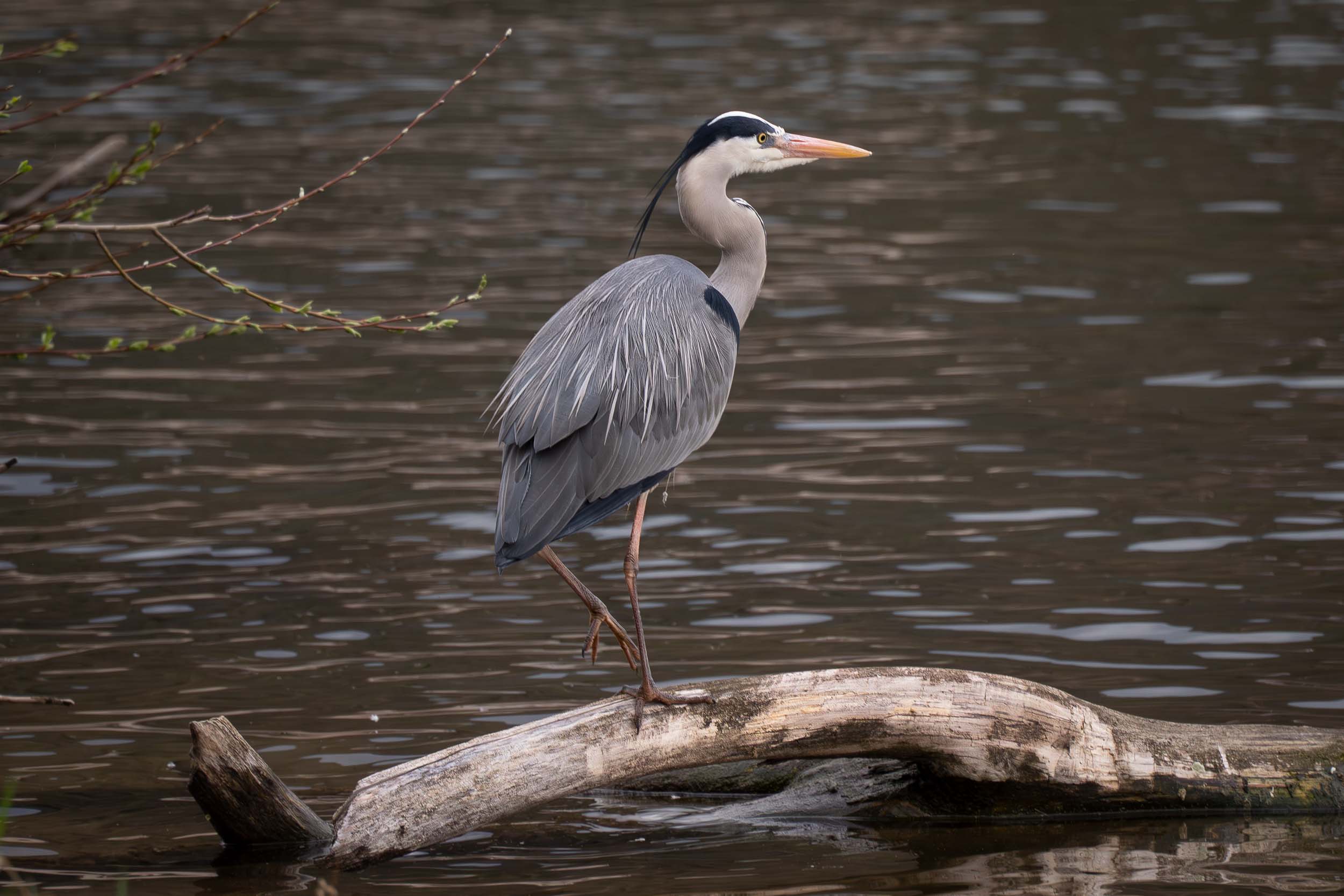
The Great Blue Heron is the largest heron in North America — a bird of considerable presence, standing nearly a meter tall with a wingspan that approaches two meters. In flight, the slow deep wingbeats and retracted neck are the defining field marks at distance. The combination of blue-grey plumage, white and black head pattern with long black plumes, and chestnut and black flanks makes the adult unmistakable at close range.
Hunting behavior is a study in patience. The bird adopts a motionless stance at the water's edge or in shallow water, waiting for prey to move within range before striking with a lightning-fast lunge of the neck and bill. Prey is swallowed whole, and the effort of swallowing a large fish is often visible as a prolonged series of neck contractions.
Herons are among the most photogenic subjects in the field — statuesque when still, dramatic in flight, and expressively animated during breeding season displays at colonial rookeries. Early morning at active feeding areas, particularly where water is still and reflective, provides ideal conditions. Overcast light eliminates the harsh shadows that can obscure plumage detail on the complex head pattern.
The Great Blue Heron is widespread, adaptable, and under no significant conservation pressure. It occurs across an enormous range of wetland habitats and has shown a capacity to exploit human-modified landscapes including fish hatcheries, drainage ditches, and urban waterfronts. Colonial nesting heronries are vulnerable to disturbance, and adults will abandon nests if repeatedly flushed during incubation. Nesting colonies in close proximity to human activity should be observed from a distance.