Range & Distribution
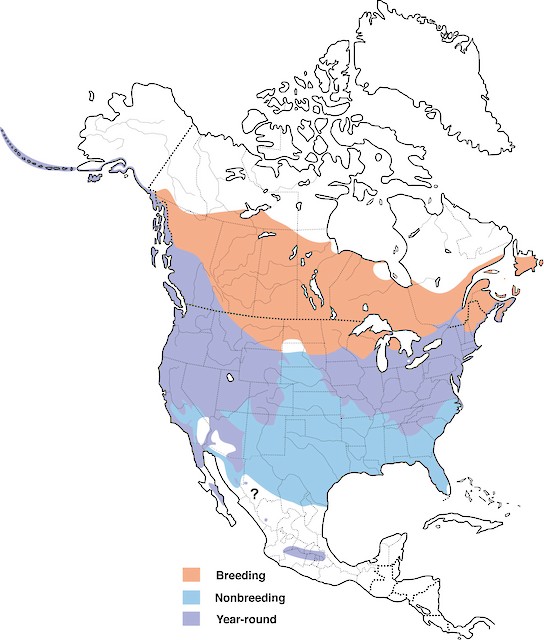
Breeding
Nonbreeding
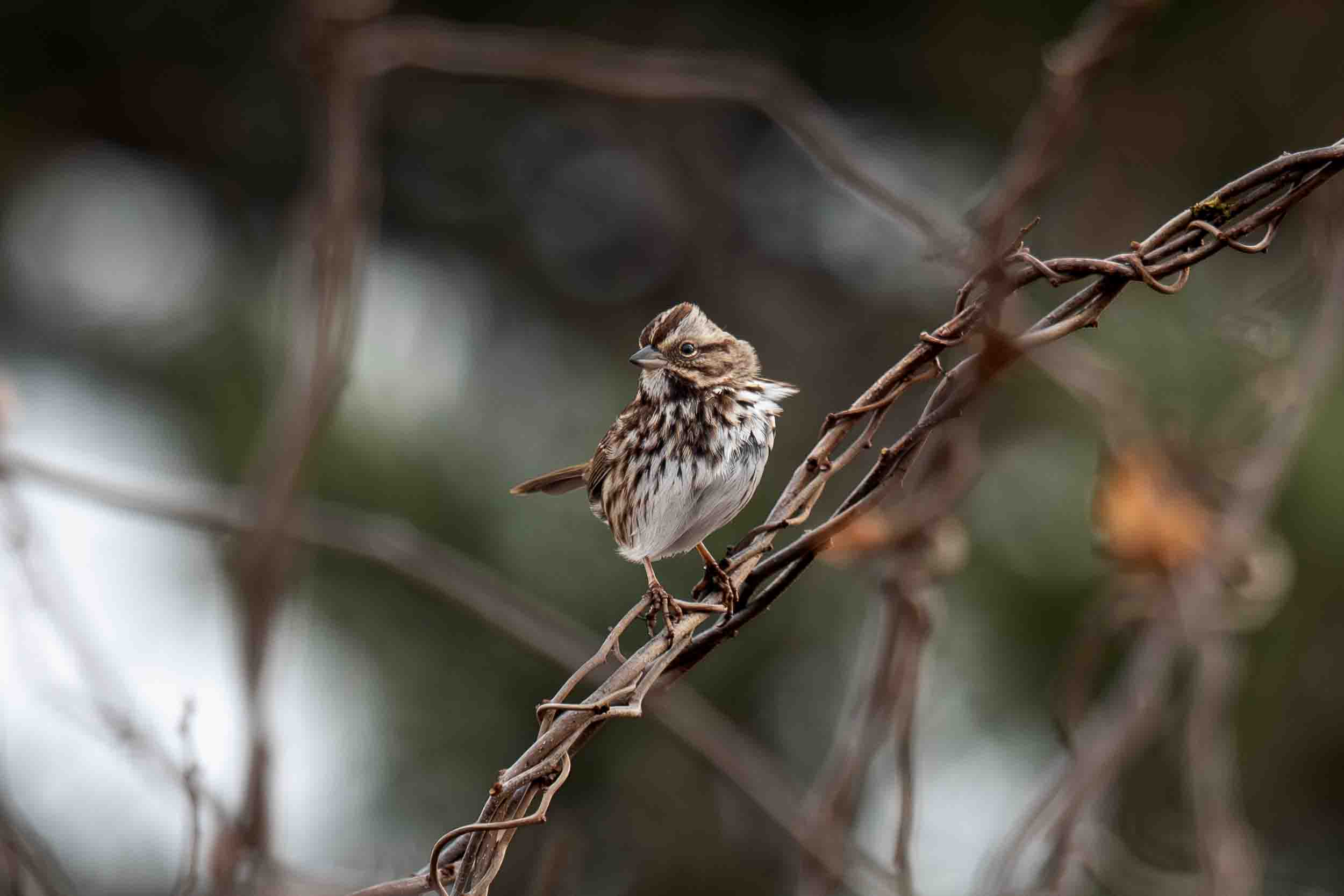
The Song Sparrow is a bird of remarkable geographic variation — birds from the large, dark, humid Pacific Northwest are barely recognizable as the same species as the small, pale birds of southwestern desert subspecies. Across most of eastern North America, the bird is a medium-sized, heavily streaked brown sparrow with a distinctive central breast spot and a long, rounded tail that is often pumped in flight.
The song is the clearest field mark — a rich, varied series of notes beginning with two or three clear introductory notes followed by a complex trill, described historically as 'Maids, maids, maids, put on your tea-kettle-ettle-ettle.' Song learning and dialect variation across populations have made this species a classic subject in bioacoustics research.
Dense shrubby margins of wetlands, salt marshes, and overgrown fields hold high densities during breeding season. Males sing persistently from low exposed perches — the top of a shrub or a reed stem — which provides straightforward access to perched singing birds at predictable locations. Early morning in late April and May is peak activity.
The Song Sparrow is one of the most widespread and studied passerines in North America, exhibiting remarkable geographic variation — over 25 subspecies are recognized, varying considerably in size, color, and song. No global conservation concerns apply. The species is a model organism in behavioral ecology and has contributed significantly to our understanding of song learning and dialects in birds.