Range & Distribution
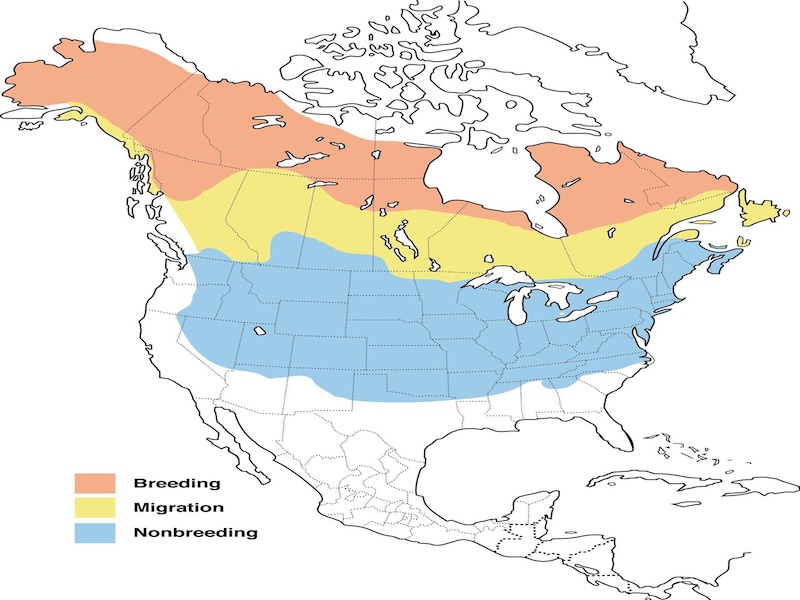
Breeding
Nonbreeding
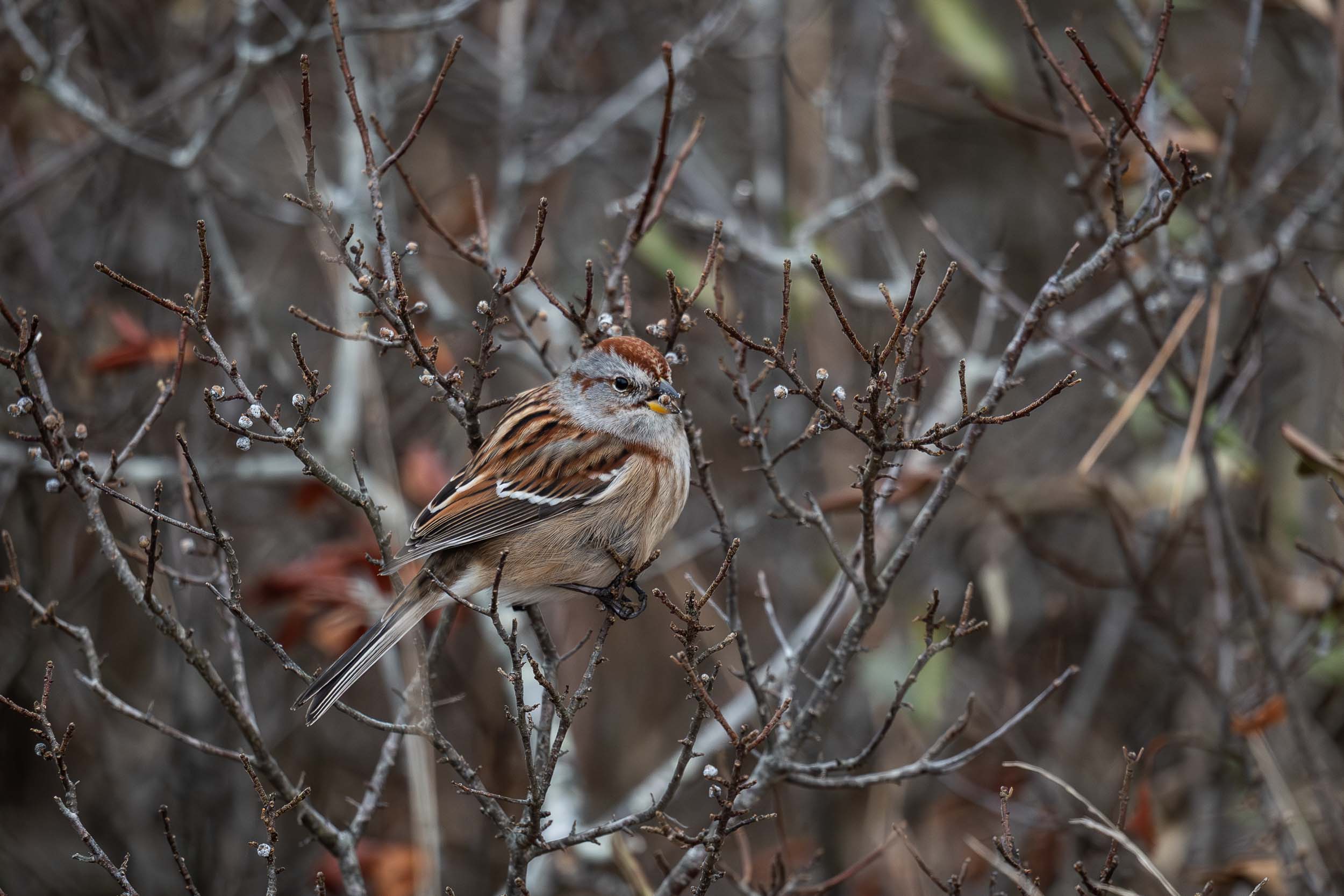
Despite its name, the American Tree Sparrow is largely a ground-dwelling bird — the name derives from the European Tree Sparrow, which the first European settlers applied to this superficially similar species they encountered in North America. A neat, compact sparrow with a rufous cap, grey face, a single dark breast spot on an otherwise clean grey-white breast, and a bicolored bill — dark above and yellow below — are the key field marks.
A winter bird in much of its accessible range, the American Tree Sparrow arrives from its high-Arctic breeding grounds in autumn and typically departs by April. Flocks can be found in weedy fields, brushy woodland edges, and hedgerows, often in association with other sparrow species. The flock's jingling, musical contact calls are a characteristic sound of open country in the northern United States in midwinter.
Winter sparrow identification demands attention to a small set of consistent marks — the rufous cap, single unstreaked breast spot, and bicolored bill distinguish the American Tree Sparrow from the several similarly streaked species it shares habitat with. Good light on a perched bird at the top of a weed stem or low shrub, when the bird pauses between bouts of seed extraction, provides the clearest views.
Despite being listed as Least Concern globally, American Tree Sparrow populations have declined significantly over recent decades — by an estimated 53% since 1970 according to long-term monitoring data. The causes are not fully understood but likely include changes to wintering habitat from agricultural intensification and potentially climate-driven changes to Arctic breeding habitat. The species' reliance on weedy field margins for winter food makes it sensitive to changing land management practices.