Range & Distribution
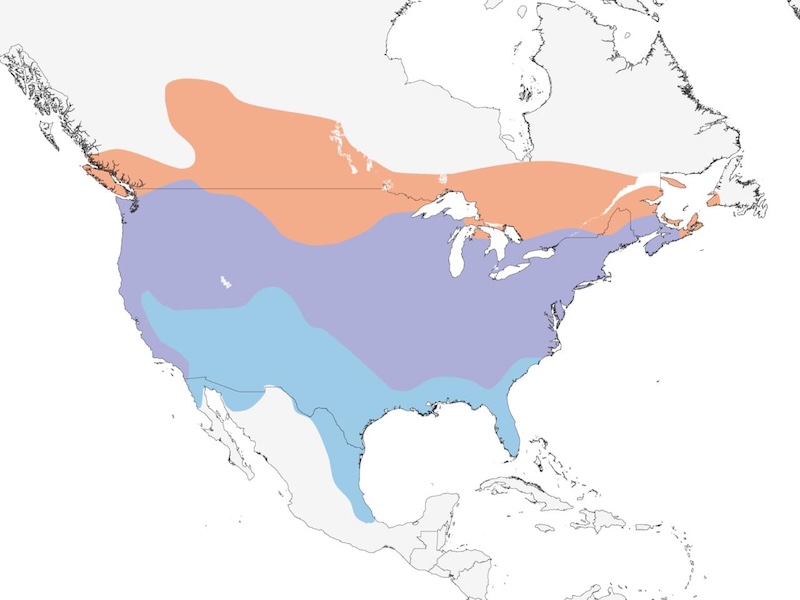
Year-round
Breeding
Nonbreeding
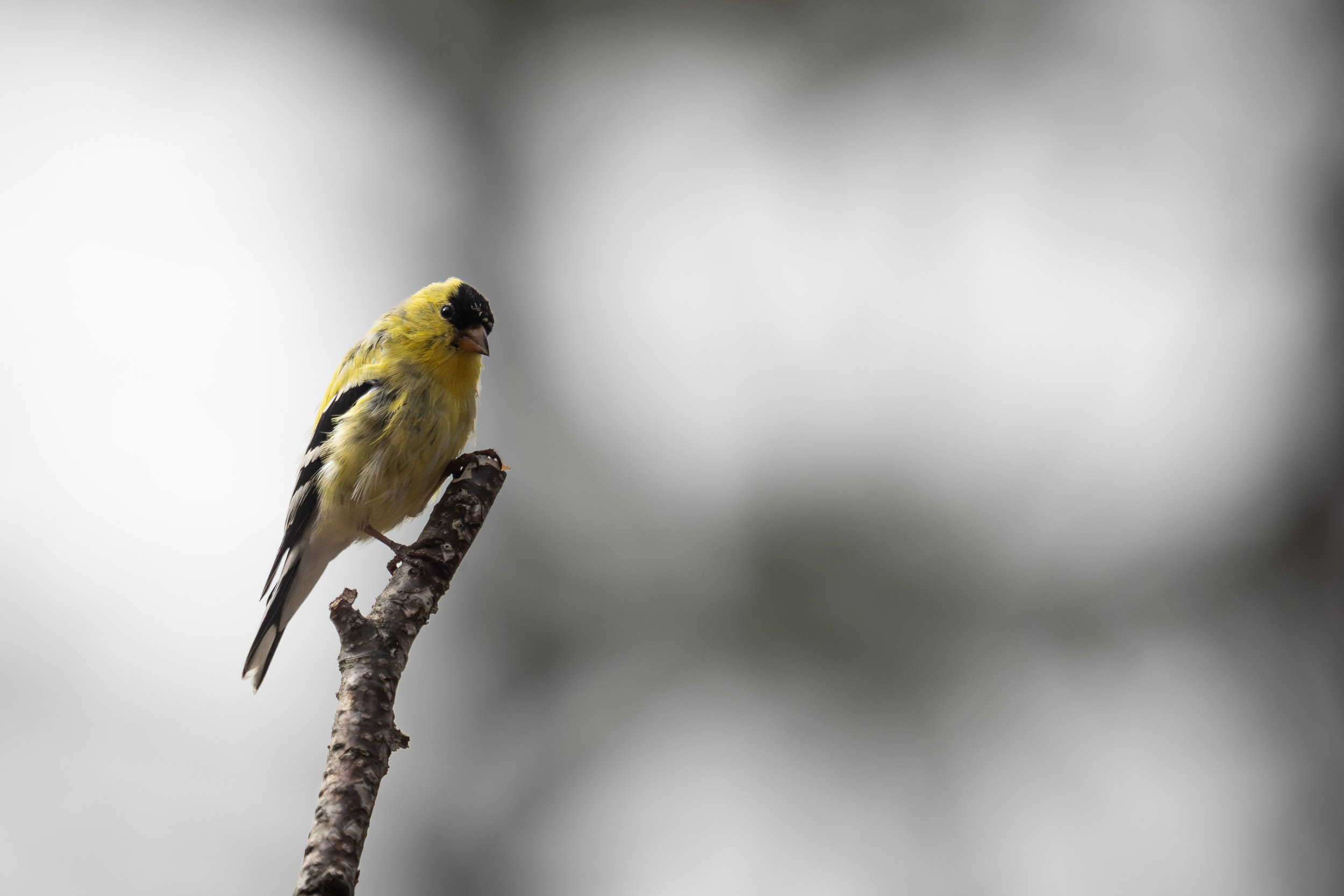
The American Goldfinch is the bright, bouncing finch of summer fields and feeders. The breeding male is unmistakable — brilliant lemon-yellow with a black cap, black wings barred white, and a pinkish bill — while females are a duller olive-yellow and winter birds of both sexes fade to soft buff-brown with blackish wings. Its flight is deeply undulating, each dip marked by a bright "po-ta-to-chip" call.
It is among the strictest seed-eaters of all birds, feeding almost entirely on the seeds of thistles, sunflowers and other composites and only incidentally taking an insect. That diet drives an unusually late nesting season: it waits until midsummer, when thistle and milkweed have set seed and down, then builds a cup so tightly woven it can hold water and lines it with plant fluff. The female lays four to six eggs.
In Maine the American Goldfinch is a common bird of weedy fields, edges and gardens, abundant at feeders stocked with nyjer and sunflower and a familiar flash of yellow through the summer. Feeders and seedheads are the obvious approach — set a natural perch near the food and wait, working for a breeding male against a clean background. Late summer, when adults are feeding young on thistle, concentrates them and gives the most activity.
The American Goldfinch is listed as Least Concern, common and widespread, and has benefited from the popularity of bird feeders and from the weedy, early-successional habitats that follow human disturbance. It faces no significant threat; its strict seed diet even makes it a poor host for cowbirds, whose chicks fail on the low-protein food. For a photographer it is one of the most dependable and rewarding feeder birds in the region.