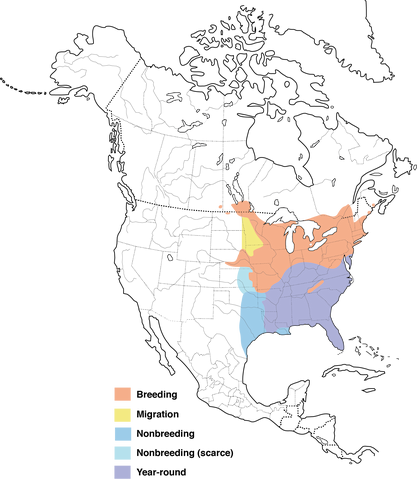
Range & Distribution
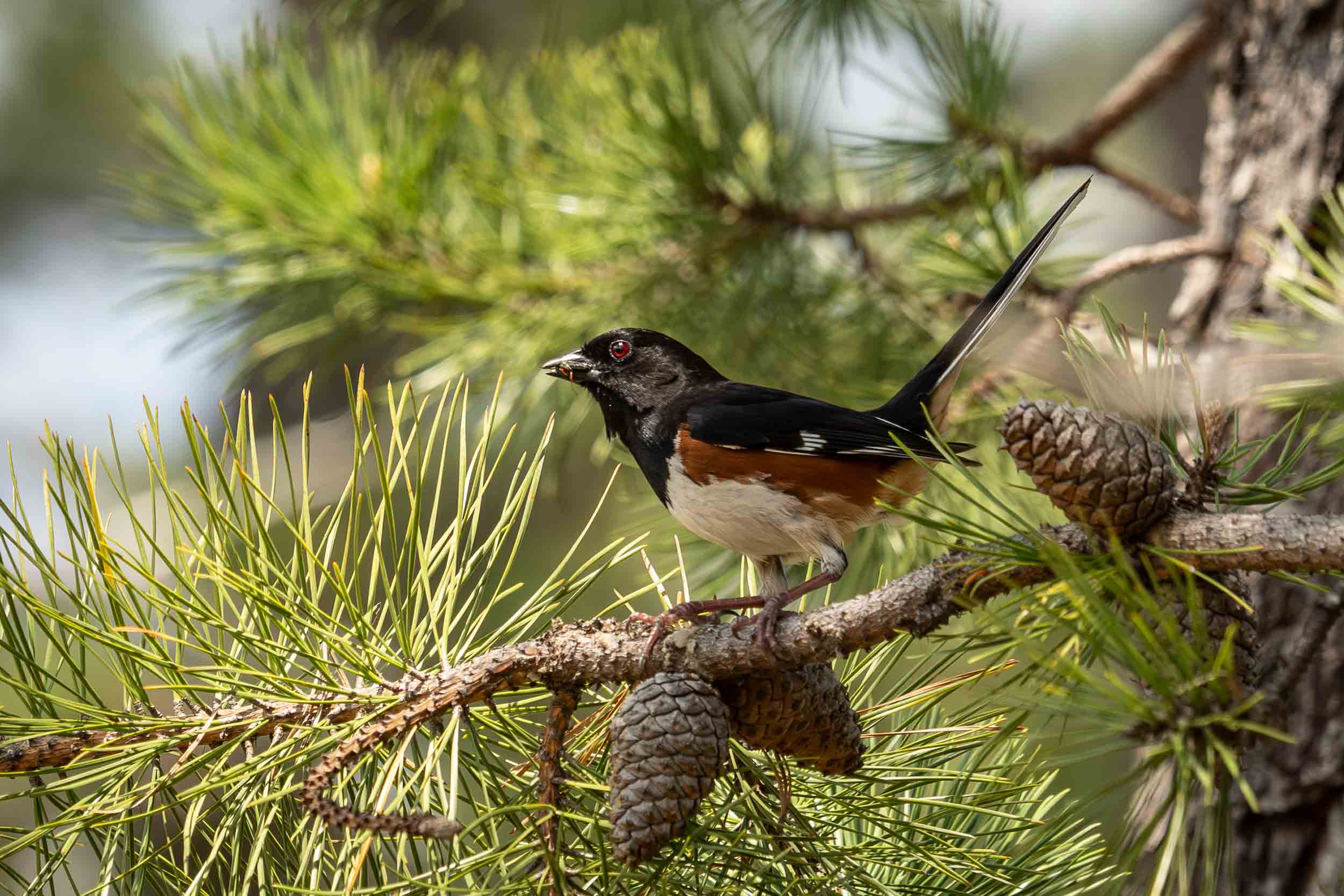
The Eastern Towhee is a large, boldly marked sparrow — males have a black hood, back and breast-sides set against rufous flanks and a white belly, a long black tail tipped white at the corners, and a striking red eye; females wear the same pattern in warm brown rather than black. It is bigger and longer-tailed than most sparrows, and the rufous sides show even in poor light.
It forages on the ground in a busy, two-footed backward hop that rakes the leaf litter aside, then darts after the seeds, insects and spiders it uncovers — a sound often heard before the bird is seen. It nests low, the cup usually sunk into fallen leaves on the ground or built a little way up in a tangle, and the male sings a clear "drink-your-tea" from an exposed perch, the last note a trill.
In Maine the Eastern Towhee breeds in brushy edges, regenerating clearings and scrubby barrens of the south and centre, where its rummaging in the leaf litter and ringing "chewink" call give it away. Because it sings from open perches but feeds in cover, the photographer's chance comes when a male climbs to advertise — get low, keep a clean background, and wait for it to drop to a bare branch. Soft light holds both the black and the rufous without losing the red eye.
The Eastern Towhee is listed as Least Concern, but like many shrubland birds it has declined as the brushy, early-successional habitat it needs matures into closed forest or is cleared. It thrives where disturbance keeps thickets and edges open and fades where the landscape tidies up. Maintaining scrub, old fields and regenerating cuts is the practical key to keeping it common.