Range & Distribution
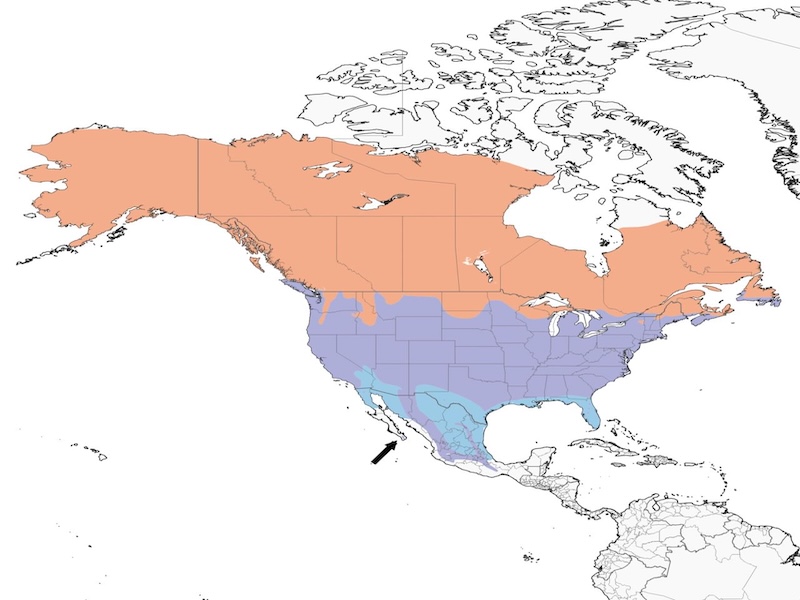
Breeding
Nonbreeding
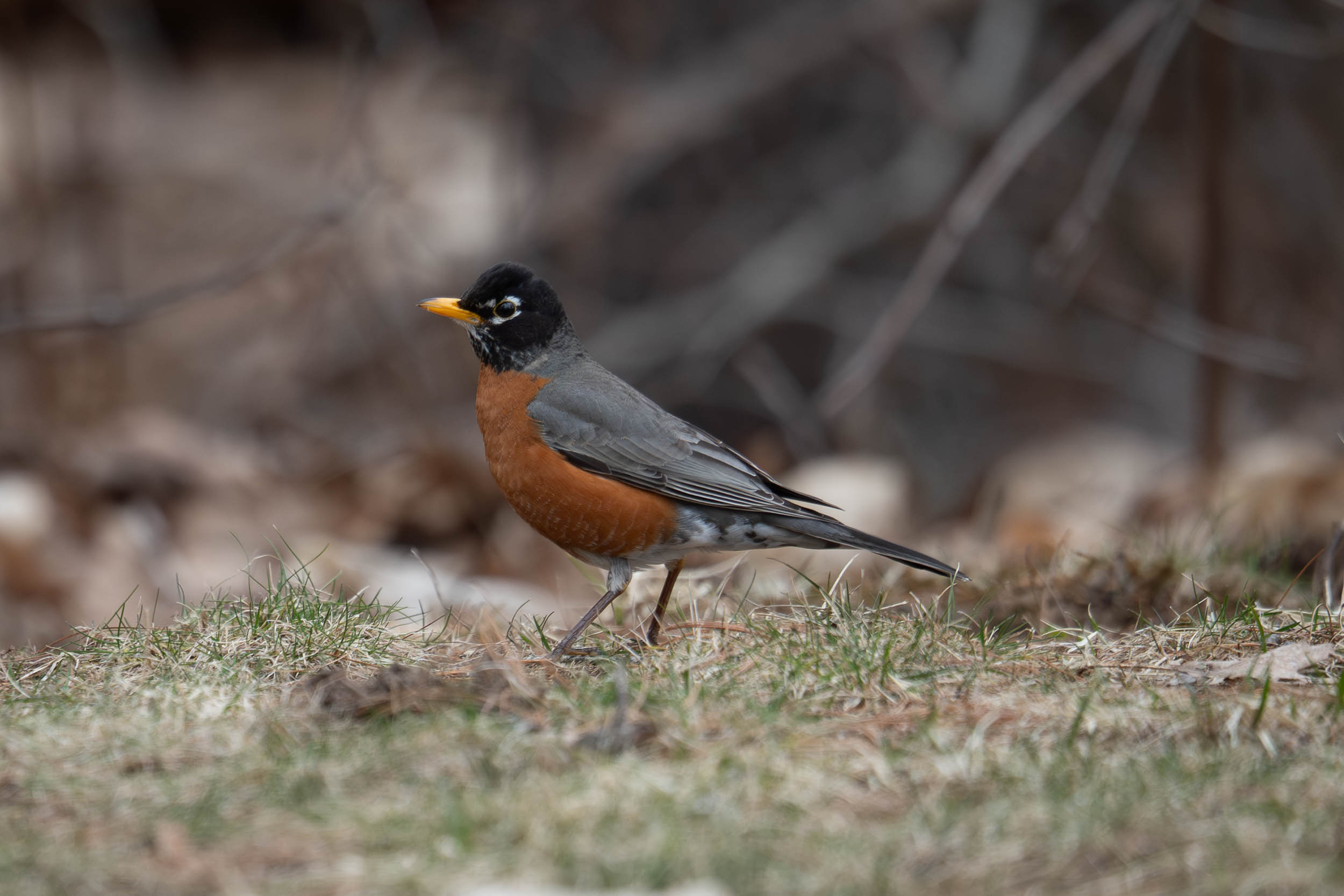
The American Robin is among the most familiar birds in North America — a large thrush with a distinctive orange-red breast, dark grey-brown back, and yellow bill. Males are more vividly colored than females, with a darker, nearly black head in breeding plumage. Juveniles show the spotted breast typical of many thrushes before their first complete molt.
Though routinely encountered as a common garden bird, the American Robin has a surprisingly wide ecological range — from suburban lawns to boreal forest edges and sub-Arctic tundra. Winter flocks foraging on berry-bearing trees can be enormous and nomadic, descending on fruiting crabapples and cedars in large numbers before moving on when the crop is exhausted.
The familiar behavior of head-tilted earthworm-hunting on lawn surfaces, while commonplace, offers a good study in hunting posture and the use of both visual and auditory cues to detect prey underground. Winter berry foraging, particularly in fruit-laden conifers or crabapple trees, can provide excellent close photographic opportunities.
One of the most abundant birds in North America, the American Robin faces no significant conservation concerns. The species has benefited from the expansion of suburban landscapes offering abundant lawns for earthworm foraging and fruiting trees and shrubs for winter food. Despite its abundance, it remains a culturally significant species — one of the most widely recognized as a herald of spring across the continent.