Range & Distribution
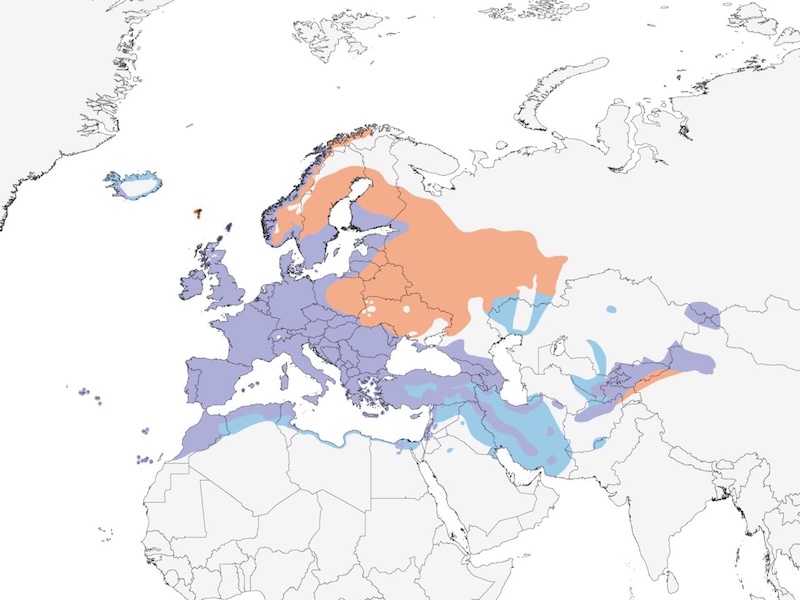
Year-round
Nonbreeding
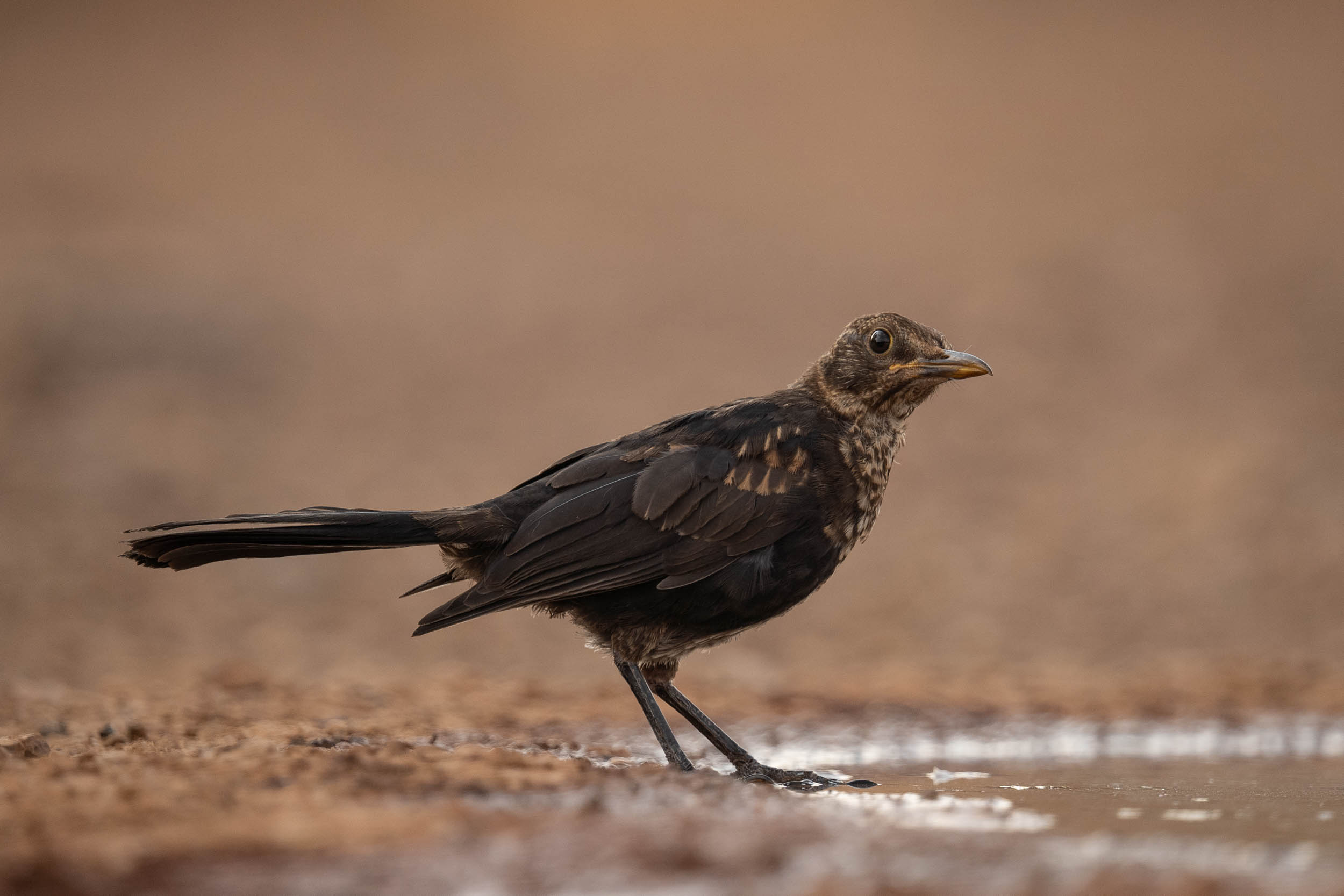
The Common Blackbird is among the most familiar birds in Europe — the glossy black male with his orange-yellow bill and eye ring is unmistakable, and his rich, mellow, fluted song delivered from rooftop and treetop is the defining sound of European gardens and woodland edges from late winter through summer. Females are brown with a streaked or spotted breast — superficially thrush-like but with the same bill color.
Foraging behavior on lawns and leaf litter closely resembles the American Robin — a direct ecological parallel. The bird listens and watches for earthworm movement at the soil surface, then tugs the worm free with repeated sharp pulls. In autumn and winter, the diet shifts heavily to berries and fruit, and birds gather in fruiting trees alongside fieldfares, redwings, and thrushes.
The male's song — arguably the richest and most musical of any common European bird — reaches its peak intensity on warm mornings in April and May, delivered from elevated perches with unhurried, improvisatory phrases. Song perches on chimney stacks, television aerials, or the topmost branch of garden trees are predictable locations for the first hour after dawn.
One of the most abundant birds in Europe, the Common Blackbird faces no significant conservation concerns at the global level, though some regional declines have been noted in parts of western Europe, possibly linked to increased urbanization and changes in land management. The species is highly adaptable and thrives in urban and suburban environments.