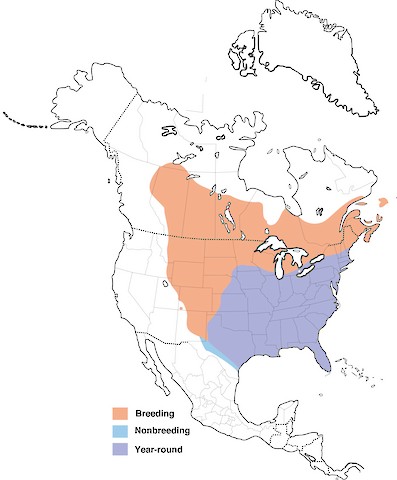
Range & Distribution
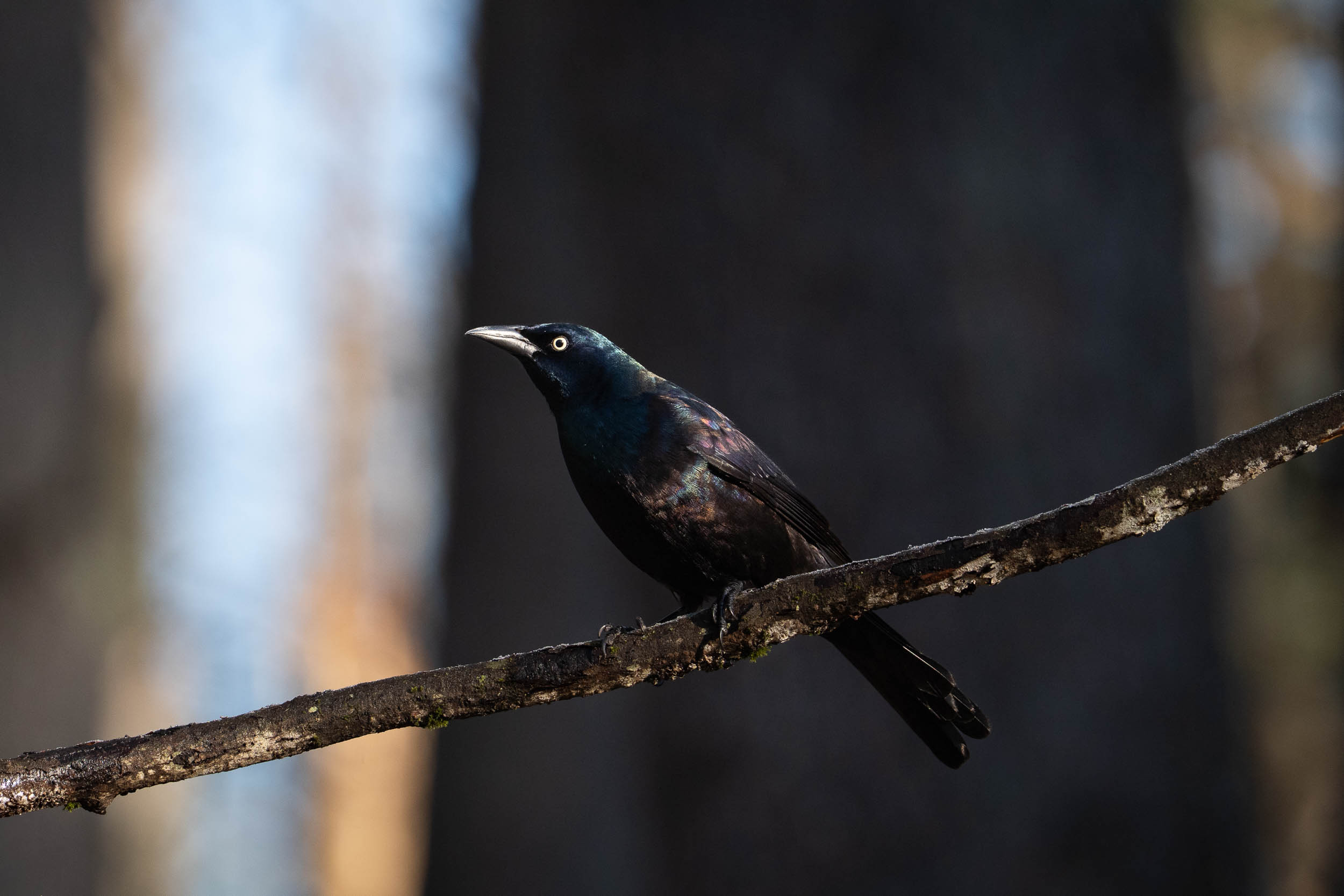
The Common Grackle is a large, long-tailed icterid that looks black at a distance but burns with iridescence up close — a glossed bronze body and a blue-purple head, set off by a staring pale-yellow eye. The long, keel-shaped tail, folded into a shallow V in flight, and the heavy bill separate it from the smaller blackbirds it often flocks with.
It is a bold omnivore, taking grain, seeds and insects and readily small vertebrates — crayfish, minnows, eggs and nestlings — and it forages confidently on lawns, fields and shorelines. It nests in loose colonies, building bulky cups in conifers near water, and gathers after breeding into the enormous mixed blackbird roosts of autumn. Around people it is brash and adaptable.
In Maine the Common Grackle is a common and conspicuous breeder of suburbs, farmland and marsh edges, striding across lawns and gathering in noisy flocks. Its very boldness makes it approachable, but the all-dark plumage is the challenge — the colour only appears when light rakes across it, so position for the sun to catch the bronze body and blue head, and expose to keep the pale eye from floating in shadow.
The Common Grackle is listed as Least Concern and is still abundant and widespread, but it has undergone a steep, well-documented long-term decline, its numbers down sharply since the 1970s despite its familiarity. The causes are not fully understood and may include agricultural change and control efforts at roosts. Its status is a reminder that a common, even disliked, bird can be quietly slipping away.