Range & Distribution
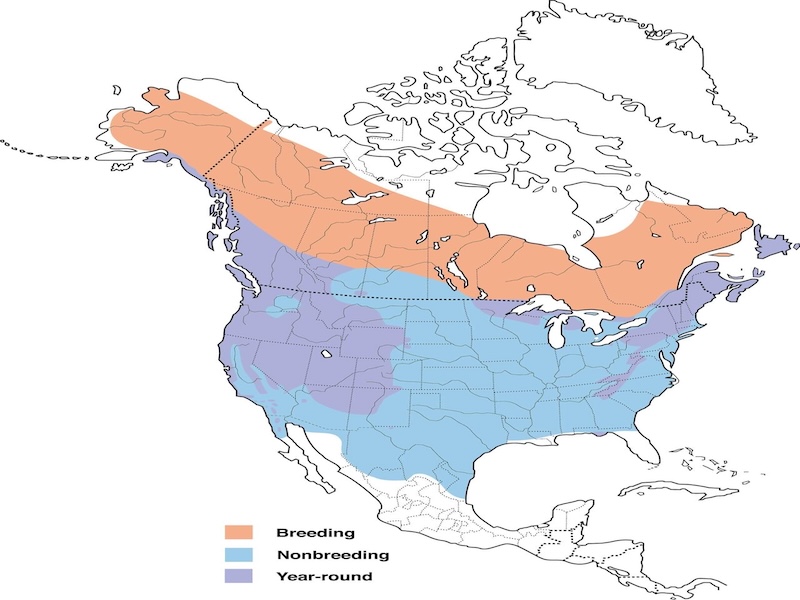
Breeding
Nonbreeding
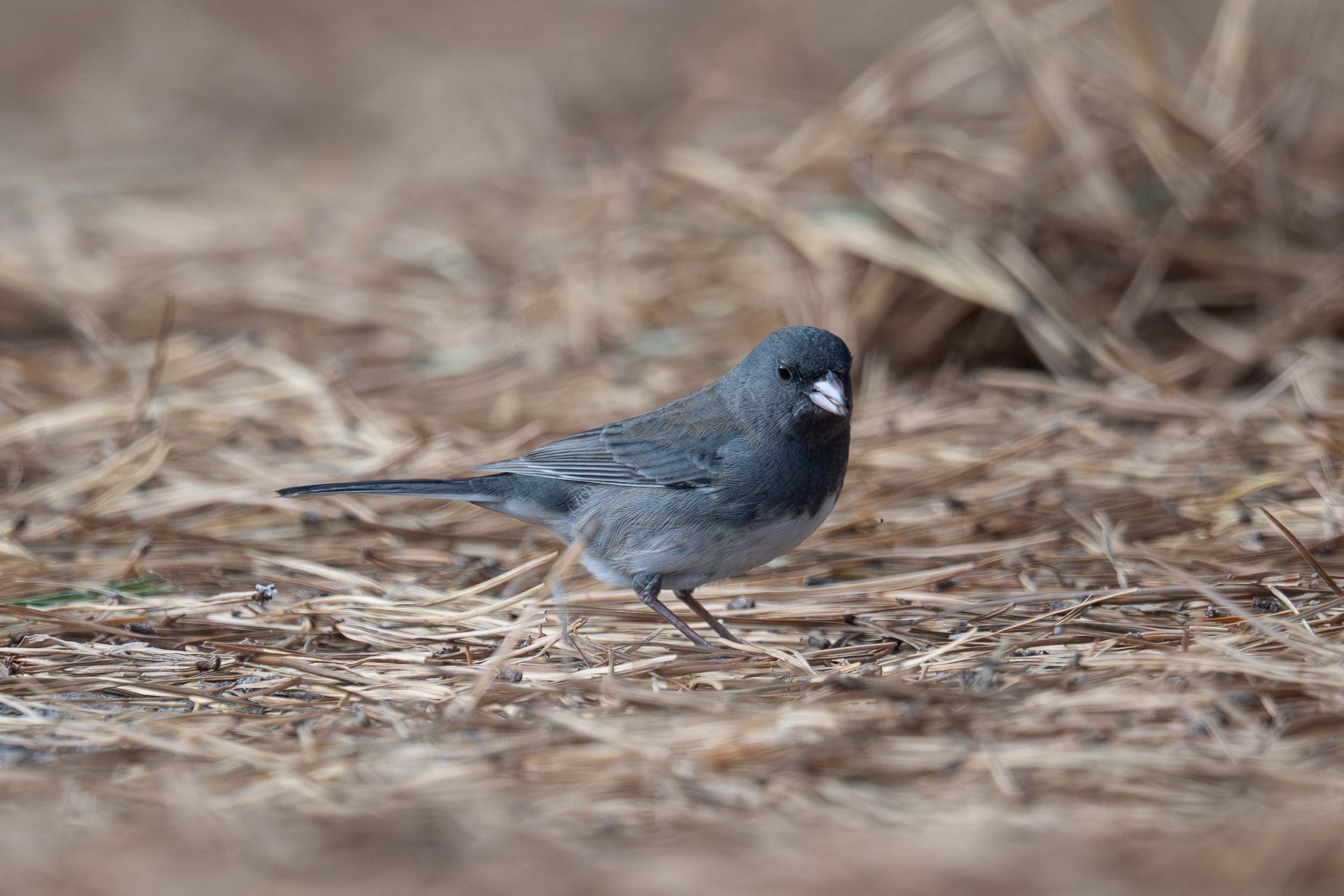
The Dark-eyed Junco is arguably the quintessential winter bird of eastern North America — arriving reliably with the first cold weather and departing in spring, it is a bird whose presence marks the turning of seasons. The Slate-colored form, dominant in the east, is a clean dark grey above with a sharp contrast to the white belly and the distinctive white outer tail feathers that flash in flight.
Juncos forage almost entirely on the ground, scratching through leaf litter and hopping beneath feeder stations to pick up fallen seeds. Flocks show a loose social hierarchy, and subordinate birds are frequently displaced by dominant individuals — behavioral interactions worth watching at feeding stations in winter. The high, thin contact calls keep flock members in touch through dense cover.
Winter light in mixed woodland or garden settings, with the bird perched briefly on a low branch or fence before returning to ground, offers the cleanest photographic opportunities. The high contrast between the dark grey and pure white demands careful exposure — evaluating off the white belly rather than the grey back prevents underexposure of the critical tones.
One of the most abundant birds in North America — estimated at around 630 million individuals — the Dark-eyed Junco faces no conservation concerns. The species encompasses several formerly separate species now lumped under a single name, and considerable plumage variation exists across the continent, from the dark-hooded Slate-colored form of the east to the multicolored Oregon form of the west.