Range & Distribution
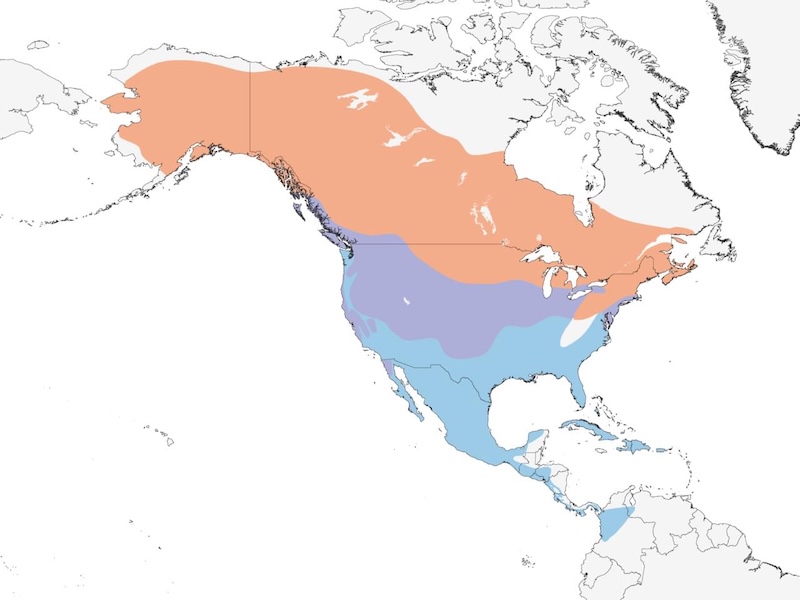
Year-round
Breeding
Nonbreeding
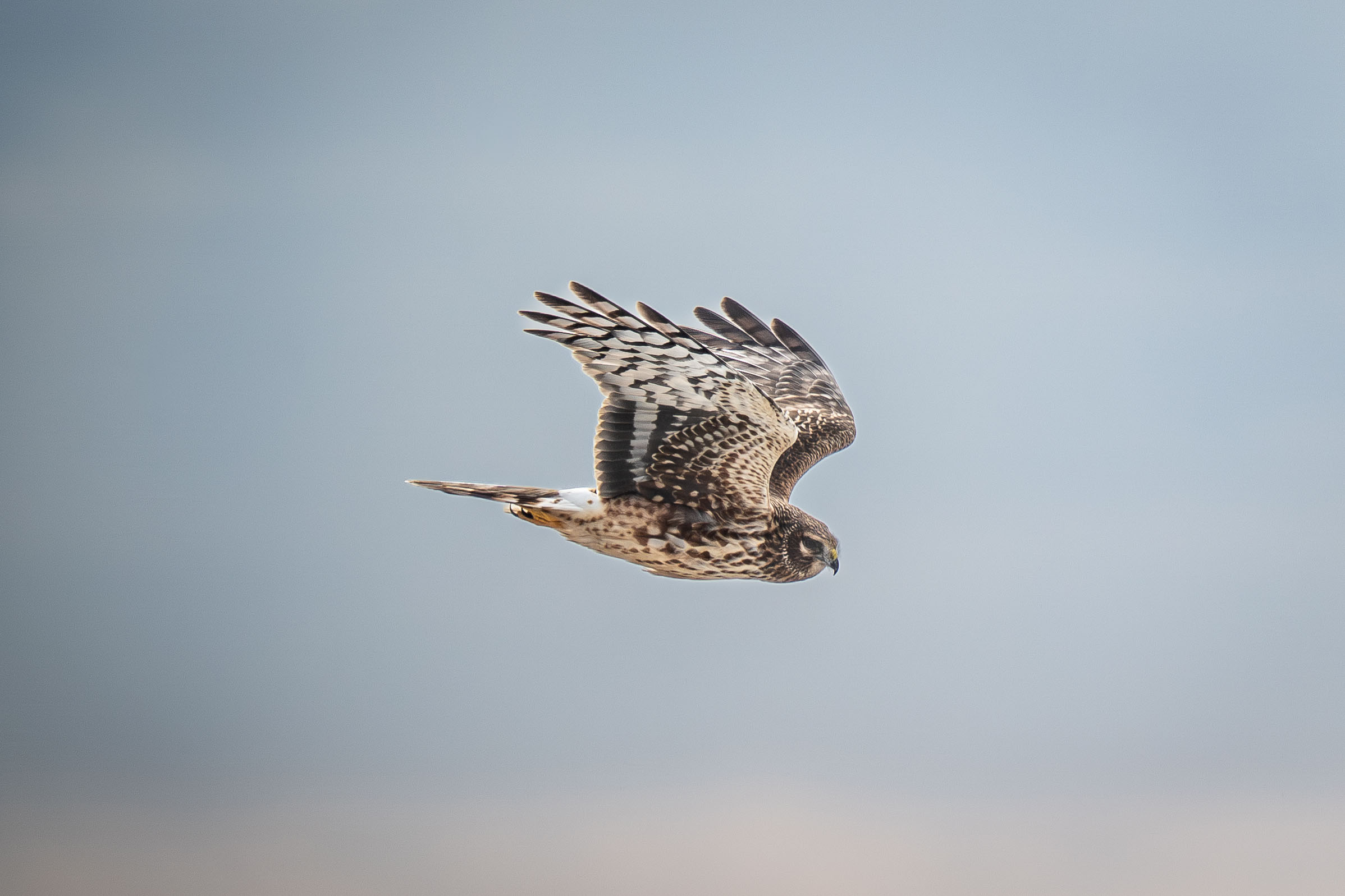
The Northern Harrier is unmistakable in flight — a long-winged, long-tailed raptor that glides low over open ground with a distinctive buoyant, tilting quality. The white rump patch, visible from considerable distance, is the single most reliable field mark regardless of age or sex. No other North American raptor hunts quite like this one.
Males and females look strikingly different. Adult males are pale grey above and white below, with black wingtips — sometimes called "grey ghosts" for the way they seem to materialize over marsh edges. Females and juveniles are streaked brown overall, and substantially larger than the males, as is typical in raptors. Immatures show rich orange-buff underparts that fade over successive molts.
Open habitats define the range of this bird — marshes, wet meadows, coastal grasslands, agricultural fields, and tundra. The harrier is unique among North American raptors in relying heavily on hearing to locate prey, facilitated by a distinct facial disc that functions similarly to an owl's. Low, systematic quartering of the ground is the signature hunting behavior, often within a meter of the vegetation surface.
While globally listed as Least Concern, Northern Harrier populations have declined significantly across much of their North American range, particularly in the eastern United States. Habitat loss is the primary driver — the draining of wetlands and conversion of grasslands to intensive agriculture has eliminated breeding and foraging habitat at scale. The species is listed as a Species of Greatest Conservation Need in numerous states. Ground nesting makes it particularly vulnerable to nest predation and agricultural disturbance during the breeding season.