Range & Distribution
Breeding
Migration
Nonbreeding
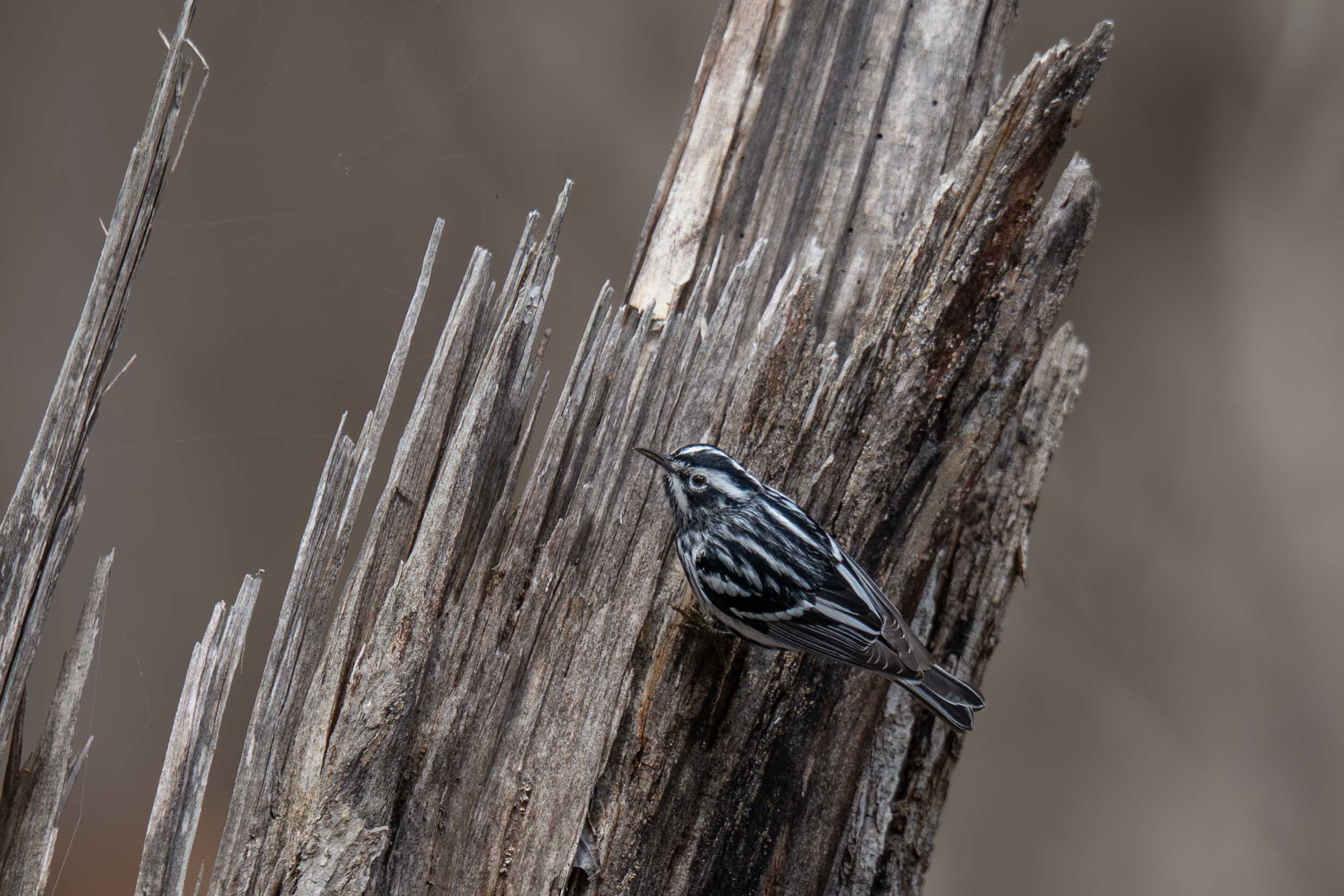
The Black-and-white Warbler is exactly that — a small warbler streaked black and white from crown to tail, head stripes included. Breeding males have a black throat and cheek; females and immatures are cleaner white below. Its plumage and its habit of creeping along trunks and limbs make it look at a glance like a small nuthatch, and an unusually long hind claw helps it grip bark — it is the only warbler that forages this way.
It works methodically over bark and large limbs, gleaning insects and spiders from crevices the way a creeper or nuthatch does, which lets it find food earlier in spring than the canopy warblers. It nests on the ground, tucking a cup against the base of a tree or among roots, where the female incubates four or five eggs. One of the earliest wood-warblers back each spring, it announces itself with a thin, squeaky "wee-see, wee-see".
The Black-and-white Warbler breeds commonly in Maine's mixed and deciduous woods and is among the first warblers back each spring, which makes it one of the more reachable members of a difficult family. Because it forages on trunks rather than high in the canopy, it often works at eye level — follow a bird as it spirals a limb and shoot when it pauses on a clean stretch of bark. The high-contrast plumage blows out in hard light, so soft, even light holds both the black and the white.
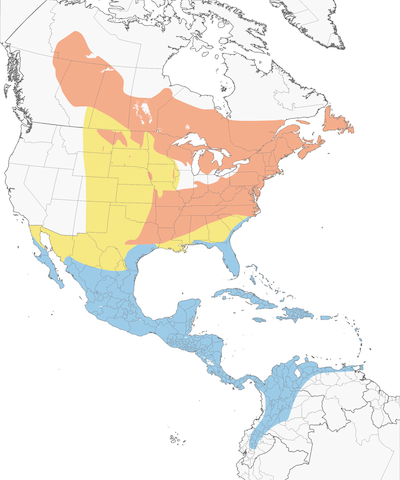
The Black-and-white Warbler is listed as Least Concern, with a large range and a population stable overall, though as a ground-nester and a long-distance migrant it is exposed to forest fragmentation on the breeding grounds and to habitat loss across its wintering range. Keeping large, unbroken tracts of forest is the practical key to keeping it common. For a photographer it is a forgiving introduction to warblers, working low and slow where most of the family stays high and fast.