Range & Distribution
Breeding
Migration
Nonbreeding
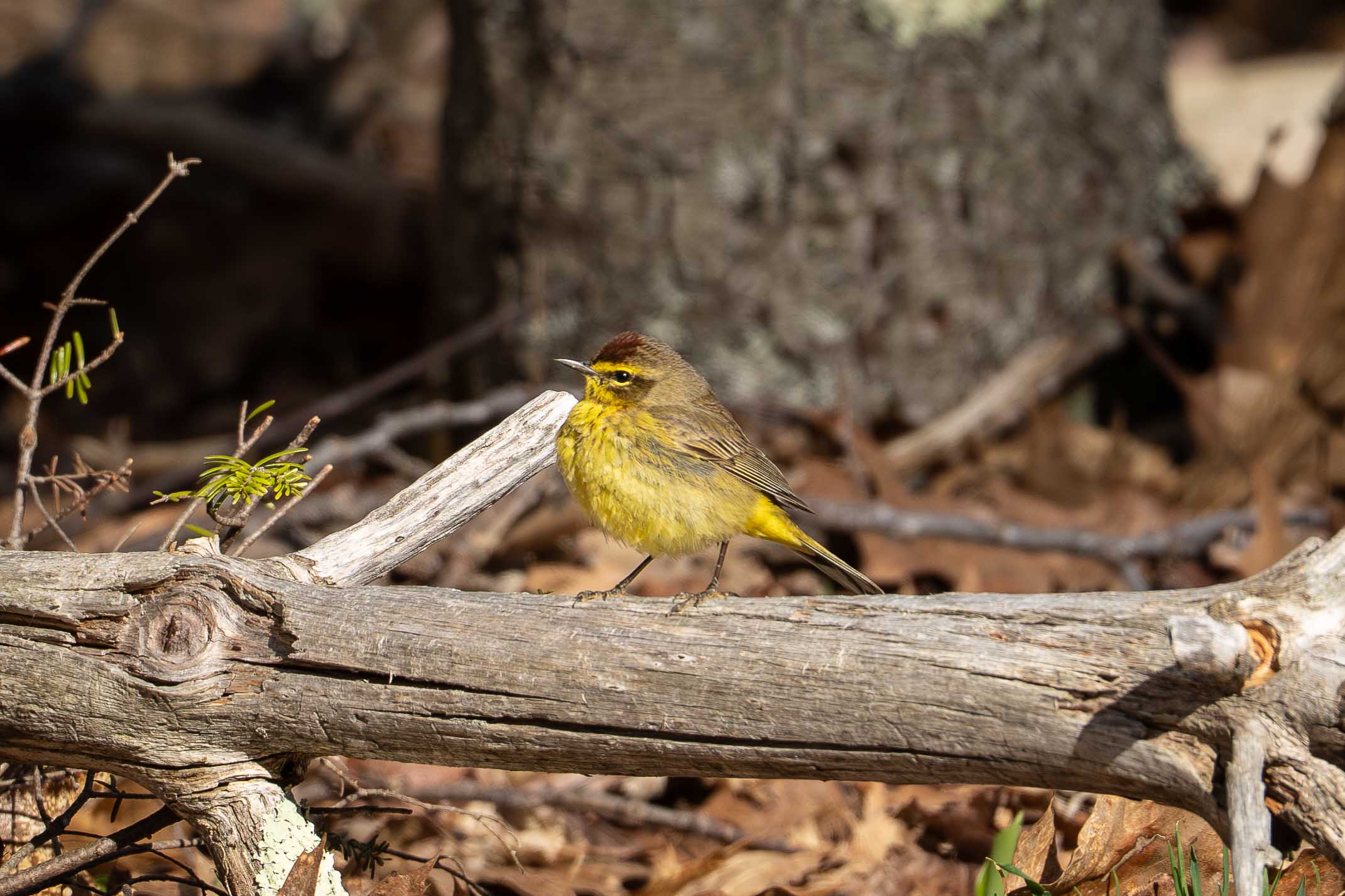
The Palm Warbler is a slim, ground-loving warbler known for a habit rather than a colour: it pumps its tail almost constantly, a motion that gives it away at distance. Breeding birds of the eastern, "Yellow" form show a rufous-chestnut cap, a yellow supercilium and yellow underparts streaked at the sides; autumn and western birds are duller and browner, but the bright yellow undertail coverts and the bobbing tail stay constant.
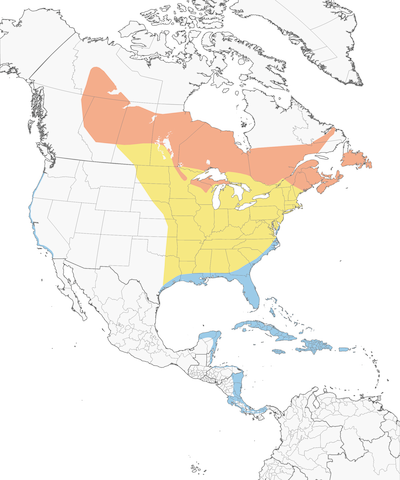
Unusually for a wood-warbler it spends much of its time on the ground and in low cover, walking and tail-pumping as it takes insects in summer and seeds and berries in the colder months. It breeds in the open spruce bogs and muskeg of the boreal zone, building a moss cup on or near the ground at the base of a small conifer, and it is among the hardiest warblers — early to arrive in spring and late to leave in autumn.
Maine is one of the few places in the eastern United States where the Palm Warbler breeds, in the peat bogs of the north and east, and it is a common migrant statewide, often feeding on open ground and woodland edges where most warblers never come down. That ground-level habit is the opportunity: get low and let the constant tail-pump and the open setting give you a clean, eye-level bird rather than a canopy silhouette. Spring birds in fresh rufous-capped plumage are worth the wait.
The Palm Warbler is listed as Least Concern, abundant across its boreal range and secure overall, helped by breeding in remote peatlands that are largely undisturbed. The longer-term concerns are those facing the boreal bog system as a whole — drainage, peat extraction and a warming climate — together with the loss of the open, weedy habitats it uses in migration and winter. For now it remains one of the more approachable warblers, on the ground and in the open where it can be watched at leisure.