Range & Distribution
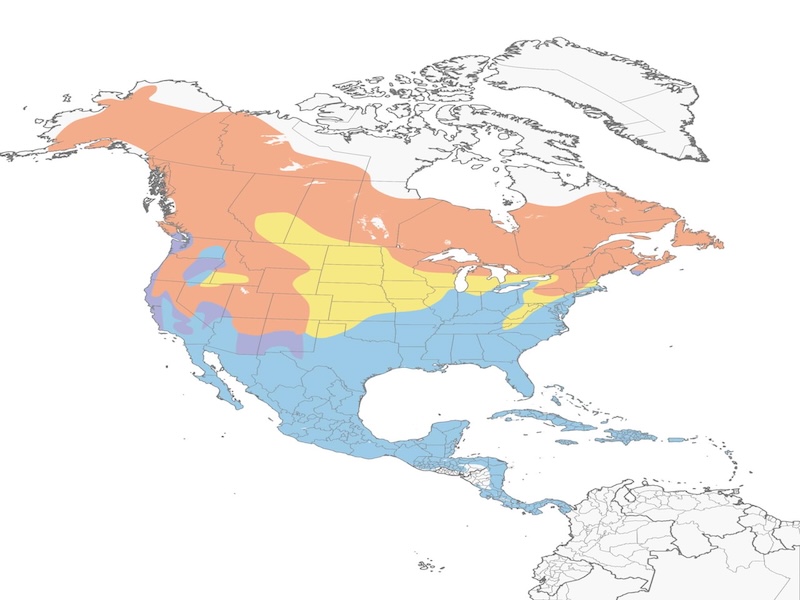
Breeding
Nonbreeding
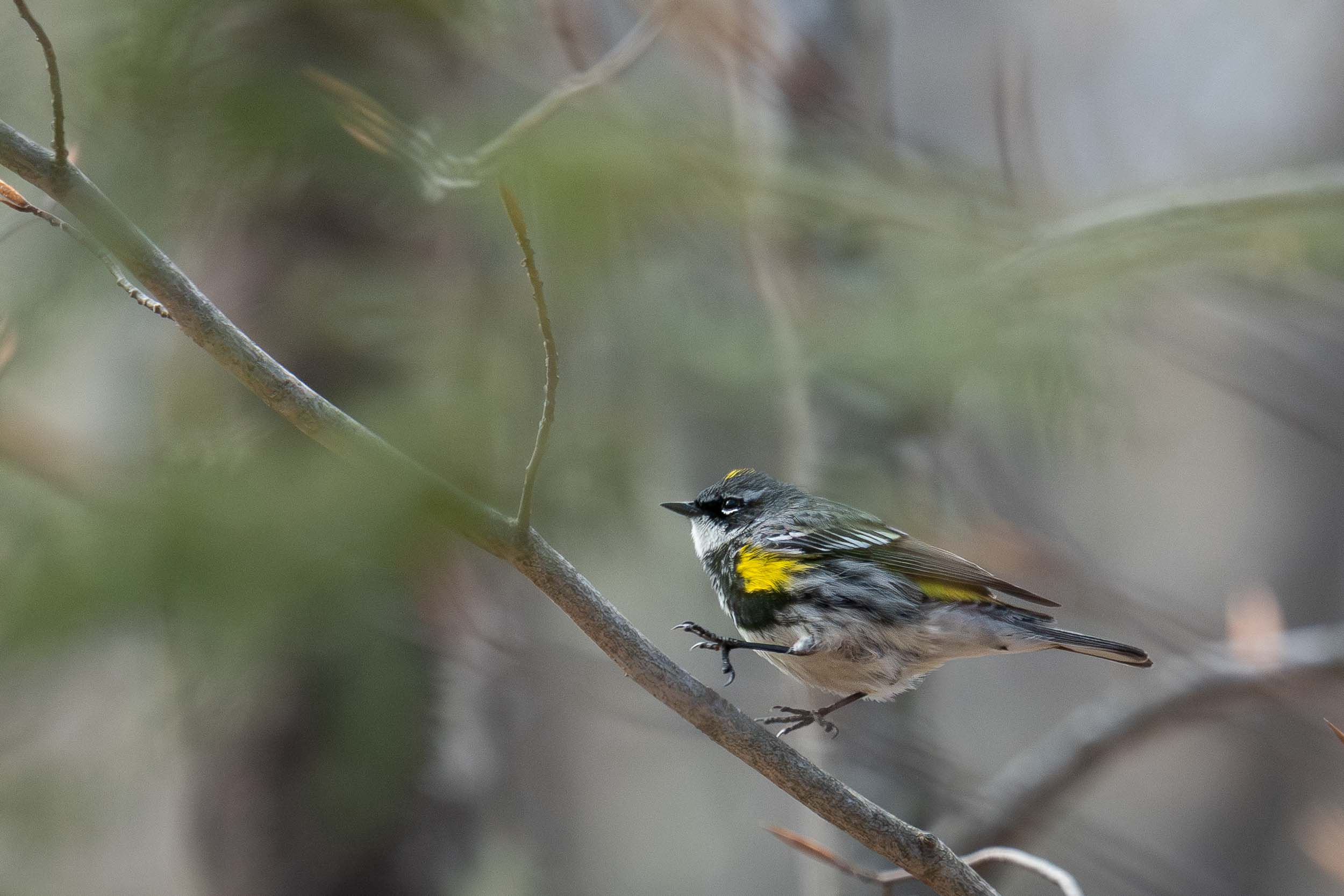
The yellow rump patch — visible as a bright flash at the base of the tail in all plumages — is the single most reliable field mark across the considerable variation this species shows. Breeding males of the eastern 'Myrtle' form are boldly patterned in grey, black, white, and yellow; the western 'Audubon's' form has a yellow throat where the Myrtle has white. The two forms were long treated as separate species.
During migration, Yellow-rumped Warblers can be among the most abundant small birds encountered, moving in mixed warbler flocks through forest and shrubby areas. In late autumn, when most other warblers have departed, large numbers linger along Atlantic and Gulf coastlines wherever bayberry and wax myrtle grow, sometimes in flocks of hundreds or thousands.
The yellow rump is the key photographic target with this species — catch it as the bird lands or lifts off, when the tail is spread or the rump momentarily exposed above closed wings. Migration concentration points in early May, when breeding males are in peak plumage, offer the best opportunity to photograph the full breeding pattern.
One of the most abundant warblers in North America, the Yellow-rumped Warbler faces no conservation concerns. Its ability to digest the waxy coating of bayberries and myrtle berries — a dietary adaptation unique among warblers — enables it to winter further north than any other wood-warbler species and to exploit food sources unavailable to competitors.