Range & Distribution
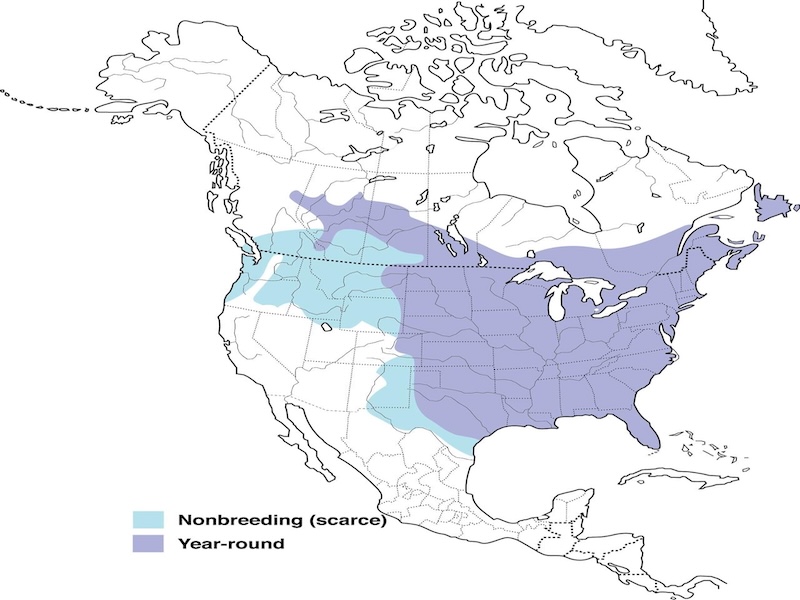
Year-round
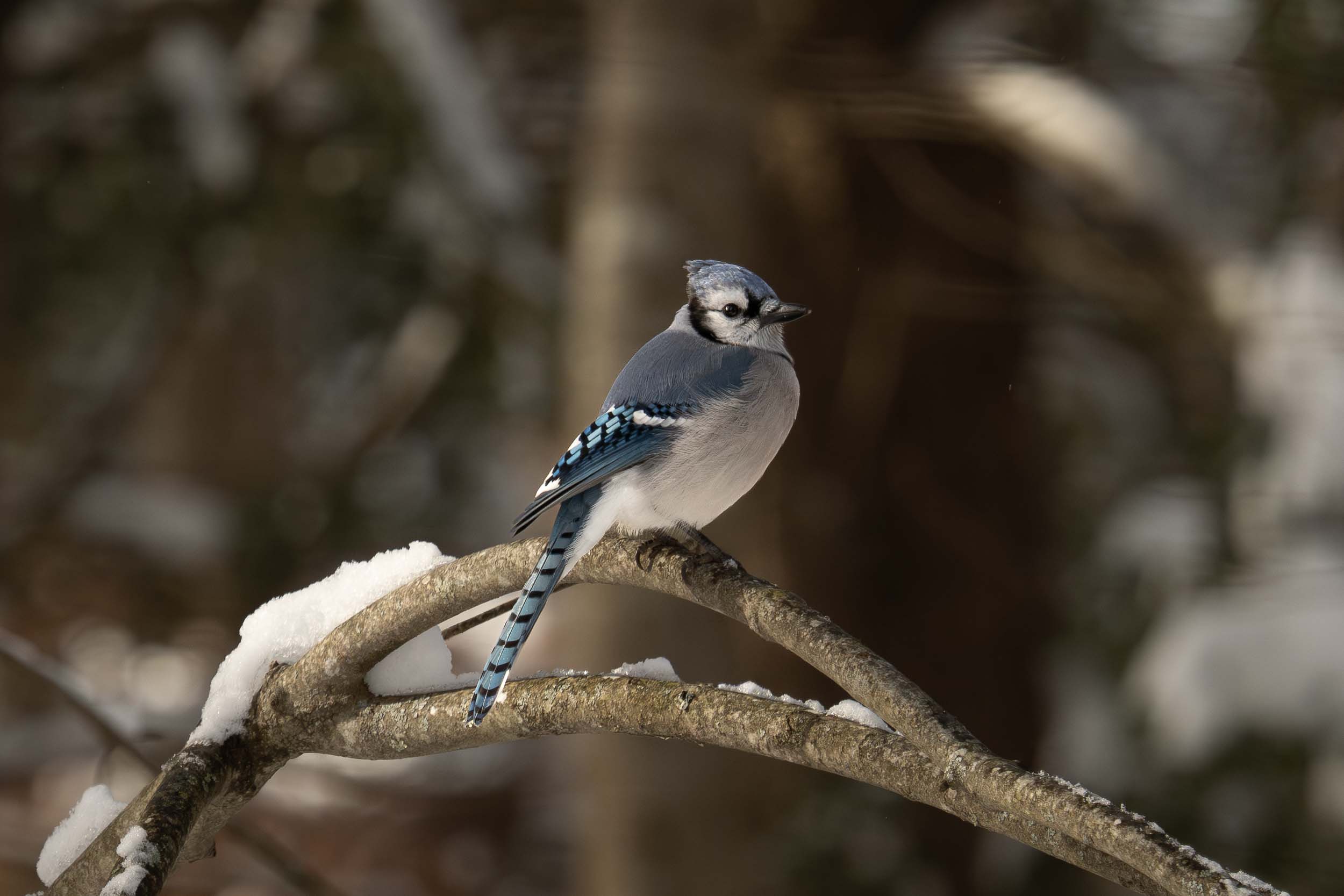
The Blue Jay is one of the most boldly patterned corvids in North America — vivid blue above with a white face and underparts, a prominent crest, and intricate black barring on the wings and tail. The bold black necklace pattern across the chest completes a plumage that photographs extremely well in dappled forest light where the blue tones are most saturated.
Intelligent and aggressive, Blue Jays are highly vocal and among the most behaviorally complex birds regularly encountered in eastern North America. The species is a skilled vocal mimic — the imitation of Red-shouldered and Red-tailed Hawk calls, sometimes used to clear feeding areas of competitors, is one of the more frequently documented examples of functional mimicry in North American birds.
Despite their conspicuousness, Blue Jays can be challenging to photograph well in natural settings — they tend to perch briefly before moving, and the blue plumage reflects differently depending on lighting angle. Forest light filtering through a canopy gap, with the bird backlit or side-lit, tends to render the blue most vividly. Winter visits to feeders provide reliable perching opportunities.
Widespread and abundant, the Blue Jay faces no significant conservation pressures. The species is an important ecological actor as a seed disperser — particularly of oaks, whose range expansion has historically been facilitated by jays caching and forgetting acorns. West Nile virus caused significant mortality in some populations in the early 2000s, though populations have since recovered.