Range & Distribution
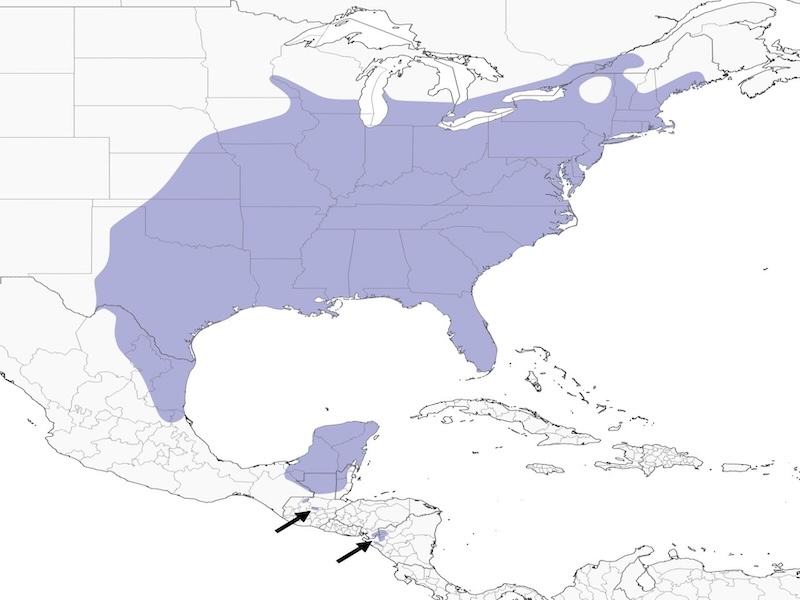
Year-round
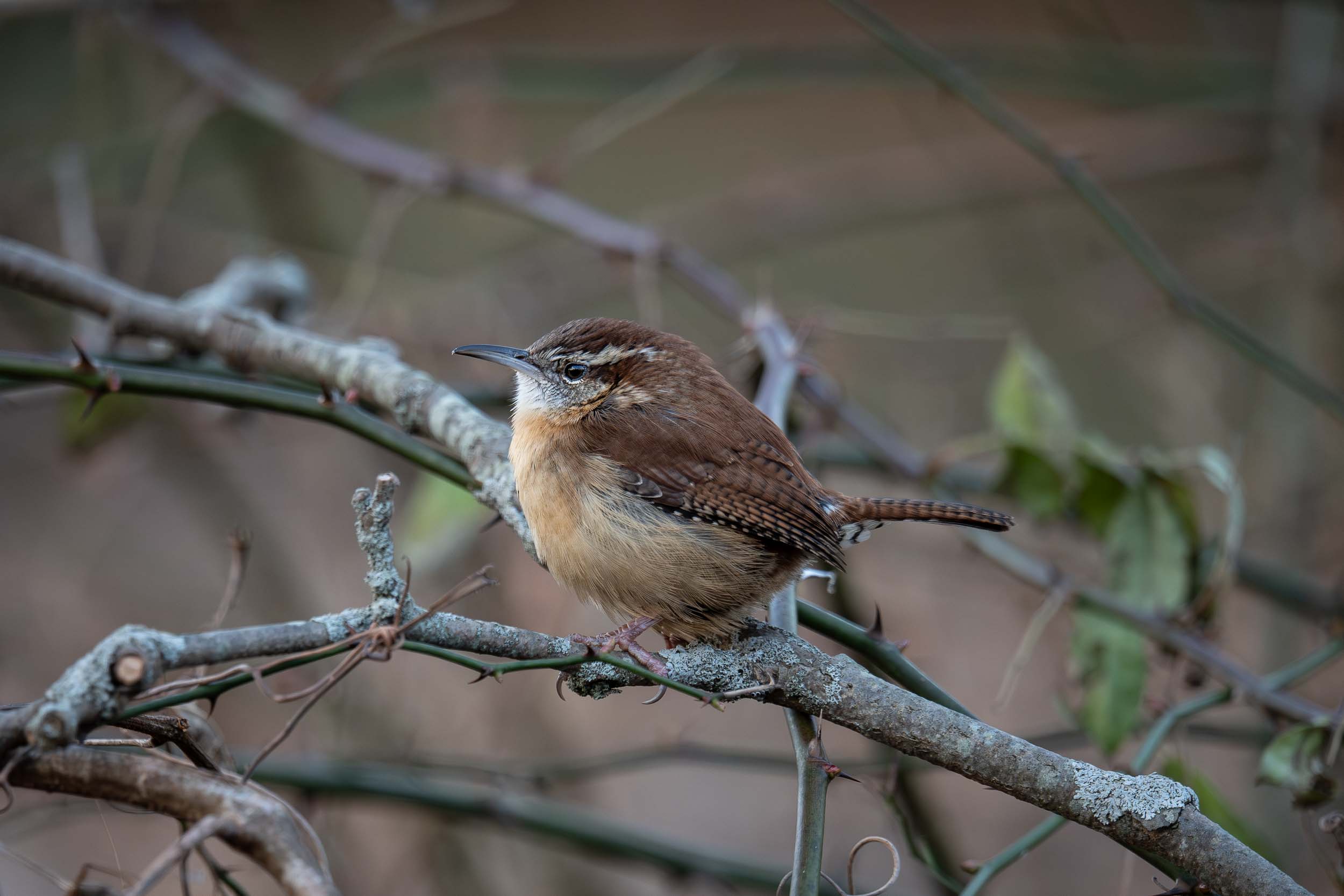
The Carolina Wren is a small but remarkably loud bird for its size, producing a carrying, repetitive song — typically a three-syllable phrase like 'tea-kettle, tea-kettle, tea-kettle' or 'cheery-cheery-cheery' — that far exceeds what the bird's compact frame suggests. Warm rufous-brown above with a bold white supercilium and buffy underparts, the bird is attractive but spends much of its time deep in dense cover.
Despite their tendency to remain hidden in thick vegetation, Carolina Wrens are curious birds and will investigate disturbance or pishing calls with persistence. They often pop briefly into view at the edge of cover before retreating — requiring patience and readiness. The cocked tail is a characteristic posture when the bird perches momentarily in the open.
Suburban gardens with dense brush piles, hedgerows, and native shrub plantings hold resident pairs that can be watched over time throughout the year. Pairs maintain territories year-round and forage together through the nonbreeding season. Early morning in late winter, when males are singing persistently from exposed perches to reestablish territorial boundaries, provides the best photographic access.
The Carolina Wren has expanded its range northward significantly over the past several decades, likely facilitated by milder winters and the proliferation of winter bird feeding. It is highly vulnerable to severe winter weather events — populations in the northern part of the range can crash following harsh winters but typically recover within a few years. No significant conservation concerns apply at the global or continental level.