Range & Distribution
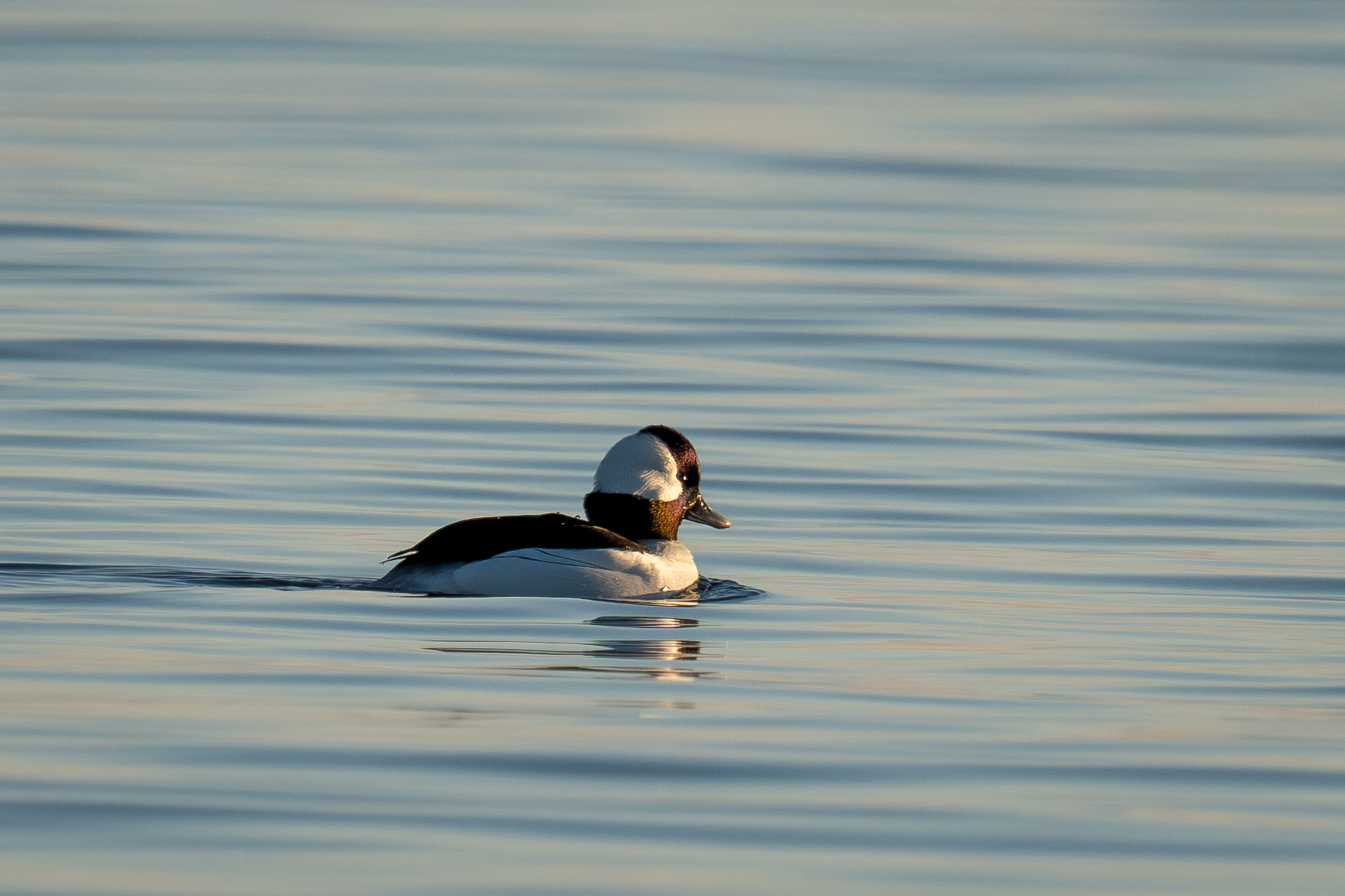
The Bufflehead is North America's smallest diving duck, a compact, big-headed bird that looks almost toy-like on the water. Drakes are crisply black-and-white with a large bonnet of white wrapping the back of an iridescent green-and-purple head that usually reads black; females and immatures are dusky grey-brown with a single neat white cheek patch. The puffy head shape and small size identify it at a glance, even at distance.
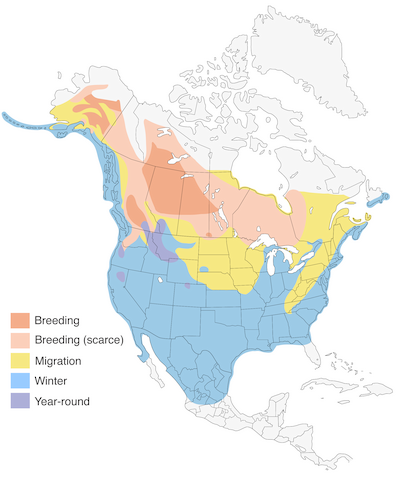
Buffleheads dive almost continuously in shallow water, taking aquatic insects on fresh water and crustaceans and mollusks on the sea. Almost uniquely among ducks they nest in old Northern Flicker holes, which ties them to boreal lakes and ponds set in aspen and poplar woodland, and the female alone raises the brood. They are restless and quick to flush, and small parties often keep one bird watching while the others feed.
In Maine the Bufflehead is a winter duck of harbours, river mouths and open inland water, usually in small, active groups. The challenge is timing: a feeding bird is underwater as often as not, so prefocus on the spot where one went down and shoot as it bobs back up. The strong black-and-white contrast blows out easily — expose for the white head and let the light-toned winter water give clean reflections in low sun.
The Bufflehead is listed as Least Concern and its population is stable, helped by a reliance on tree cavities that keeps it tied to protected northern woodlands rather than heavily altered land. Its dependence on Northern Flicker holes does link its fortunes to that woodpecker and to mature nesting trees, and like all sea-wintering ducks it is exposed to coastal oil and water-quality problems. Nest boxes have locally supplemented natural cavities where large trees are scarce.