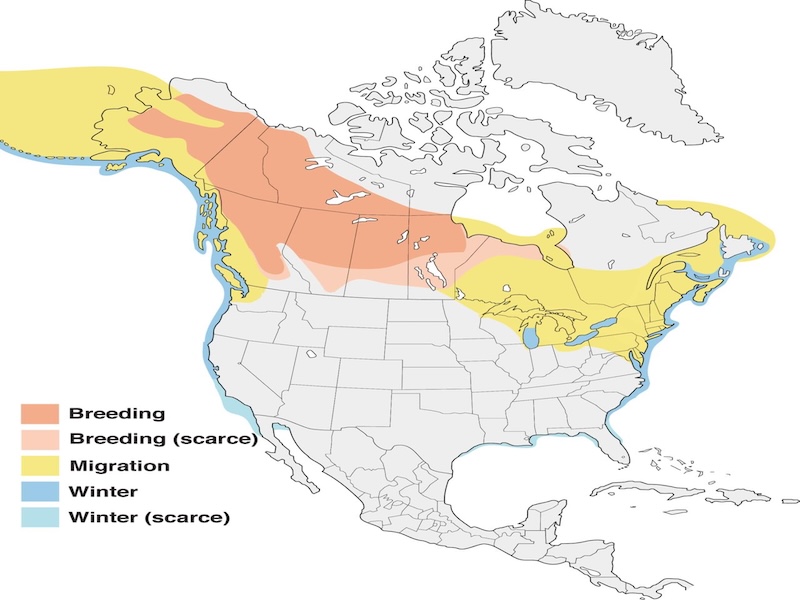
Range & Distribution
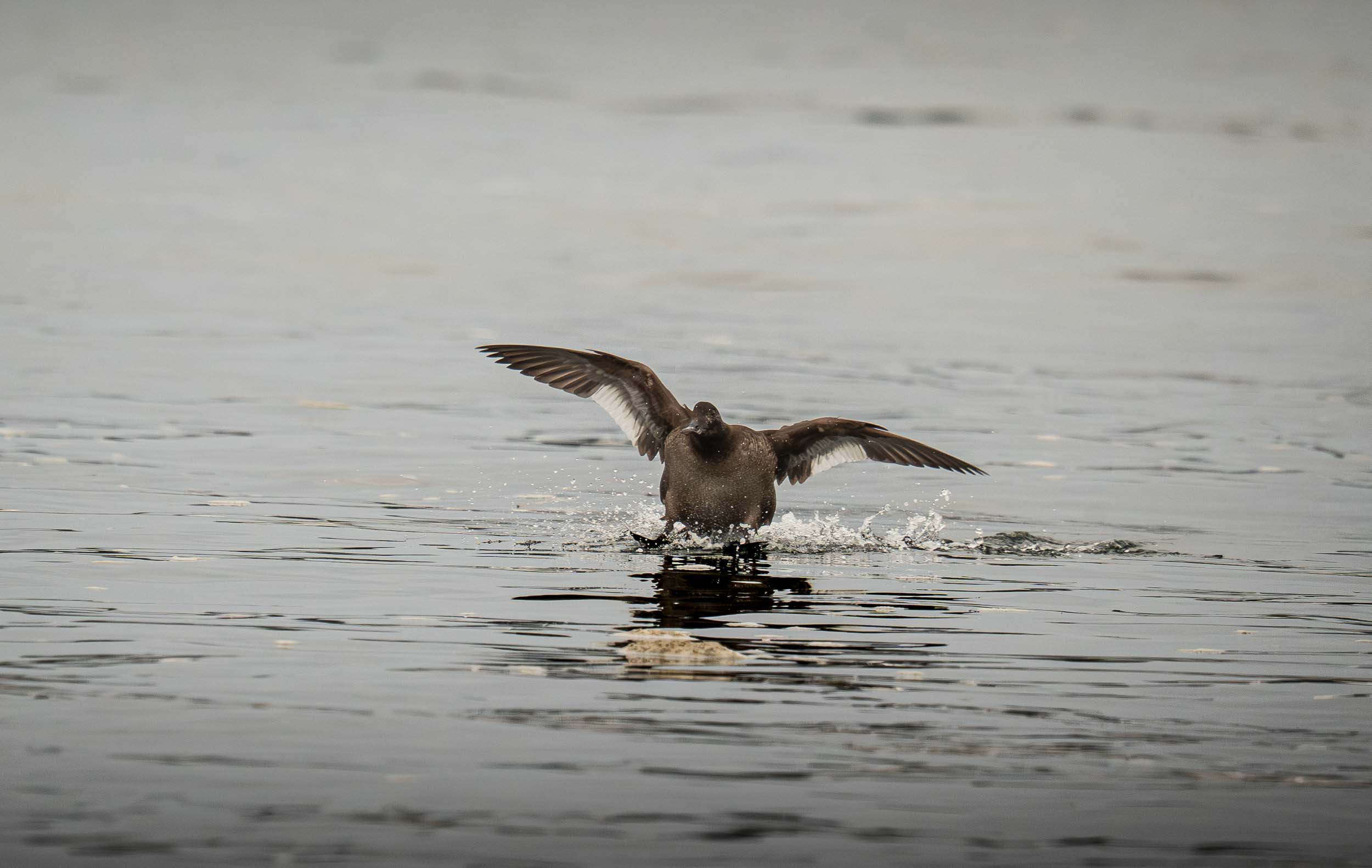
The White-winged Scoter is the largest of the three North American scoters, a heavy-bodied sea duck that rides low in the water. Drakes are black with a white teardrop around the eye and a sloping, knobbed bill marked orange and red; females and immatures are sooty brown with two pale patches on the face. The diagnostic mark is the white speculum — a square white wing patch usually hidden at rest but flashing clearly the moment a bird flaps or takes flight.
A diving duck of open water, it plunges for mollusks, crustaceans and other bottom invertebrates and swallows hard-shelled prey whole. It breeds late and far north, nesting on the ground near boreal lakes and tundra pools, often well back in cover, and broods reach salt water by late summer. Outside the breeding season scoters gather in loose rafts over shellfish beds, frequently mixed with the other two scoter species.
Along the Maine coast the White-winged Scoter is a winter bird, scattered in rafts beyond the surf where distance and swell make it a patience game. Shoot from a low headland with the light behind you and wait for a bird to wing-flap or stretch — that is when the white wing patch shows and a flat silhouette becomes a recognizable scoter. A fast shutter freezes the spray of a bird running to take off, and overcast keeps the black plumage from blocking up.
Listed as Least Concern, the White-winged Scoter remains widespread across northern North America, but sea-duck monitoring is difficult and several scoter populations are thought to have declined in recent decades. The threats are diffuse — coastal oil pollution, degraded shellfish beds, gillnet bycatch and changes to boreal breeding habitat — and because the birds concentrate on a limited number of wintering grounds, a local event can affect many at once. Keeping a respectful distance from wintering rafts avoids flushing birds already budgeting energy through the cold months.