Range & Distribution
Breeding
Nonbreeding
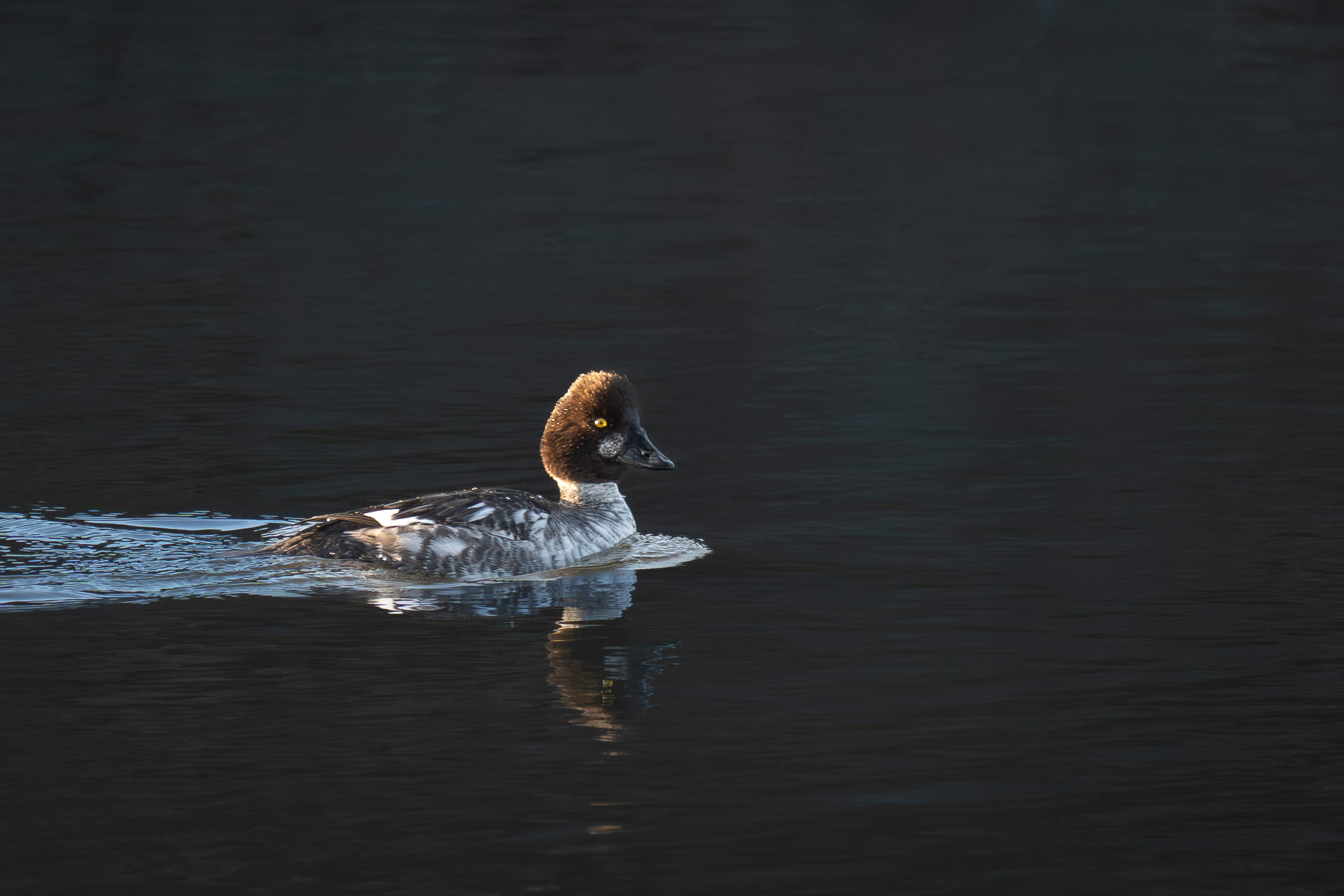
The Common Goldeneye is a stocky diving duck with a high, peaked head and the staring golden eye that gives the genus its name. Drakes are white-bodied with a glossy green-black head marked by a round white spot before the eye; females have a chocolate-brown head, a grey body and a dark bill often tipped yellow. The steep forehead and short neck give a blocky profile both swimming and in flight, where the wings produce a characteristic whistling.
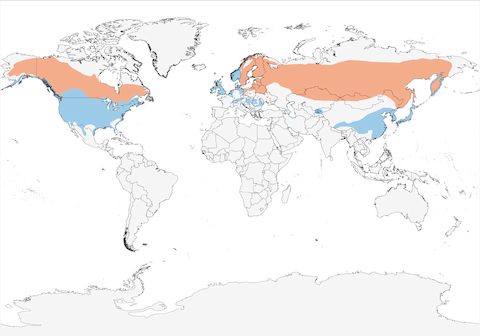
A bird of cold, clear water, it dives for crustaceans, aquatic insects and mollusks and is among the hardiest of ducks, lingering on open water through hard freezes. It nests in tree cavities — old large-woodpecker holes and natural hollows — near boreal lakes and rivers across North America and Eurasia, and readily takes to nest boxes. Courting drakes throw the head sharply back over the body in a display easily seen on winter water.
Goldeneyes winter on Maine's rivers, lakes and coastal bays, and a few breed in the north of the state. They are wary and tend to hold offshore, so a long lens and a low, concealed position pay off, and the whistling wings often announce a bird before you see it. Work the low, raking light of a winter morning to set a catchlight in the yellow eye and to model the white flanks against dark water.
The Common Goldeneye is listed as Least Concern, with a large Holarctic range and a population considered stable. As a cavity nester it depends on mature forest near water and on standing dead timber, so forestry practice and the loss of old trees are the main pressures on breeding numbers; nest-box schemes have offset shortages in some managed landscapes. On wintering waters it shares the general exposure of diving ducks to oil spills and declining water quality.