Range & Distribution
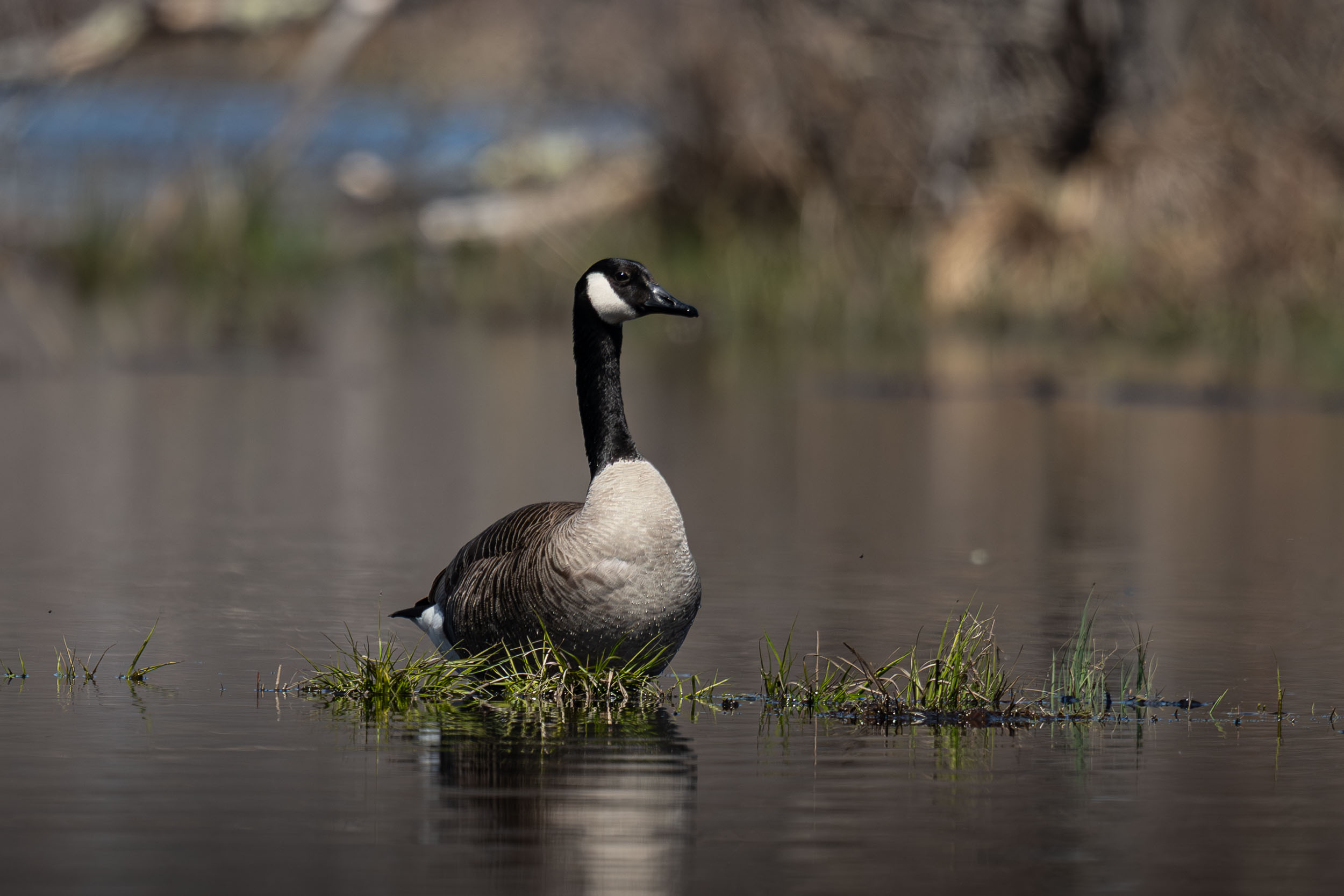
The Canada Goose needs little introduction: a large, heavy-bodied goose with a black head and neck broken by a white chinstrap, a pale breast, brown body and a black tail above a white rump band. Size varies enormously across the subspecies — from small, cackling-type birds to the big resident "giant" form — but the head pattern is constant and diagnostic, and the sexes look alike.
It grazes on grass, sedges and waste grain, tipping up in shallow water for aquatic plants, and is as at home on a city pond or playing field as on a remote marsh. Pairs are long-term and territorial; the female builds a ground nest on a slightly raised site near water and incubates while the gander stands guard, and the precocial goslings follow their parents to water within a day of hatching. Family groups stay together through the first migration, and flocks travel in the familiar V.
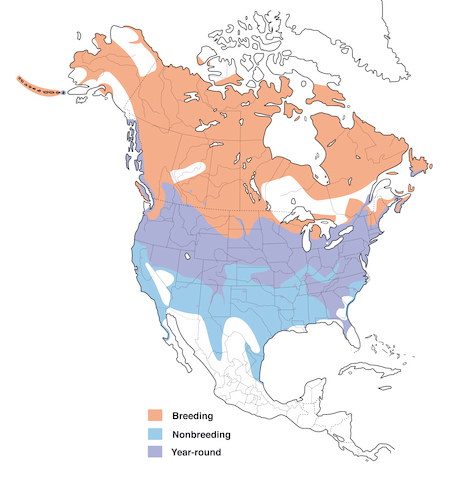
Canada Geese are everywhere in Maine — resident on ponds and rivers and pouring through in noisy migration — which makes them easy to overlook and easy to photograph. Their tameness in parks lets you work close, but the better frames come from low, water-level angles in early or late light, when the dark neck separates cleanly from a bright body. Goslings in spring and birds banking in to land repay patience more than a static adult on the grass.
The Canada Goose is listed as Least Concern and is one of conservation's clear success stories — once heavily depleted, it has rebounded so thoroughly that resident populations are now managed as a nuisance across many urban and agricultural areas. Hunting is regulated and the species faces no broad threat; the modern issues are local conflicts over droppings, grazing and aggression rather than scarcity. For a photographer it is a dependable subject in any season.