Range & Distribution
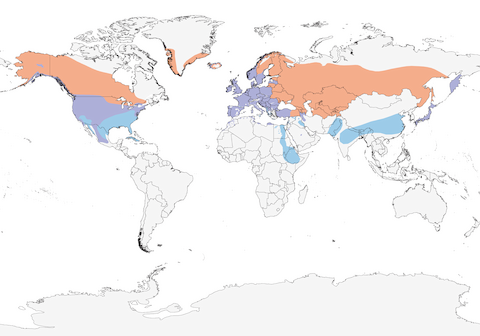
Year-round
Breeding
Nonbreeding
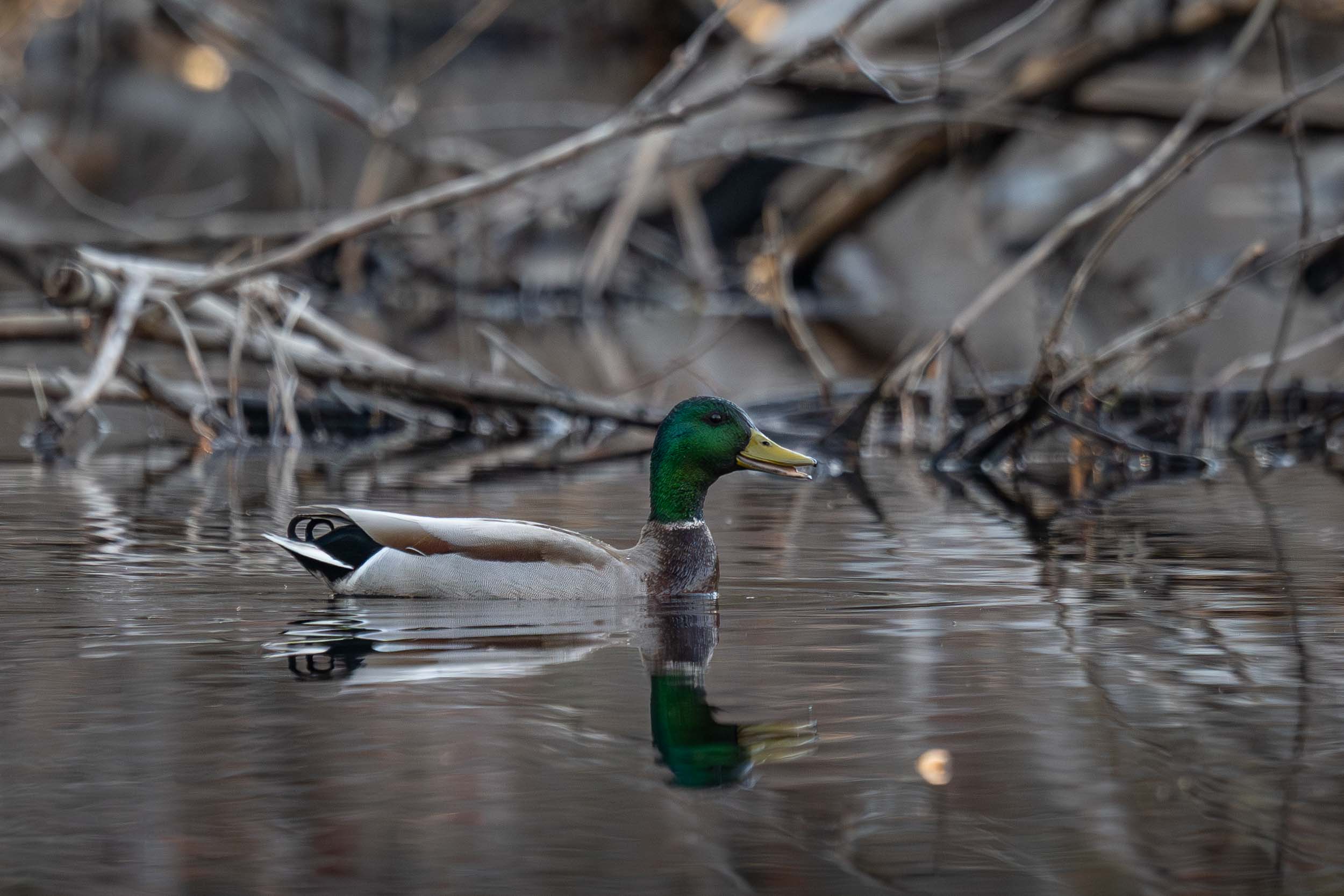
The Mallard is the most familiar duck across the Northern Hemisphere and the ancestor of most domestic ducks. The drake is unmistakable — a glossy green head, narrow white collar, chestnut breast, grey body and a curled black central tail feather — while the hen is mottled brown with an orange-and-dark bill. Both sexes show a blue speculum bordered white, and both have orange legs.
A dabbling duck, it feeds by tipping up in the shallows for seeds, aquatic plants and invertebrates, and will take grain wherever people gather. Pairs form in autumn and winter; the hen nests on the ground in cover near water, lays a large clutch and raises the brood alone, leading the ducklings to water soon after they hatch. Mallards hybridise readily with other ducks, which can complicate identification at the edges.
In Maine the Mallard is everywhere there is open water, resident through the year and easy to approach on town ponds and rivers. That familiarity is the trap — the head iridescence shifts from green to blue to black with the angle of light, so set up where the sun rakes across the head and hold for the moment the green fires. Hens and ducklings in soft light make better pictures than a hard-lit drake at noon.
The Mallard is listed as Least Concern and is among the most abundant and widespread ducks in the world, secure across a vast range and supported by wetland management and regulated hunting. Its principal conservation wrinkle is genetic rather than numerical: as an aggressive hybridiser it can swamp the gene pools of localised relatives such as the American Black Duck where ranges overlap. As a subject it is endlessly available and a good place to practise water and light.