Range & Distribution
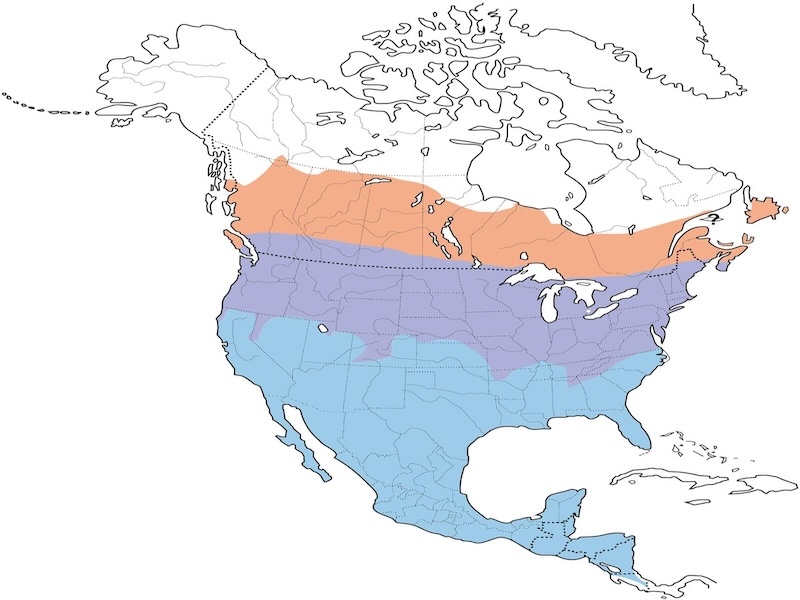
Breeding
Nonbreeding
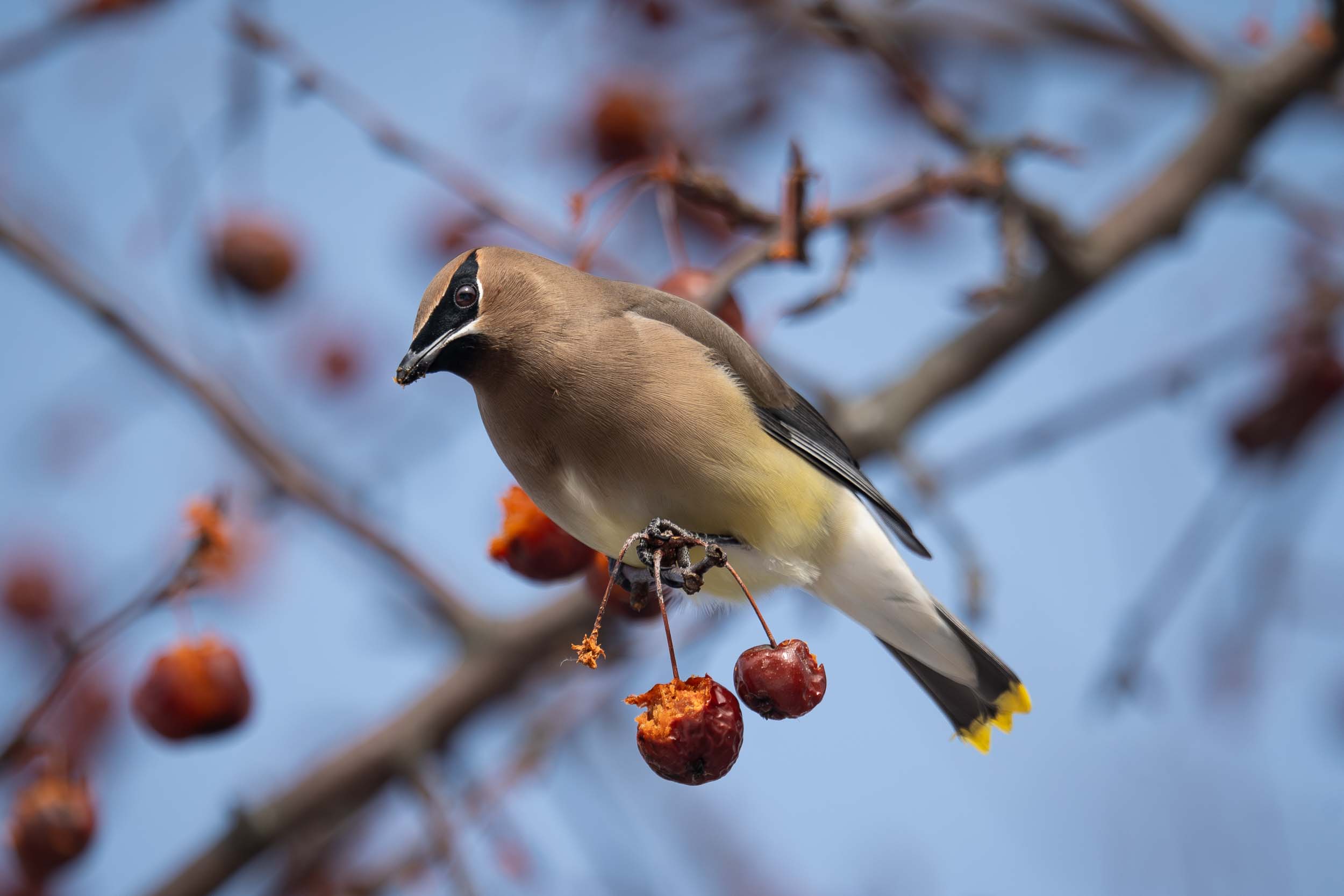
Few North American birds are more elegantly plumaged than the Cedar Waxwing — a silky, sleek bird with smooth blended plumage in tones of cedar brown, grey, and yellow, a black mask, prominent crest, yellow-tipped tail, and the waxy red droplets on the secondary feather tips that give the species its name. Flocks in flight produce a high, thin, sibilant contact call — a sound so closely associated with the species that experienced observers look up automatically upon hearing it.
The Cedar Waxwing is almost entirely frugivorous for most of the year, and its movements are dictated by fruit availability rather than fixed migratory routes. Large, nomadic flocks descend on berry-bearing trees and shrubs, strip them efficiently, and move on. Fruiting crabapples, junipers, mountain ash, and native berries like serviceberry and dogwood are particularly attractive. Fermented fruit can cause visible intoxication behavior in feeding flocks.
Flocks perched in fruiting trees, particularly in winter light, offer superb group portrait opportunities — the birds tend to perch in dense clusters, allowing multiple individuals in frame. The smooth, blended plumage renders beautifully in soft overcast light where the subtle color transitions are most visible without harsh shadows.
The Cedar Waxwing is abundant and increasing across North America, aided by the proliferation of fruiting ornamental trees in suburban and urban areas that provide reliable winter food sources. No conservation concerns apply. The species occasionally suffers mass mortality events from alcohol intoxication when feeding on overripe, fermented berries — documented events, though not a population-level concern.