
Range & Distribution
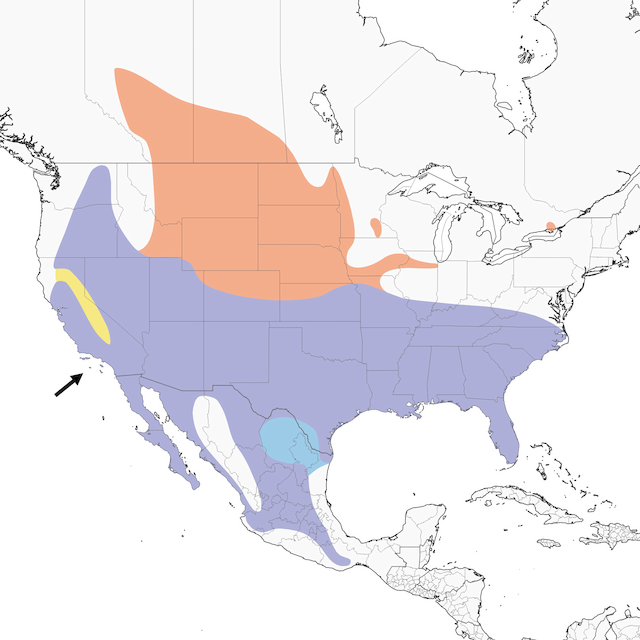
Breeding
Nonbreeding
The Loggerhead Shrike occupies an unusual ecological niche — a songbird that behaves like a small raptor, hunting vertebrate prey including lizards, mice, and small birds. Lacking talons, the bird uses its hooked bill to kill prey and impales carcasses on thorns, barbed wire, or sharp twigs to hold them while feeding and to cache surplus prey. These larders — known as 'butcher bird' caches — are one of the most distinctive and memorable behaviors in North American bird life.
The grey, black, and white plumage pattern — particularly the bold black mask and broad white wing patches visible in flight — gives the bird a clean, graphic appearance. Perched birds sit upright on exposed lookout posts: fence posts, power lines, and the tops of isolated shrubs in open country. The chunky head, hooked bill, and alert posture distinguish it from any confusable species.
Open country with scattered shrubby vegetation and perching posts in late autumn and winter offers the most reliable encounters. The bird hunts by visual scanning from exposed perches, descending to take prey in direct, low-level flight. A stationary, patient approach to a bird actively using a fence line or isolated shrub provides the best photographic access.
The Loggerhead Shrike has experienced severe long-term population declines across much of its range — estimated at over 70% since the 1960s in some regions. Loss of open grassland habitat, intensification of agriculture, reduction in large insect prey, and the removal of hedgerows and shrubby fence lines that provide both hunting perches and impaling substrates are the primary drivers. The species is listed as a Species of Conservation Concern across much of its range and is locally extirpated from portions of its former territory.