Range & Distribution
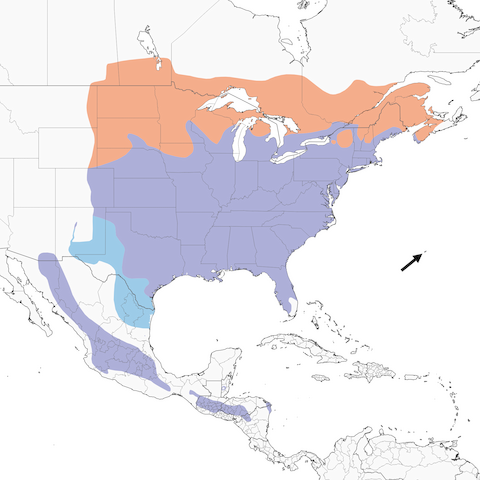
Year-round
Breeding
Nonbreeding
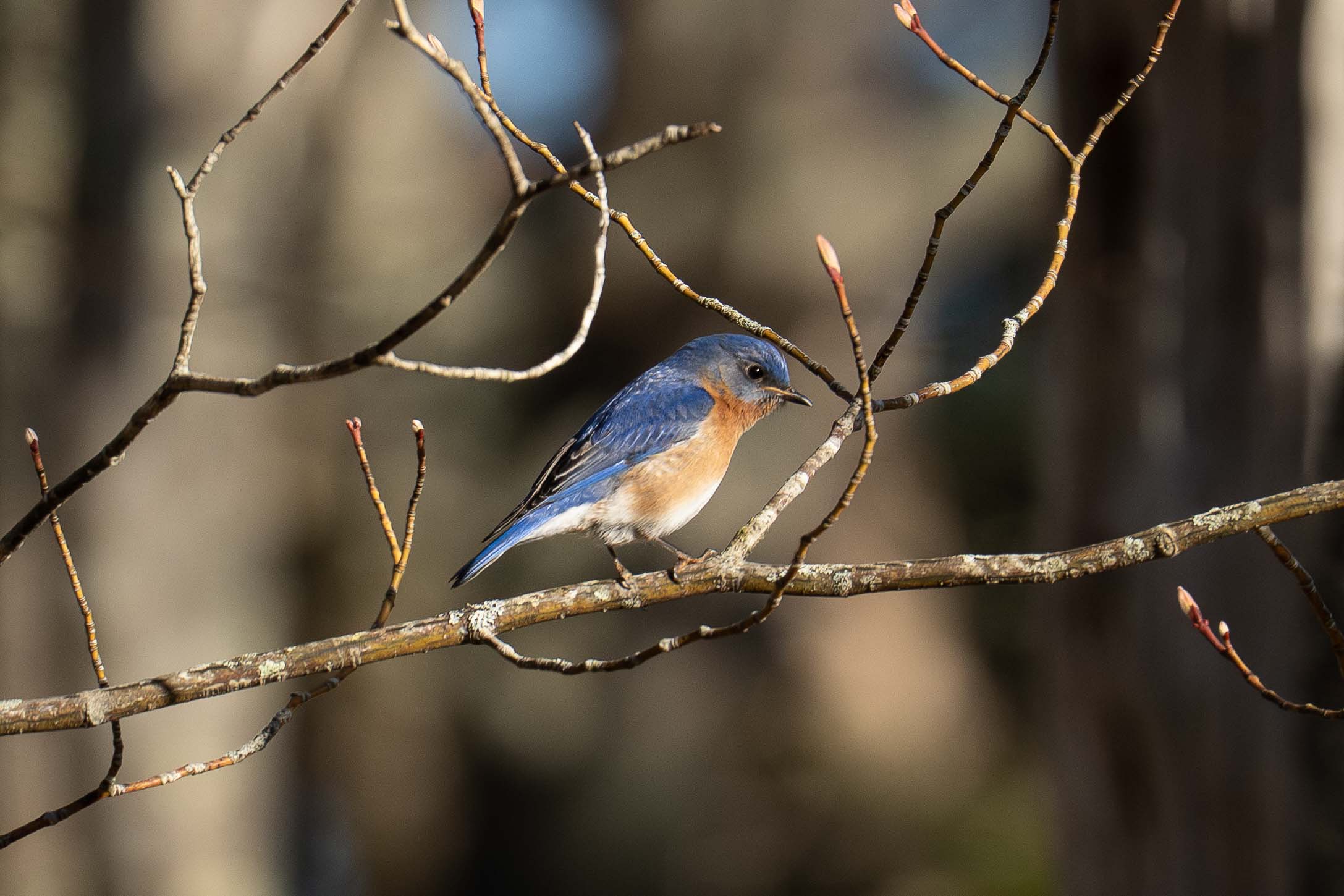
The Eastern Bluebird is a small, round-shouldered thrush of open country: the male is deep blue above with a rusty-orange throat and breast and a white belly, the female a softer grey-blue with the same warm breast. Perched upright on a wire or post it is unmistakable, and the blue flares brightest in direct sun against the bird's habit of dropping to open ground.
It hunts by watching from a low perch and dropping to the ground for insects — grasshoppers, crickets, beetles and caterpillars — and shifts to berries and fruit through the winter. A cavity nester, it uses old woodpecker holes and rotted snags and takes readily to nest boxes, where it raises two or even three broods a season in a cup of fine grasses.
In Maine the Eastern Bluebird breeds in open farmland, orchards and field edges, much of its presence owed to the nest-box trails that line back roads and pastures. Those boxes and exposed perches make it one of the more cooperative subjects — work a known box or a favoured wire and wait for the bird to perch clean and catch the light. Low morning sun is what turns the blue from dull to electric.
The Eastern Bluebird is listed as Least Concern and is a genuine conservation success: numbers fell sharply through the twentieth century as introduced House Sparrows and starlings took the cavities it needs, then recovered strongly once volunteers put up and maintained nest boxes across its range. It remains dependent on that help and on open habitat with nesting holes. Few birds show so clearly what attentive, low-tech conservation can do.