Range & Distribution
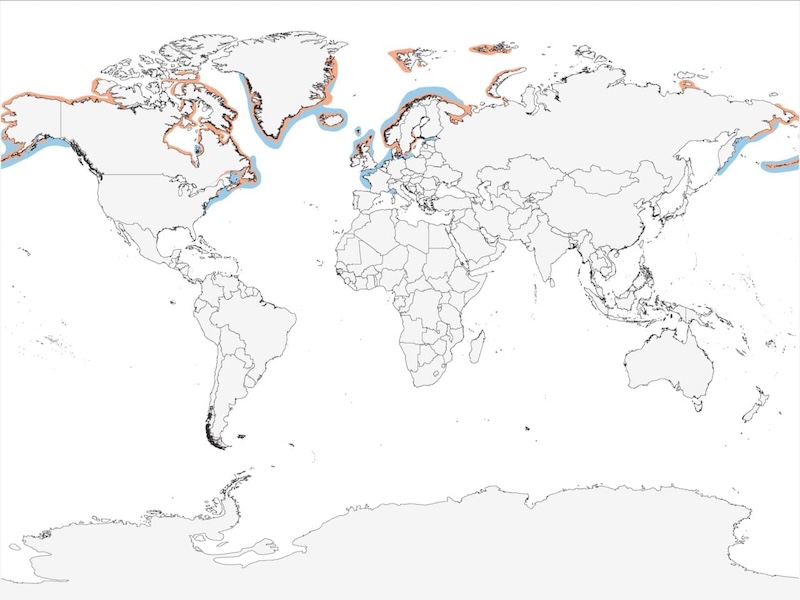
Breeding
Nonbreeding
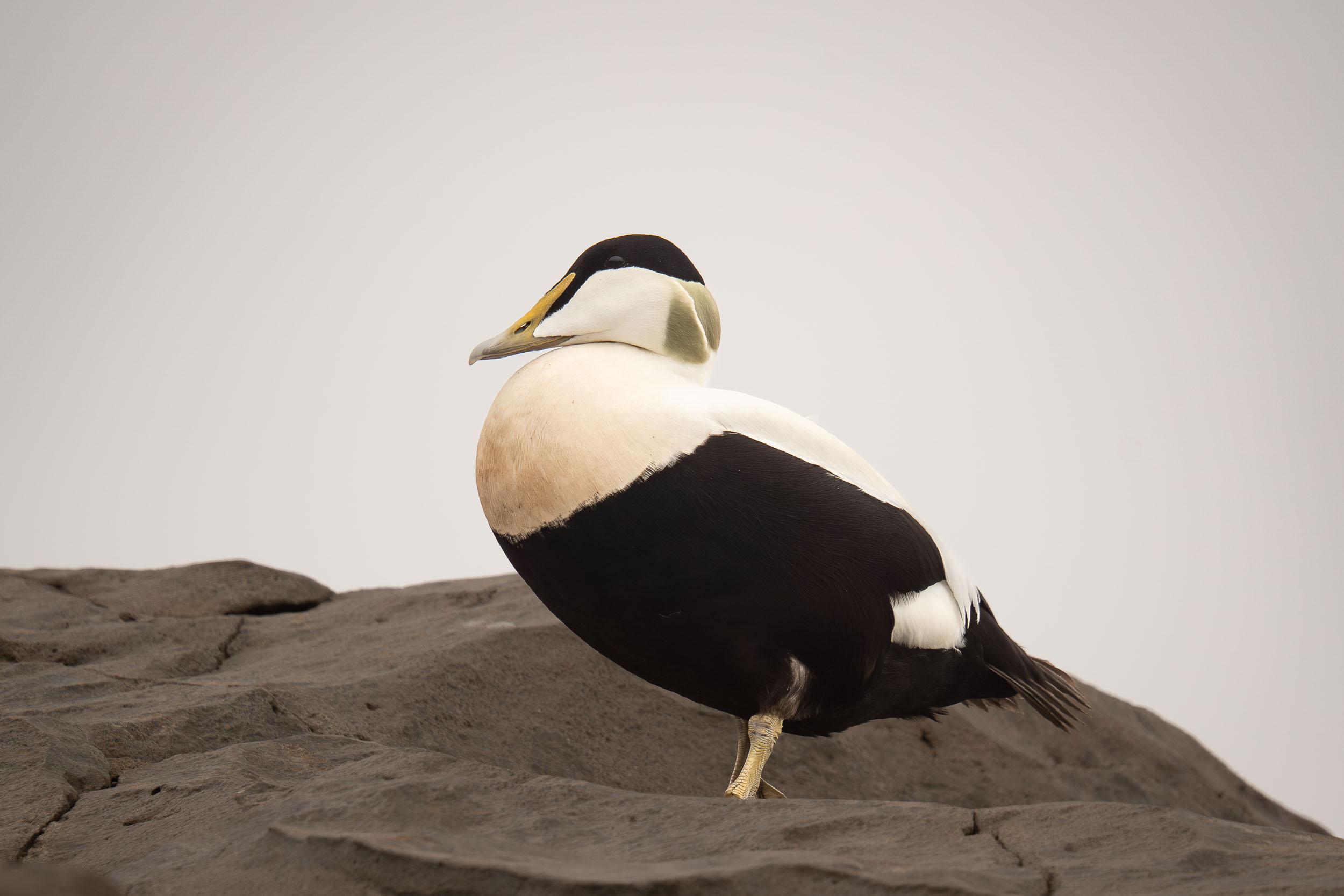
The Common Eider is the largest duck in the Northern Hemisphere, and the drake in breeding plumage is unmistakable: clean white above and across the breast, black below and on the cap, with a moss-green wash on the nape and a long wedge-shaped bill that runs almost straight into the forehead. The female is a warm grey-brown, closely barred all over — drab at distance but intricately marked up close, and built on the same heavy, long-bodied frame. Both sexes ride low and bulky on the water.
Eiders are sea ducks, rarely far from salt water. They feed by diving in shallow coastal water and tearing blue mussels from the bottom, swallowing them whole and crushing the shells in a powerful gizzard. Nesting is colonial on low islands, the female scraping a hollow and lining it with insulating down plucked from her own breast — the eiderdown long harvested for bedding. Ducklings from several broods gather into crèches shepherded by a few females.
On the Maine coast the Common Eider is the default large sea duck and the only eider that breeds in the eastern United States, nesting on spruce-fringed islands out in the Gulf of Maine and loafing on ledges and in harbor mouths year-round. Work them from a low vantage on shore or from a drifting boat with the sun behind you; the drake’s hard white plumage blows out easily, so meter for the highlights and let the dark flanks fall where they will. Calm, overcast light handles the contrast better than full sun.
The Common Eider is listed as Near Threatened: several major populations have fallen in recent decades, and the species’ tight dependence on shellfish beds and traditional nesting islands leaves it exposed. Threats include the decline and overharvest of mussel beds, marine pollution and oil, predation pressure on island colonies, hunting, and the effects of a warming ocean on its prey. Down harvesting, where it continues, is generally sustainable when done after the ducklings have left. Nesting colonies are sensitive to disturbance — keep well clear of island nests in the breeding season, when a flushed female exposes her eggs to gulls.