Range & Distribution
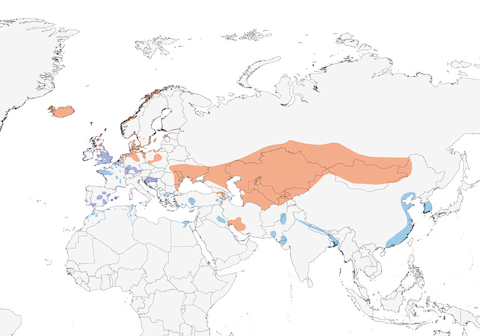
Year-round
Breeding
Nonbreeding
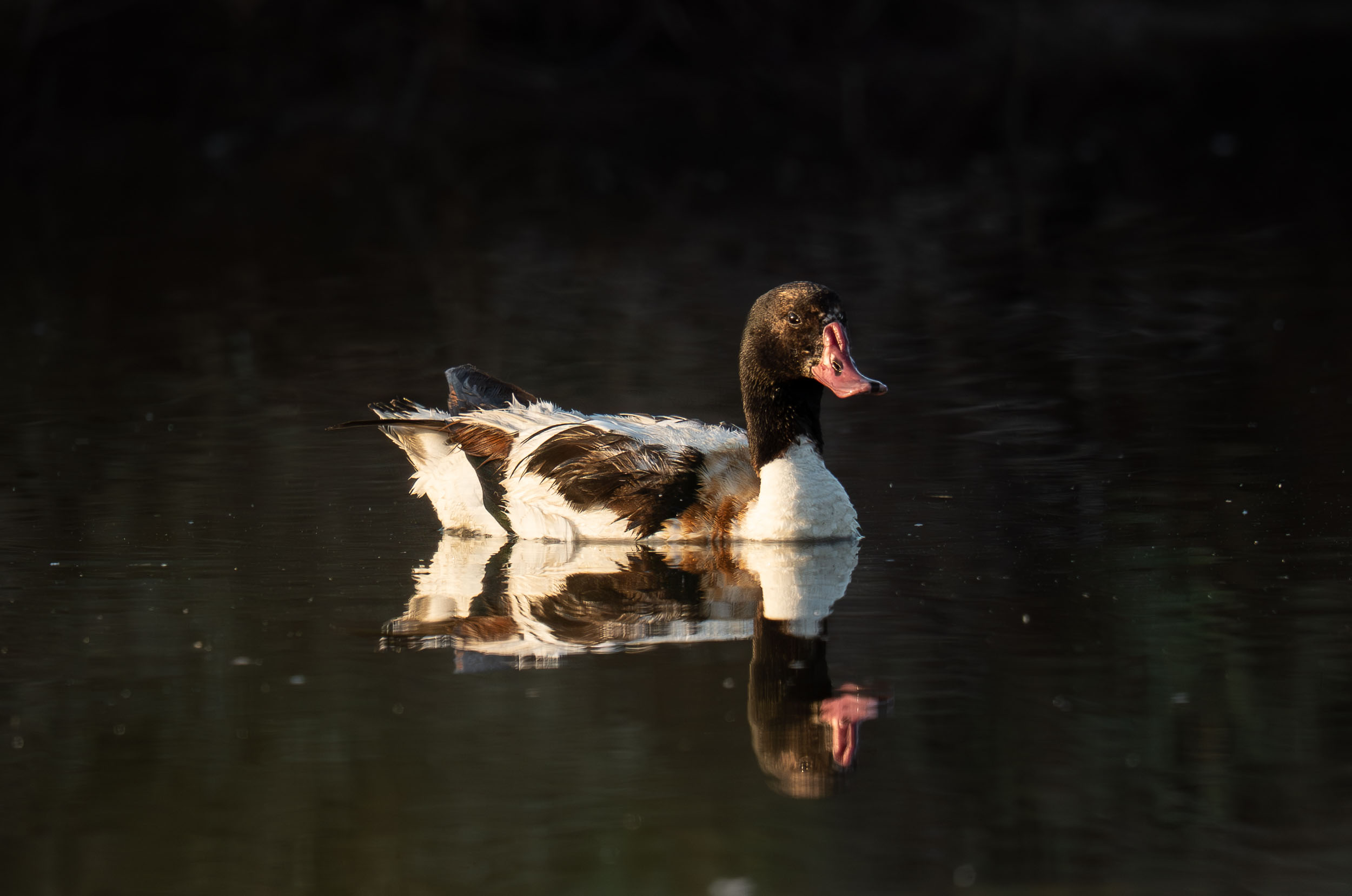
The Common Shelduck is a large, goose-like duck patterned in bold blocks of colour: a bottle-green head and upper neck that reads black at distance, a broad chestnut band wrapping the white breast and back, black scapular stripes, and pink legs. The bill is bright red, and the drake carries a pronounced knob at its base in the breeding season. Unusually for a duck, the sexes are similarly marked, the female only slightly duller and lacking the knob.
It is a bird of tidal flats and estuaries, feeding along the waterline by sweeping its bill from side to side through wet mud to sift out small snails and other invertebrates. Shelducks nest out of sight in cavities — most often a disused rabbit burrow, but also tree holes, haystacks or dense cover — and lead their ducklings to the shore, where broods often merge into large crèches tended by a few adults. After breeding, most of the European population undertakes a moult migration to a handful of traditional sites such as the Wadden Sea.
Shelducks are wary on open estuary mud and usually keep their distance, so fieldcraft is mostly about tide and patience: set up where a falling tide will bring feeding birds toward a fixed vantage or hide, and let them walk into range rather than approaching. The crisp white plumage overexposes easily against dark mud, so expose for the whites. Low, raking light early or late gives the cleanest separation from a reflective background.
The Common Shelduck is listed as Least Concern and has increased and spread across parts of its range since the mid-twentieth century, colonising new coasts and some inland saline waters. Its reliance on estuaries and tidal flats nonetheless ties it to habitats under steady pressure from land reclamation, pollution and disturbance, and its concentration at a few traditional moulting sites means large numbers can be affected by events at any one of them. Protecting estuarine feeding and moulting grounds is the practical key to keeping populations secure.