Range & Distribution
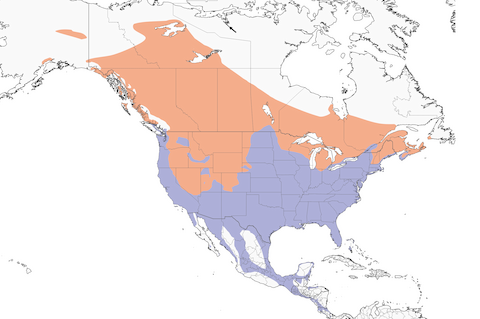
Year-round
Breeding
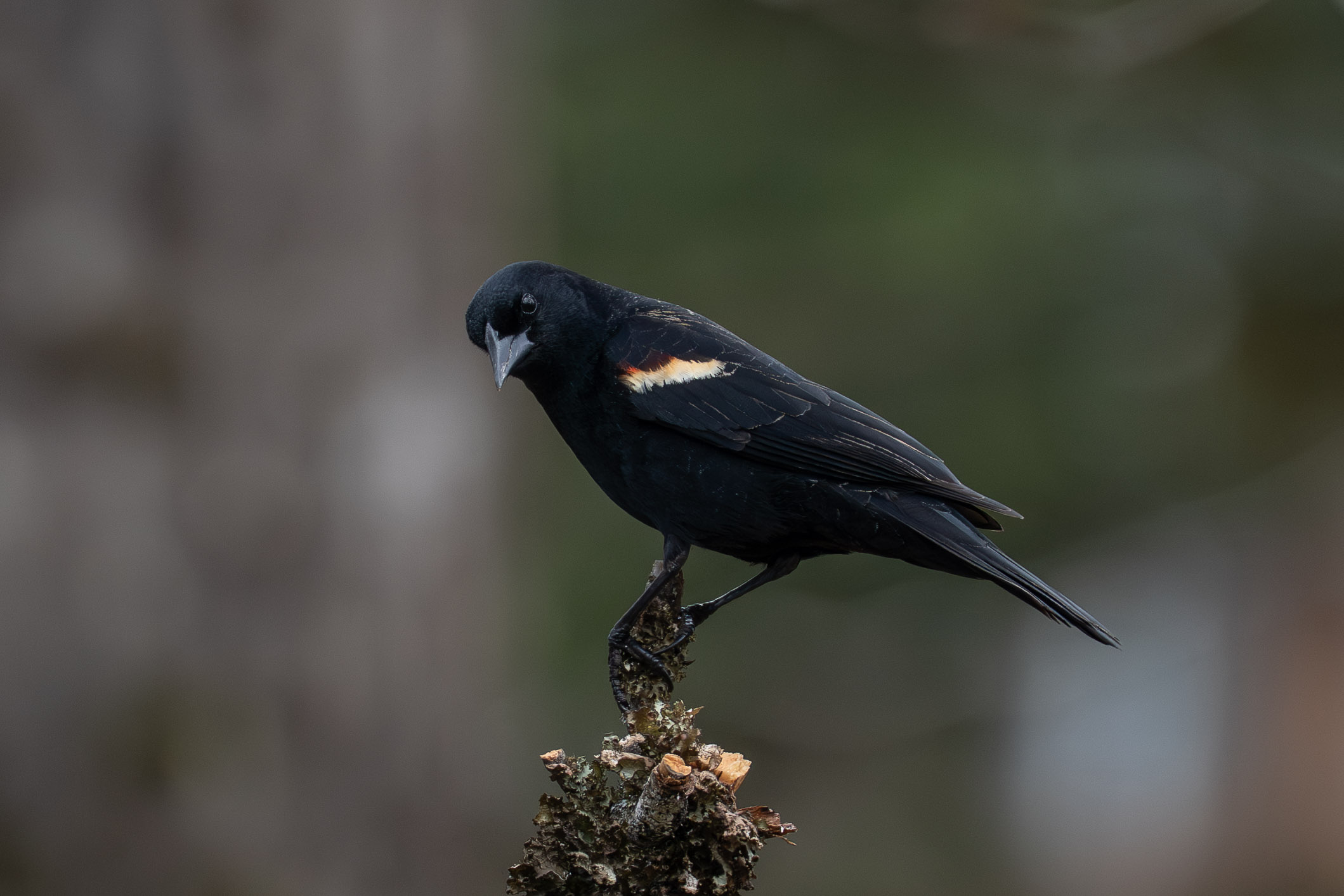
The male Red-winged Blackbird is glossy black with brilliant red shoulder patches edged buff-yellow, flared in display and half-hidden at rest; the female is an entirely different bird — heavily streaked brown and sparrow-like, easily overlooked. The two are among the most abundant and conspicuous birds of North American marshes, the male singing from a swaying cattail with his epaulets blazing.
It feeds mostly on seeds and waste grain, switching to insects through the breeding season, and gathers in vast flocks outside it. The species is strongly polygynous — a single male may hold a marsh territory shared by a dozen or more nesting females — and the bulky cup nests are lashed to standing cattails and reeds over water. The male's "conk-la-ree" is one of the first and surest signs of spring.
In Maine the Red-winged Blackbird is an abundant and early-returning breeder of marshes, wet meadows and roadside ditches, the males back on territory while ice still lingers. They display openly from prominent stems, which makes them one of the easier marsh birds to photograph — wait for a male to throw his wings forward and flare the red in song. Side light picks out the epaulet against the black; a clean reed completes it.
The Red-winged Blackbird is listed as Least Concern and remains one of the most numerous birds on the continent, secure across a huge range and adaptable to farmland and disturbed wetlands. It is sometimes treated as an agricultural pest where flocks descend on grain, but faces no broad threat. For a photographer it is a generous, accessible subject and a good place to learn marsh light.