Range & Distribution
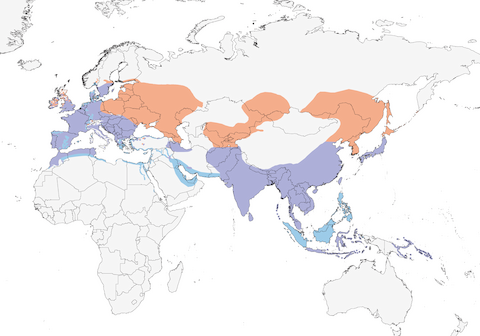
Year-round
Breeding
Nonbreeding
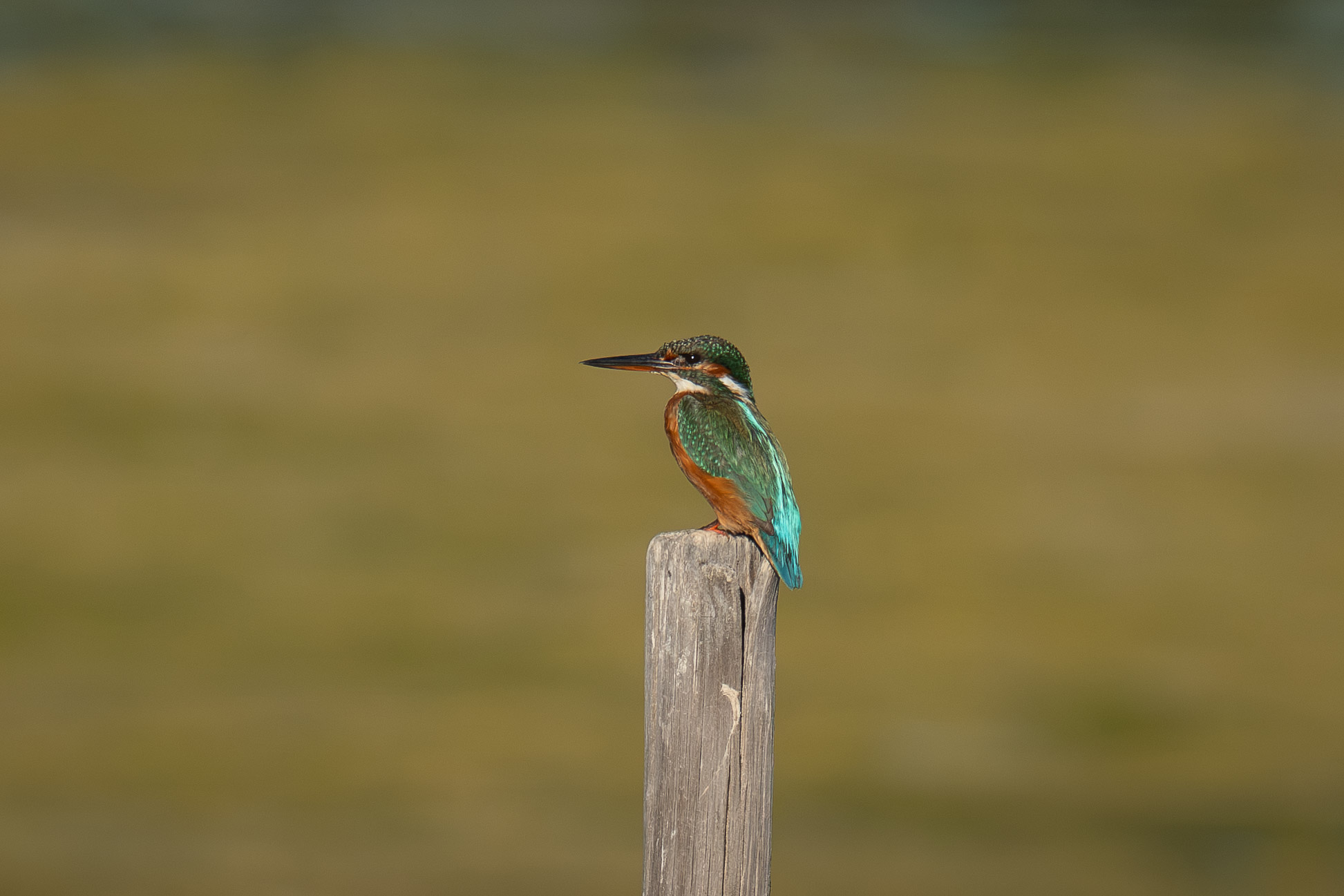
The Common Kingfisher is one of the most visually arresting birds in Europe — sparrow-sized, yet carrying a combination of electric blue and deep orange that stops the eye as effectively as any bird on the continent. The blue of the upperparts is structural rather than pigmented, shifting from turquoise to cobalt depending on angle and light quality, most vivid when seen from directly behind as the bird perches motionless above water. The chestnut-orange underparts and white throat patch complete a field mark combination that leaves no room for confusion with any other European species.
Hunting behavior is the defining behavioral feature. The bird selects a low perch — an overhanging branch, a trailing stem, the corner of a lock gate — and watches the water below, tilting its head to correct for refraction. The dive itself is over in under a second: a clean, minimal-splash entry, a moment of pursuit underwater wings partly opened to brake and steer, and a return to the perch with the fish held crosswise in the bill. The fish is then beaten against the perch, reoriented headfirst, and swallowed whole. The entire sequence from perch to perch is rarely longer than four or five seconds.
For photography, this species rewards patience and preparation more than opportunism. Locate a reliable territory and identify the favored perches — kingfishers are highly territorial and will work the same three or four spots throughout the day. A low shooting position level with the water surface gives the cleanest background separation and catches the reflection in calm conditions. The return from a successful dive, fish in bill, is the most consistently achievable behavioral shot. Overcast light handles the structural blue far more faithfully than direct sun, which tends to bleach the upperparts toward greenish-white and flatten the contrast with the orange.
Globally the Common Kingfisher is considered stable and is not under significant conservation pressure across its wide Eurasian and North African range. It is, however, sensitive to several localized threats. Water quality is fundamental — the species requires clear water to see and pursue fish, making it an effective indicator of freshwater health. Eutrophication and siltation of rivers and streams directly reduces feeding success. Severe winters are a significant natural mortality source; ice cover on watercourses eliminates access to prey and can cause population crashes in cold years, from which recovery typically takes two to three breeding seasons. In the United Kingdom the species is Amber-listed under the Birds of Conservation Concern framework, reflecting moderate population and range declines. Nest site availability can also be limiting where suitable earthen banks are scarce or disturbed by river management activities. The species benefits considerably from habitat restoration and water quality improvements, and has shown recovery in areas where rivers have been cleaned up following historical industrial pollution.