Range & Distribution
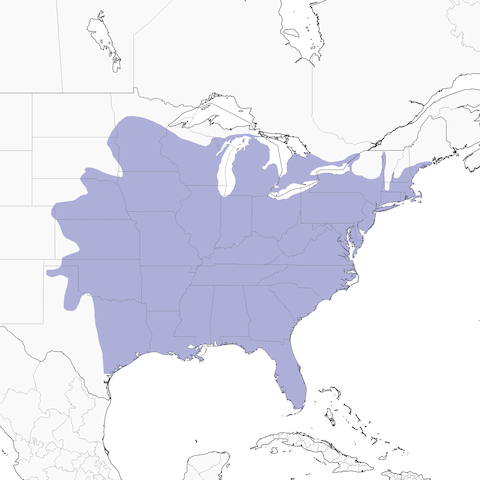
Year-round
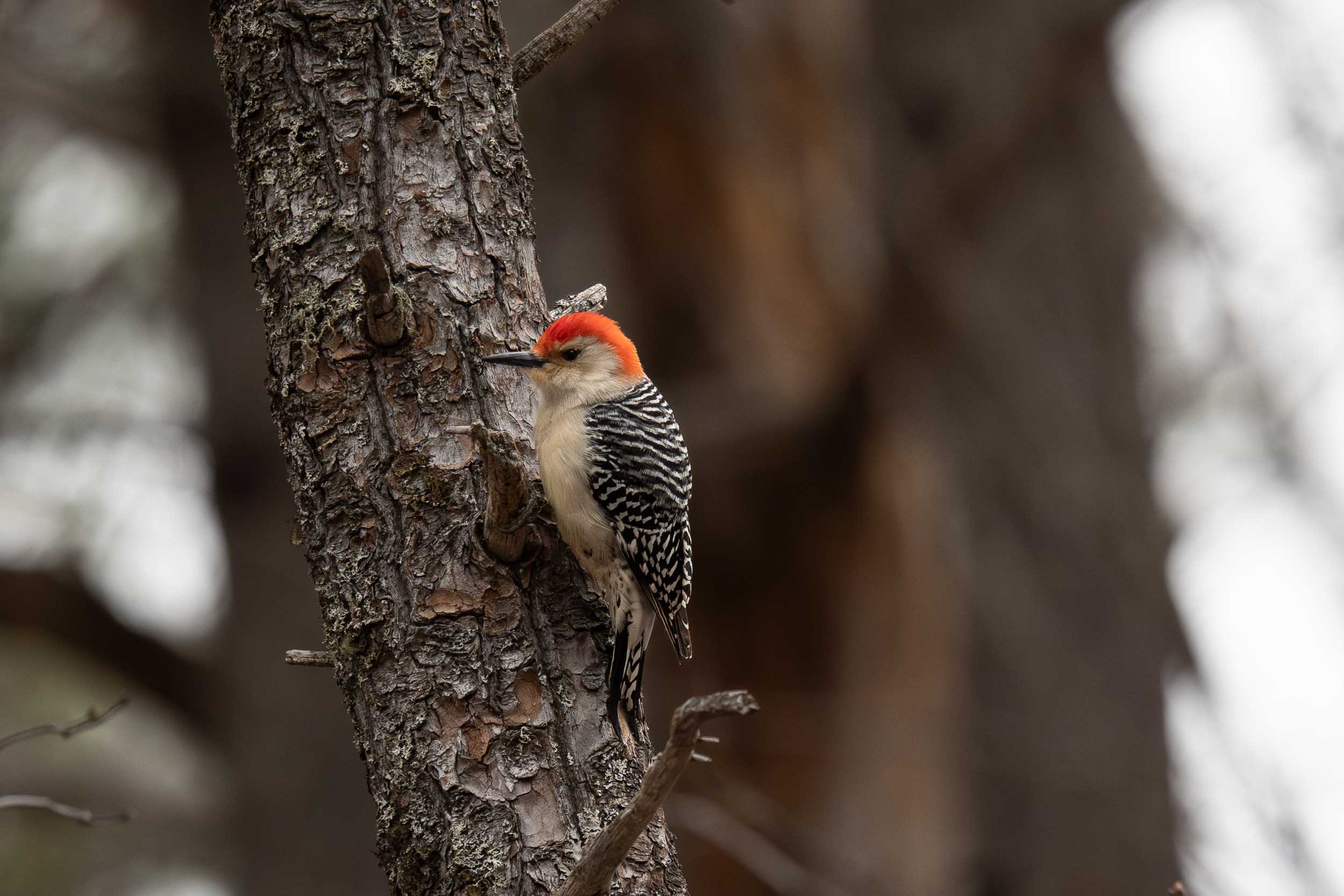
The Red-bellied Woodpecker is a medium-sized woodpecker with a boldly black-and-white barred ("zebra") back, pale grey underparts and a bright red cap. On males the red runs from the bill back over the crown to the nape; on females it covers only the nape, leaving the crown grey. The faint reddish wash on the belly that gives the bird its name is hard to see in the field and rarely the feature you notice first.
An omnivore, it takes insects, spiders, fruit, nuts, seeds and sap, wedging acorns and nuts into bark crevices to hammer them open and readily storing food. Pairs excavate a nest cavity in dead wood, both birds sharing the digging and the care of the young, and the loud rolling "churr" carries through eastern woodland. It comes freely to suet and seed feeders, which has helped its steady spread.
Long a southern bird, the Red-bellied Woodpecker has pushed north over recent decades and now reaches southern Maine, where it is most reliably found at woodland feeders. Feeders are the easiest approach: set a natural perch nearby, focus on it and let the bird come to you. The barred back can flicker into a moiré against a busy background, so choose a clean backdrop and enough depth of field to hold the pattern sharp.
The Red-bellied Woodpecker is listed as Least Concern, and its numbers and range are increasing — the species has expanded steadily northward, helped by maturing eastern forest and the popularity of backyard feeders. It depends on standing dead wood for nesting, so retaining dead limbs and snags in woodlots supports breeding, but it faces no significant threat at present. Its spread is one of the clearer recent examples of a bird shifting north as conditions change.