Range & Distribution
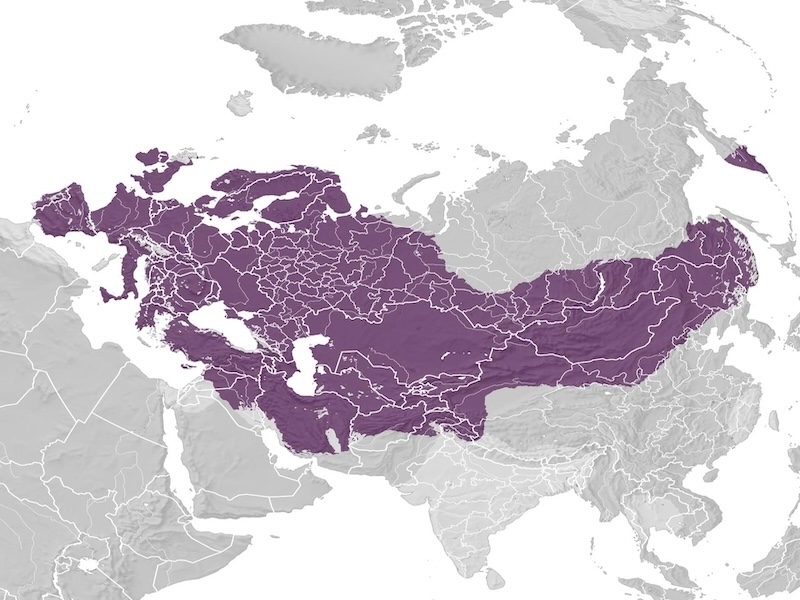
Year-round
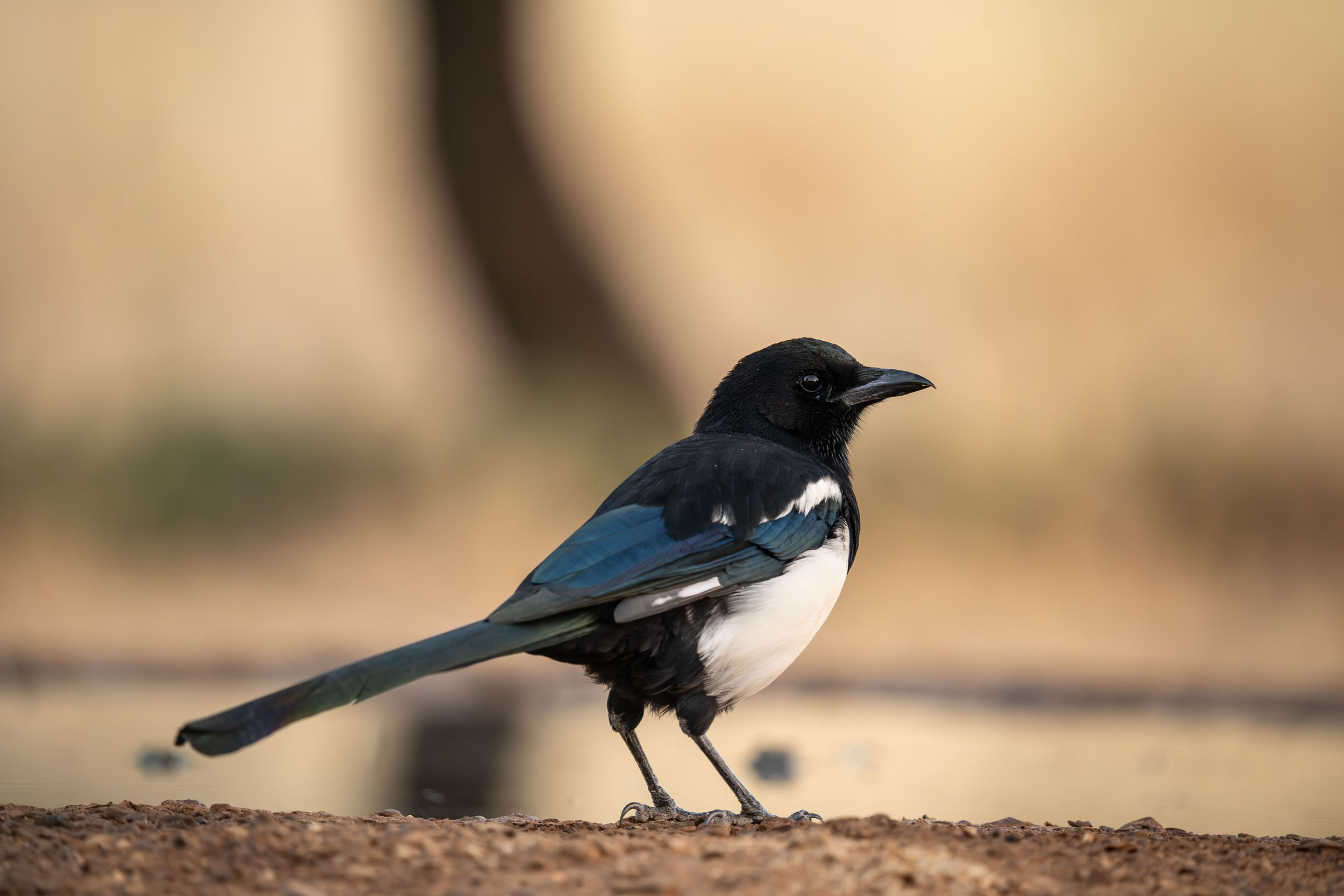
The Common Magpie's bold black and white plumage — with the iridescent blue-green sheen of the wing and tail visible in good light — makes it one of the most visually striking corvids. The long, graduated tail, composing well over half the bird's total length, is immediately distinctive in flight. The iridescence of the closed wing and tail, shifting from blue to green depending on the angle of light, rewards close observation.
Among the most cognitively capable of birds, the Common Magpie has been demonstrated to recognize itself in mirrors — one of only a handful of non-human animals to show this ability, and the first non-mammal demonstrated to do so. Social behavior is complex, including alarm-calling networks, mobbing of predators, and what appear to be ritualized responses to the deaths of other magpies.
The species' tolerance of human presence in suburban and urban settings, combined with its large size and bold plumage, makes it one of the more accessible corvids for close-range photography. Overcast light renders the iridescence most evenly, eliminating the highlights that can obscure the structural color in strong sunlight. Individuals habituated to a particular garden or park can be watched over extended periods.
Among the most adaptable and successful birds in Europe and Asia, the Common Magpie faces no conservation concerns. The species has colonized urban environments extensively and is now one of the most familiar corvids in European towns and cities. Its intelligence, behavioral flexibility, and omnivorous diet allow it to exploit a wide range of food sources and habitats.