Range & Distribution
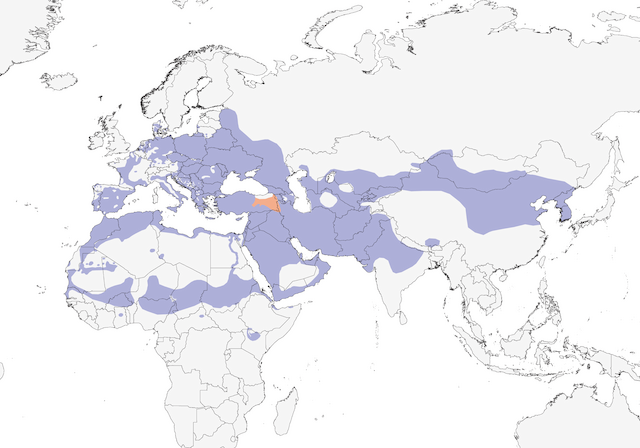
Year-round
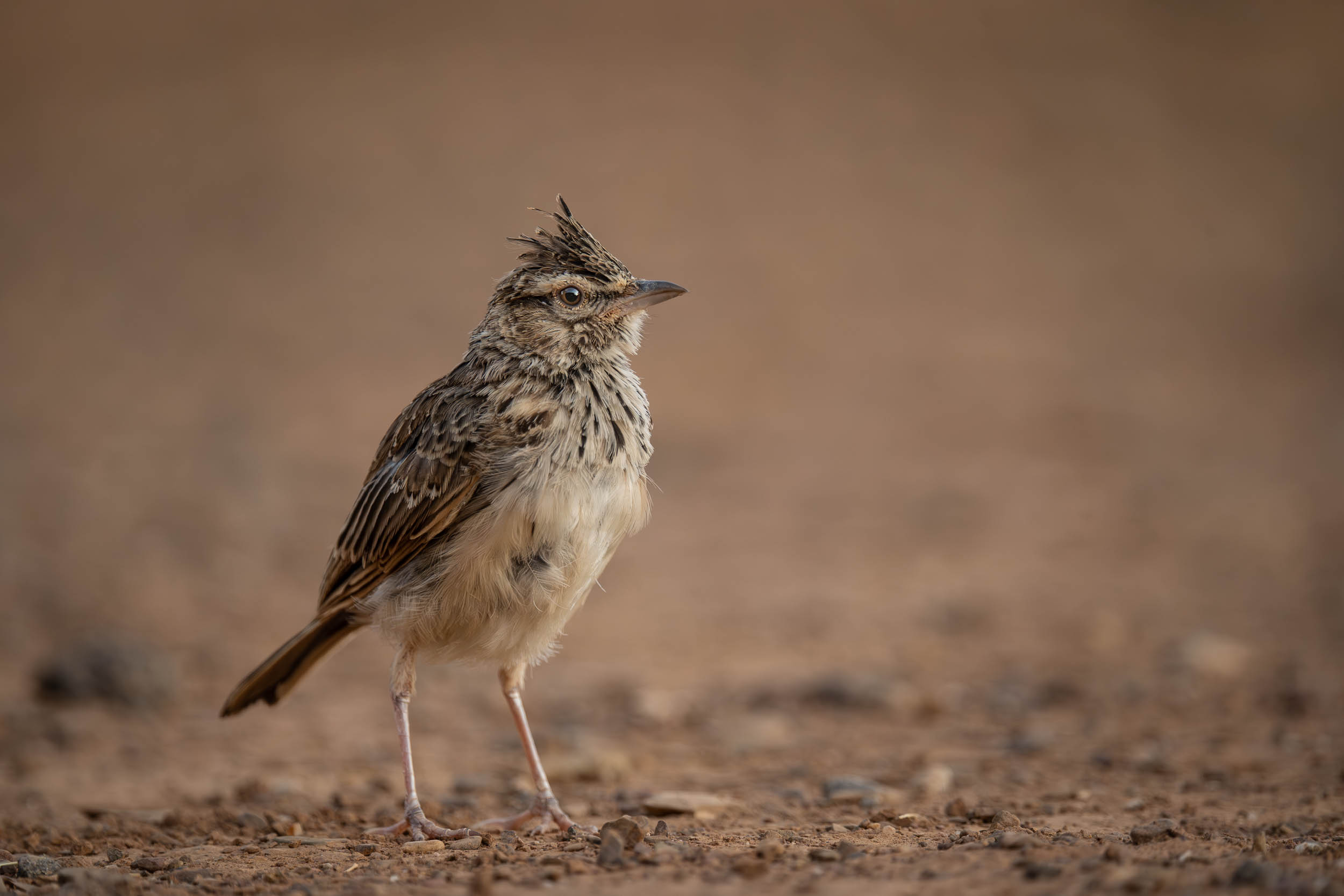
The Crested Lark is a bird of bare, dry open ground — roadsides, ploughed fields, track margins, wasteland, and semi-arid scrub — throughout its range. The prominent pointed crest, raised or lowered in response to the bird's alertness, is the single clearest field mark and distinguishes it from the similar Skylark at a glance. The warm sandy-brown streaked plumage provides excellent camouflage against the pale bare ground it prefers.
The song is rich and varied — melodious phrases delivered from the ground or in undulating song flight, often beginning with characteristic whirling notes. Unlike the Skylark, the Crested Lark rarely climbs to any height to sing, preferring exposed ground perches or low fence posts. The song period begins earlier in the year than most larks, with singing recorded in mild winters from February onward.
Roadsides and track margins in warm, dry lowland areas of Spain, Portugal, and the Mediterranean are the most reliable locations across the western range. The bird often allows a remarkably close approach in areas where vehicle traffic is regular, having habituated to passing disturbance. Low-angle photography from a vehicle window — which the bird is less likely to flush from than a standing observer — often yields the best results.
Despite being globally listed as Least Concern, Crested Lark populations have declined significantly across much of Europe — by over 50% in several countries — primarily due to the intensification of agriculture, which eliminates the weedy arable margins, fallow fields, and bare ground tracks the species depends on. It is listed as threatened or near-threatened across much of western Europe and has become a conservation priority bird in several countries.