Range & Distribution
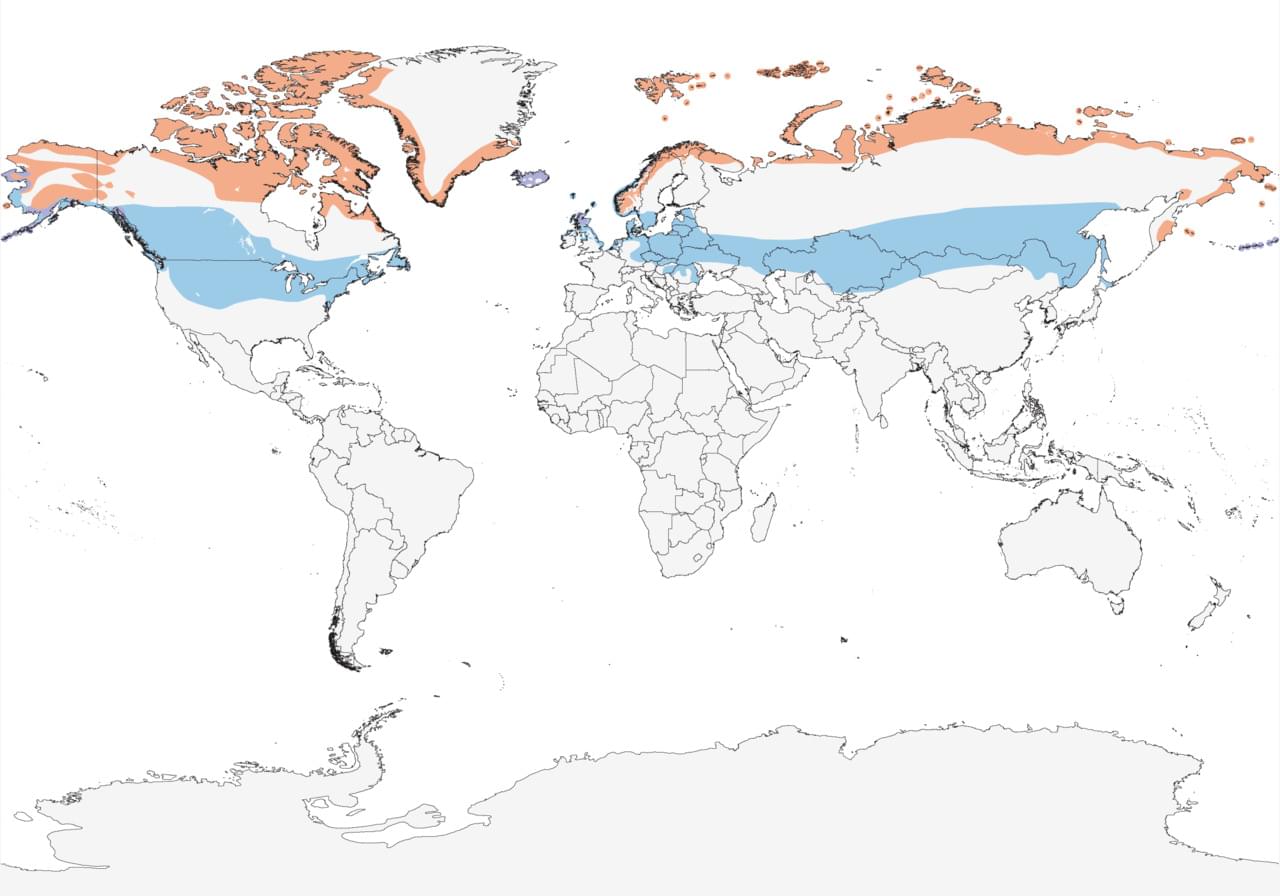
Breeding
Nonbreeding
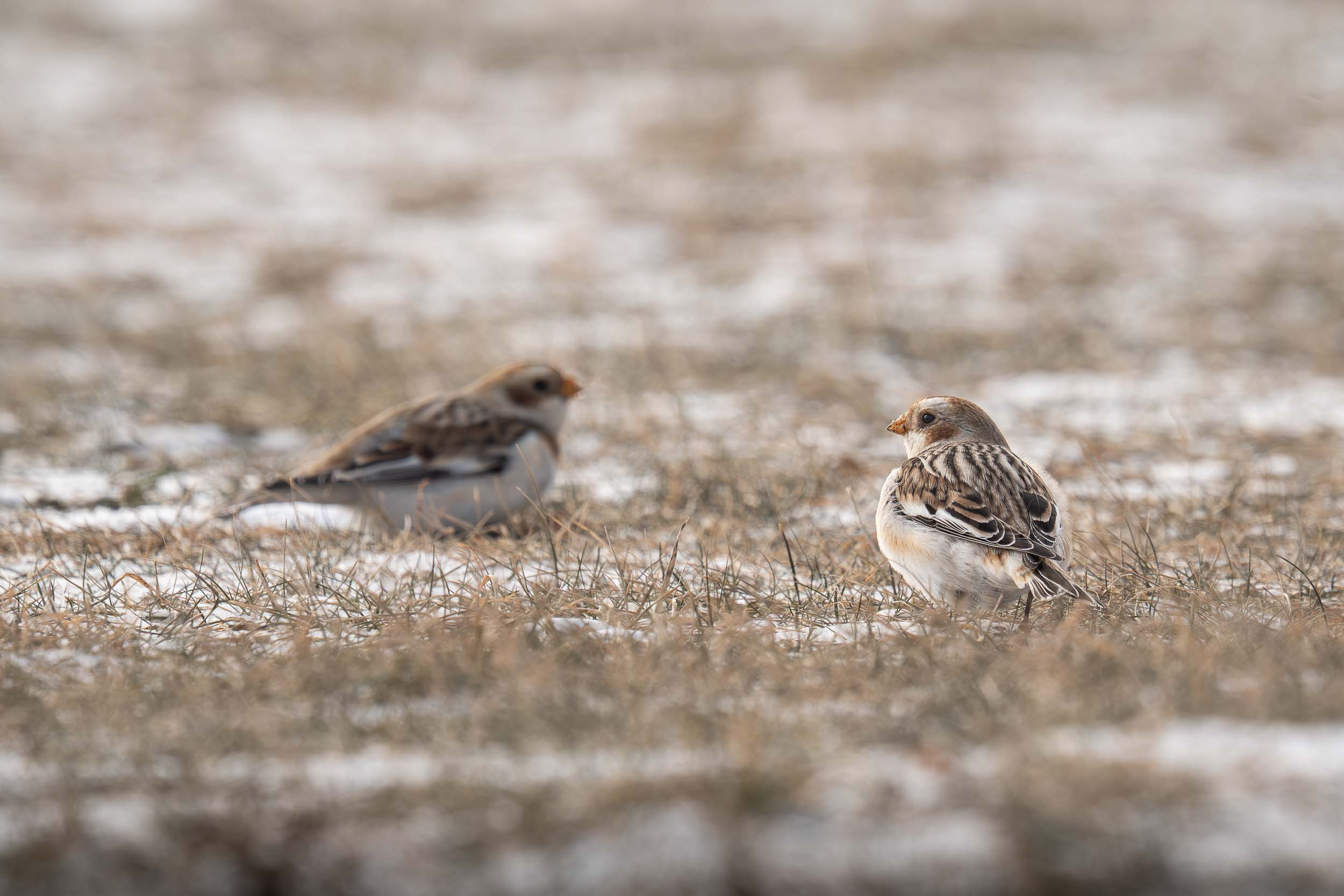
The Snow Bunting is the most northerly breeding songbird in the world, nesting in rocky Arctic terrain where few other passerines venture. Breeding males are among the most striking of small birds — snow-white with jet black back and wingtips — while females and winter birds are more streaked brown and buff. In flight, the large white wing patches flash conspicuously against darker wingtips.
In winter, Snow Buntings are birds of open, windswept coastal and upland landscapes — beaches, dunes, sea walls, and rough grassland. Flocks move nomadically in response to food availability, descending unpredictably on suitable areas and departing just as quickly. The birds feed actively on the ground, often running rapidly over bare sand or frozen soil to pursue wind-blown seeds.
Winter beach habitats — particularly exposed barrier beaches and dune systems — are the most reliable locations to encounter this species in eastern North America and northwestern Europe. Flocks are often wary and will flush repeatedly before settling to feed. A low approach from downwind, keeping below the skyline, gives the best chances of extended observation. The white plumage against a pale winter sky or white sand background demands careful exposure compensation.
While globally still listed as Least Concern, Snow Bunting populations have shown concerning declines across much of the Arctic breeding range, with studies pointing to climate-driven habitat changes and shifts in insect prey availability during the breeding season. As a high-Arctic specialist, the species faces disproportionate exposure to rapid climate warming at its breeding grounds. Winter population monitoring is complicated by the nomadic nature of wintering flocks.