Range & Distribution
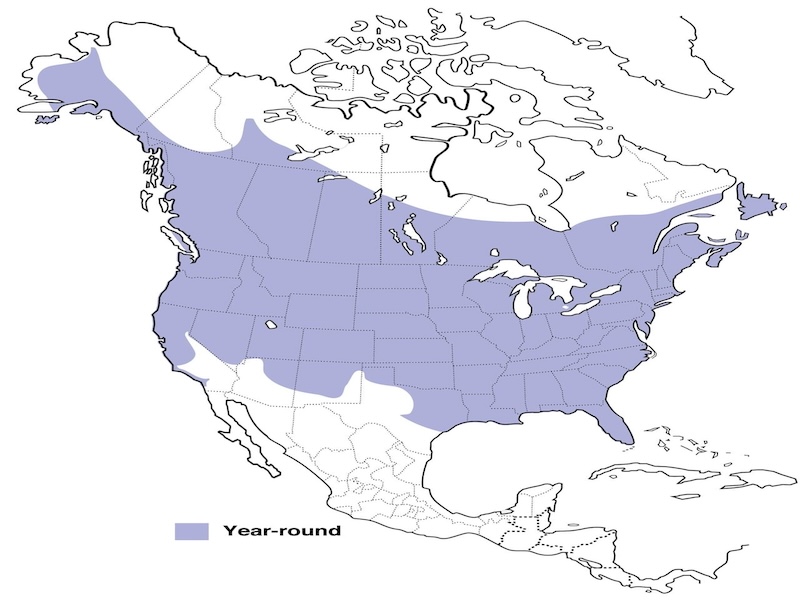
Year-round
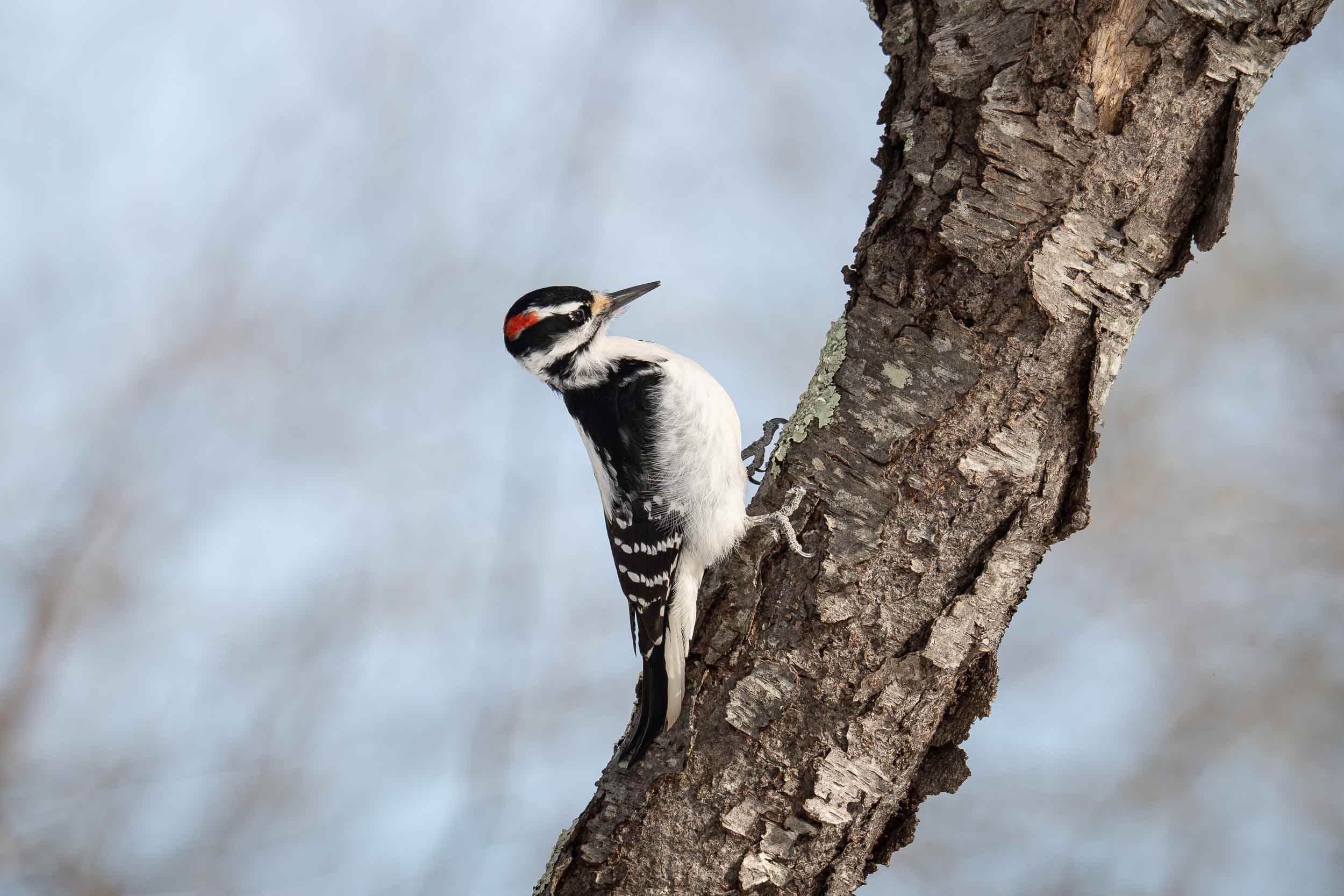
The Downy Woodpecker is the smallest woodpecker in North America and one of the most familiar woodland birds across the continent, readily visiting suet feeders and adapting to suburban habitats where larger woodpecker species are less common. The bold black-and-white pattern, with a white back stripe and spotted wings, and the small red nape patch of the male are the primary field marks.
The Downy and Hairy Woodpecker are frequently confused — the two species are nearly identical in plumage pattern, though the Hairy is substantially larger and has a proportionally much longer bill. In mixed forest, both species often forage on the same trees, which provides useful direct comparison. The Downy's small bill, barely longer than the depth of the head, is the clearest separator.
Foraging behavior involves systematic searching of bark surfaces and dead wood for invertebrates — moving up a trunk in short hops, probing crevices and scaling bark. Dead standing trees and large deciduous branches with exposed heartwood are productive foraging sites. At suet feeders, the birds are tolerant of close observation and return predictably throughout the day.
The Downy Woodpecker is abundant and widespread across North America, adapting readily to a variety of wooded habitats including suburban areas, orchards, and parks. No conservation concerns apply. The species frequently associates with mixed foraging flocks in winter, moving through woodland with chickadees, nuthatches, and other small birds.