Range & Distribution
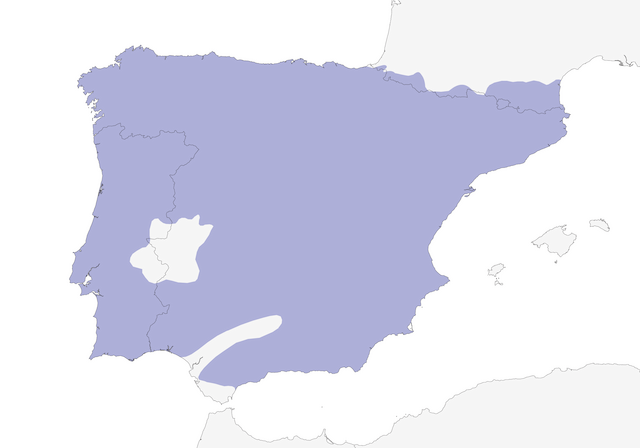
Year-round
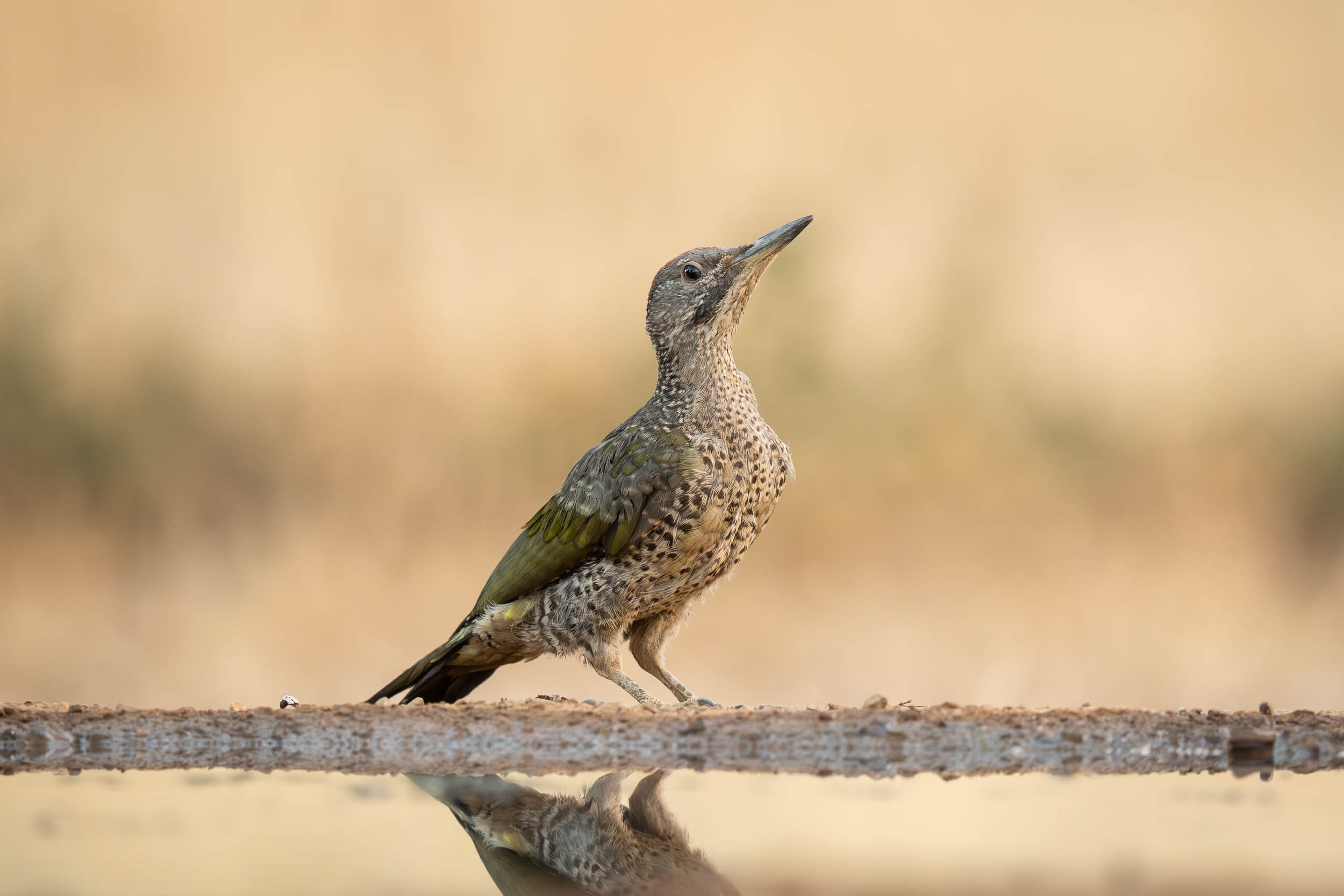
The Iberian Woodpecker is a large, impressive woodpecker — mostly green above with a grey face, red crown, and pale yellow-green underparts. It is closely related to the European Green Woodpecker and was long treated as a subspecies, but the two are now widely accepted as distinct species based on differences in plumage, vocalizations, and genetics. The Iberian form lacks the black face mask of the Green Woodpecker.
An ant specialist, the Iberian Woodpecker forages largely on the ground, excavating ant nests in bare soil and turf with its powerful bill and extracting ants with a long, sticky tongue. The distinctive laughing call — a loud, carrying series of notes — is typically heard well before the bird is seen, and is the primary means of locating the species in suitable habitat.
Open dehesa woodland — the characteristic savanna-like landscape of cork oak and holm oak scattered over grazed grassland — is the most productive habitat across the Iberian range. Birds are conspicuous when on the ground or moving between trees, and the large size relative to other forest woodpeckers makes them easier to locate and approach than smaller species.
Until recently treated as a subspecies of the European Green Woodpecker, the Iberian Woodpecker is now recognized as a full species endemic to the Iberian Peninsula. It is common and stable within its restricted range, and faces no significant conservation concerns. Its dependence on open oak woodland — particularly the traditional dehesa landscape — links its long-term status to the maintenance of this culturally and ecologically significant habitat type.