Range & Distribution
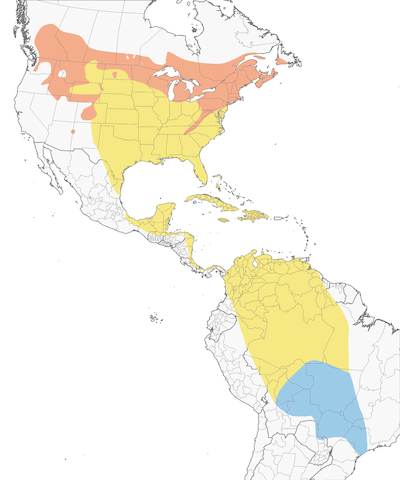
Breeding
Migration
Nonbreeding
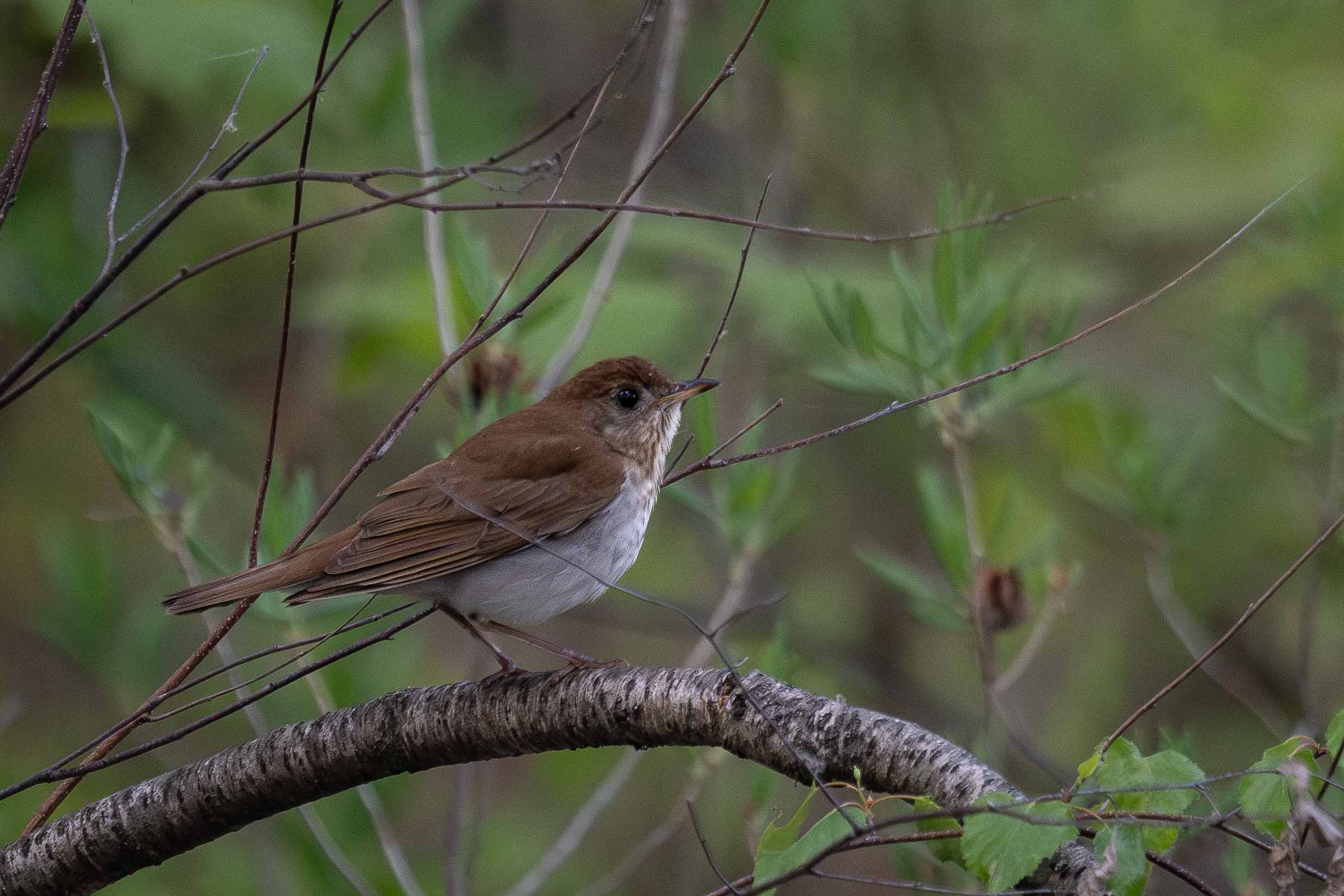
The Veery is the plainest of the spotted thrushes — uniformly warm cinnamon-brown above, whitish below, with only faint, blurry spotting on a buff-washed breast and a nearly blank face. That very plainness identifies it: where the Hermit and Wood Thrushes are boldly spotted, the Veery is smooth and rufous, a low-key bird of the forest floor.
It forages mostly on the ground, hopping and flipping leaves for insects in summer and turning to berries and fruit by late summer and autumn. The nest is built on or near the ground at the base of a shrub, where the female lays three or four eggs. The Veery is a long-distance migrant, wintering in central and southern Brazil, and it is best known not for its looks but for its voice.
In Maine the Veery breeds in damp, shrubby deciduous woods, and its song is one of the iconic sounds of the northern summer — a breezy, downward-spiralling cascade of reedy "veer" notes delivered at dusk from deep cover. That habit makes it a bird more often heard than photographed; the chance comes at the edges of its damp thickets in low light, where patience and a clean understory perch matter more than reach.
The Veery is listed as Least Concern, but it has declined across much of its range, pressured at both ends of its journey by the fragmentation of damp northern breeding woods, heavy deer browsing of the understory it nests in, and the loss of Amazonian forest where it winters. As a ground-nester it is also vulnerable to nest predators and cowbirds in broken-up habitat. Its haunting song depends on large, undisturbed tracts of moist woodland.