Range & Distribution
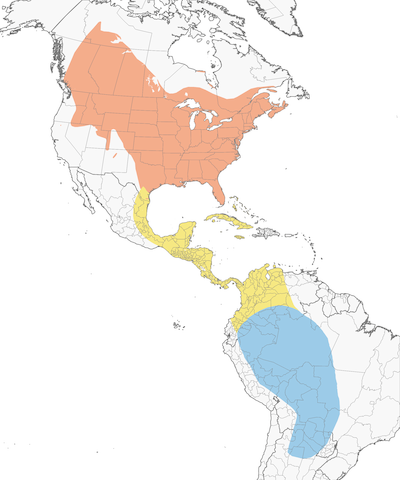
Breeding
Migration
Nonbreeding
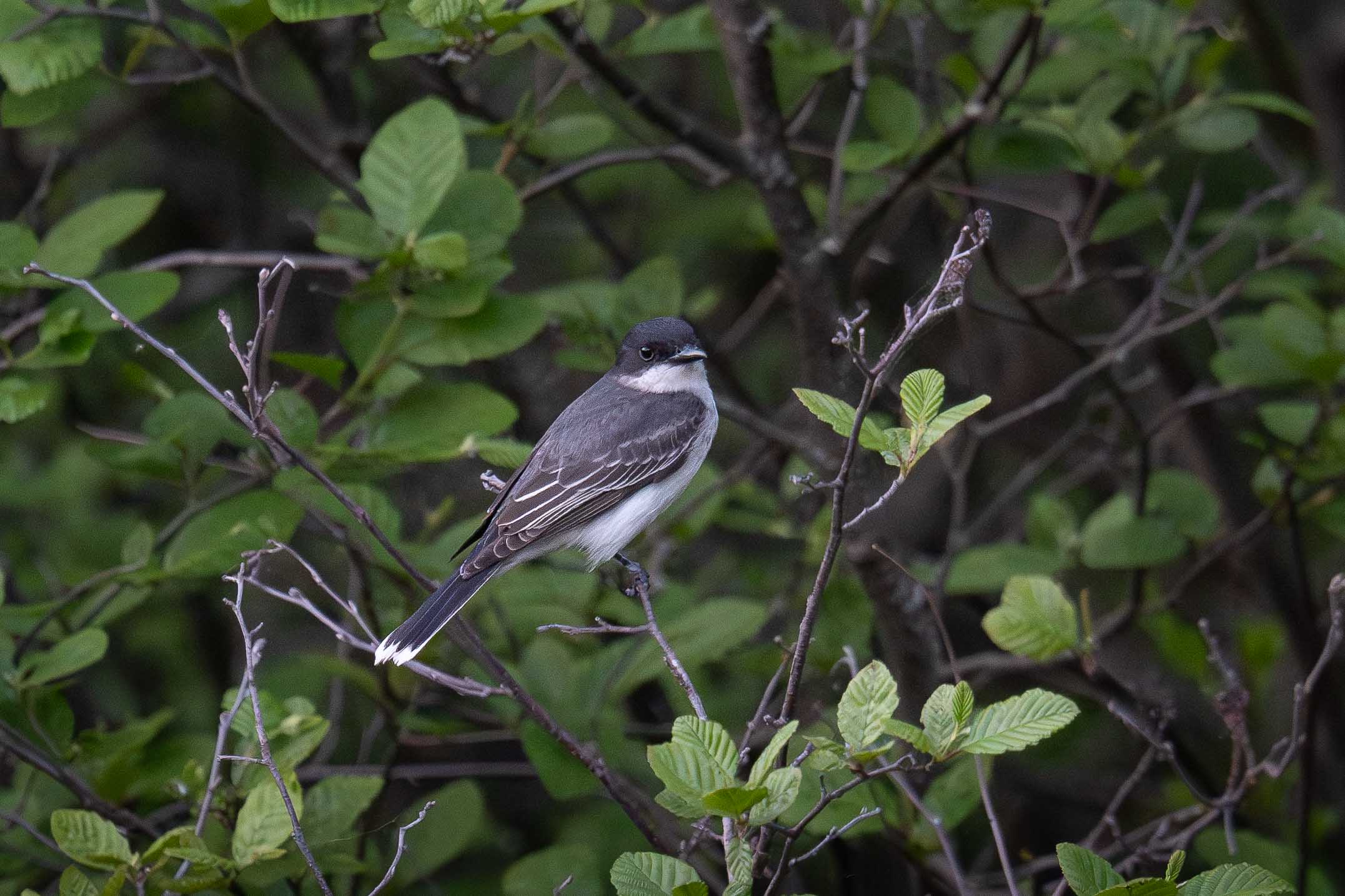
The Eastern Kingbird is a boldly patterned flycatcher — slate-black above and clean white below, with a black tail crisply tipped white at the end; a concealed crown patch of red is almost never seen in the field. Upright and alert on an exposed perch over open country, the white-banded tail and the sharp black-and-white contrast identify it at a glance.
It is an aggressive, sally-hunting flycatcher that takes insects on the wing through the breeding season, and its scientific name, Tyrannus tyrannus, captures its temperament — it fearlessly mobs crows, hawks and anything else that strays near its nest, and that very aggression shelters other birds nesting nearby. On its South American wintering grounds it changes character entirely, travelling in flocks through the Amazon and feeding largely on fruit.
In Maine the Eastern Kingbird breeds in open country with scattered trees — field edges, hedgerows, shorelines and beaver flowages — perching conspicuously on wires, dead snags and tall weeds. Its habit of using prominent, open perches makes it one of the more cooperative flycatchers to photograph; work a hunting bird from a low angle and wait for it to return to a clean perch. The white tail-band reads best against a dark background.
The Eastern Kingbird is listed as Least Concern but has declined gradually across parts of its range, tied to the loss of the open and edge habitats it favours and, like many aerial insectivores, to broad reductions in flying-insect prey. Its dependence on intact Amazonian forest in winter adds a second pressure far from its breeding grounds. Keeping open country with scattered trees and snags supports it through the nesting season.