Range & Distribution
Year-round
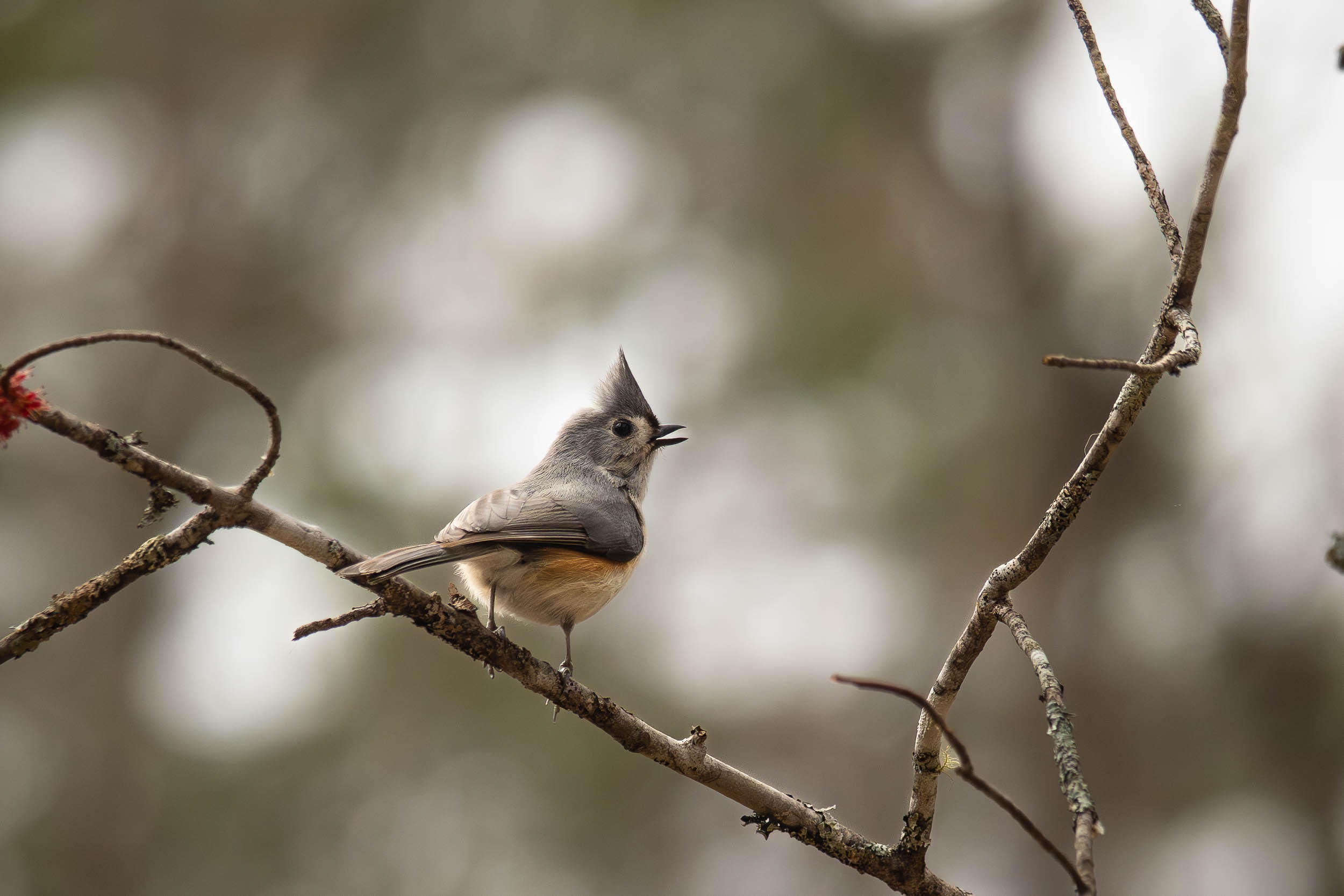
The Tufted Titmouse is a small, active grey bird with a jaunty pointed crest, large black eyes in a plain face, a small black patch above the bill, and a soft peach wash along the flanks. Acrobatic and vocal, it is a familiar presence in eastern woods and at feeders, where its clear, whistled "peter-peter-peter" is one of the steadiest sounds of the year.
It eats insects — caterpillars especially — through the summer and shifts to seeds, nuts and acorns in colder months, often hammering a seed open while holding it underfoot and caching food in bark crevices for later. A cavity nester, it lines its nest with soft material and will boldly pluck hair from live mammals to do so. Young titmice often stay with their parents into winter and sometimes help raise the next year's brood.
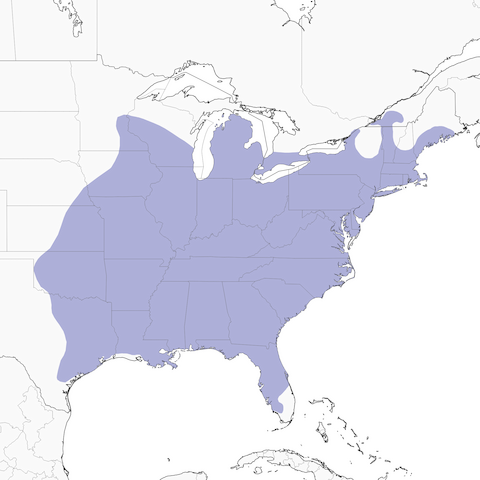
The Tufted Titmouse has spread north over recent decades and is now a familiar Maine feeder bird, resident the year round in woodlots, suburbs and woodland edges. Feeders are the obvious approach — its boldness and constant activity bring it close, so set a clean natural perch beside the food and wait for the bird to pause between trips. Its quick movements reward a fast shutter and a little patience for the moment it sits still and raises the crest.
The Tufted Titmouse is listed as Least Concern, and its numbers and range are increasing — it has expanded steadily northward over the past century, helped by maturing eastern forests and the popularity of winter feeders. It depends on tree cavities for nesting and on mature woodland, but faces no significant threat at present. Its northward spread is one of the clearer recent signs of a warming, reforesting region.