Range & Distribution
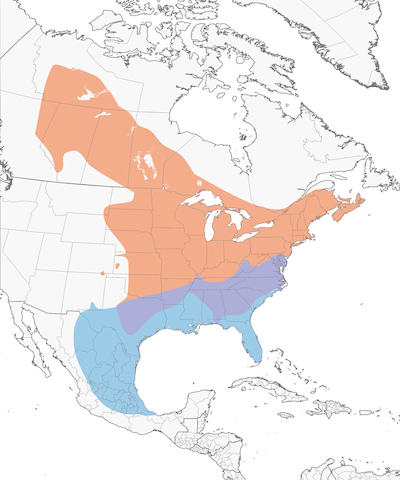
Year-round
Breeding
Nonbreeding
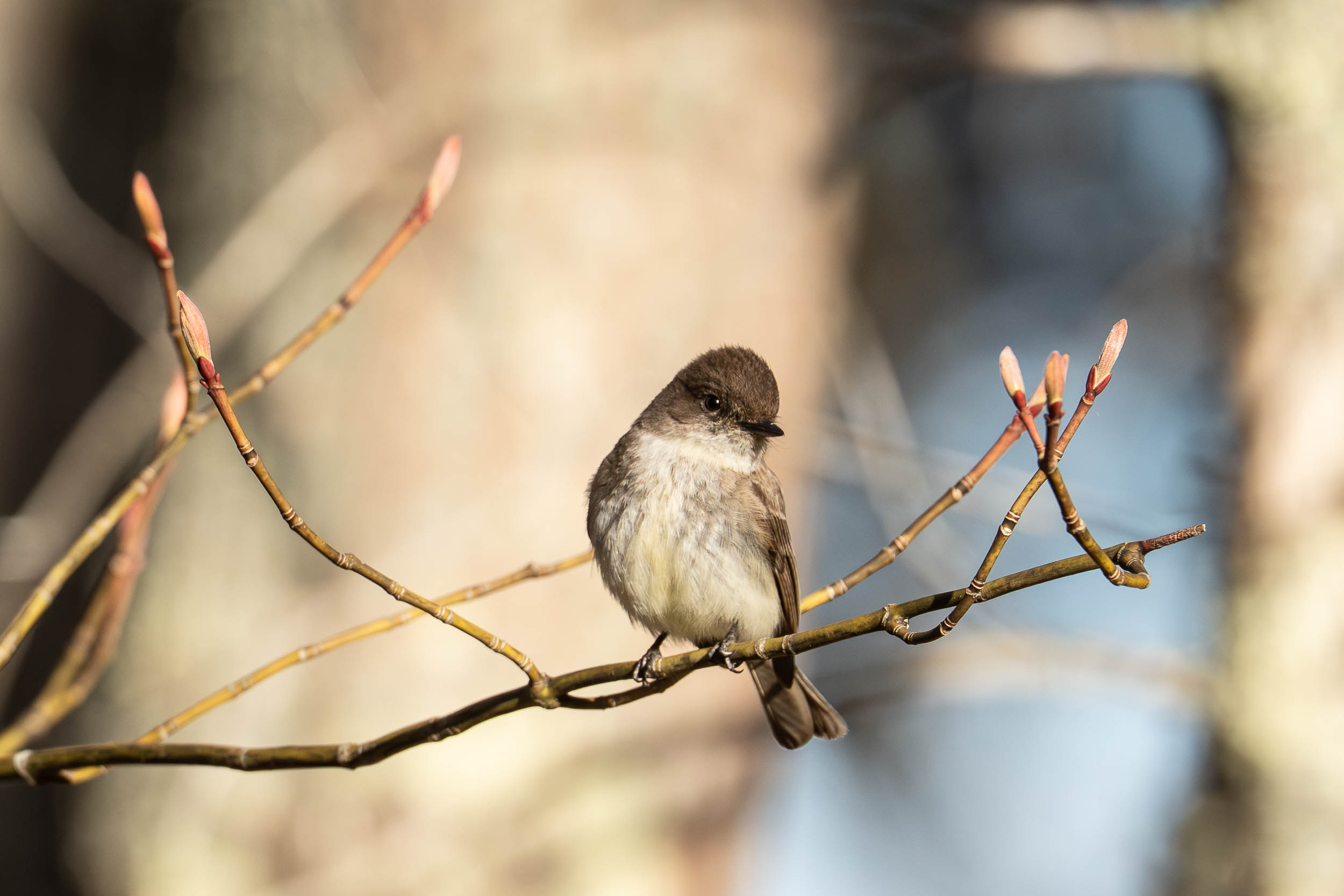
The Eastern Phoebe is a plain, medium-small flycatcher — brownish-grey above with a darker head, dirty-white below, and lacking the eyering and bold wing bars of the confusing Empidonax flycatchers. Its surest field mark is behaviour: it sits upright on a low perch and pumps its tail down and up almost constantly, a habit no other flycatcher shares to the same degree.
It hunts by sallying from a perch to snatch flying insects, returning to the same lookout, and can fall back on berries when cold weather grounds its prey. Famously it builds a mud-and-moss cup on a sheltered ledge — and has taken so readily to bridges, culverts and the eaves of buildings that it is now closely associated with people. It was also the first bird ever banded in North America, when Audubon tied silvered thread to one's leg in 1804.
In Maine the Eastern Phoebe is an early-returning, common breeder around farms, bridges, culverts and rural buildings, often nesting on the same ledge year after year. Its loyalty to perches and nest sites makes it one of the easier flycatchers to work — find a favoured lookout near water or a known nest and wait for the bird to return between sallies. The tail-pump telegraphs the shot; a clean perch and side light do the rest.
The Eastern Phoebe is listed as Least Concern and has likely benefited from human structures, which have vastly expanded the supply of sheltered nest ledges it needs. It is sensitive to hard late frosts that knock back its insect prey and to the loss of nest sites when old bridges and outbuildings are replaced, but faces no broad threat. For a photographer it is an approachable and dependable introduction to the flycatchers.