Range & Distribution
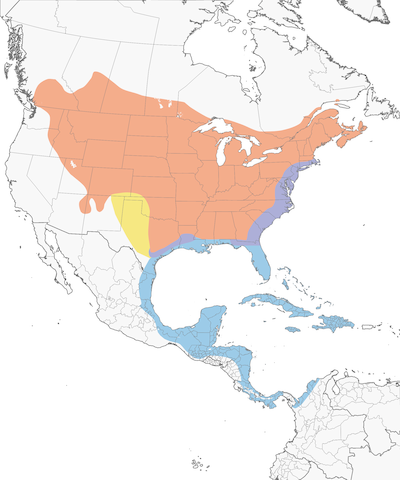
Year-round
Breeding
Migration
Nonbreeding
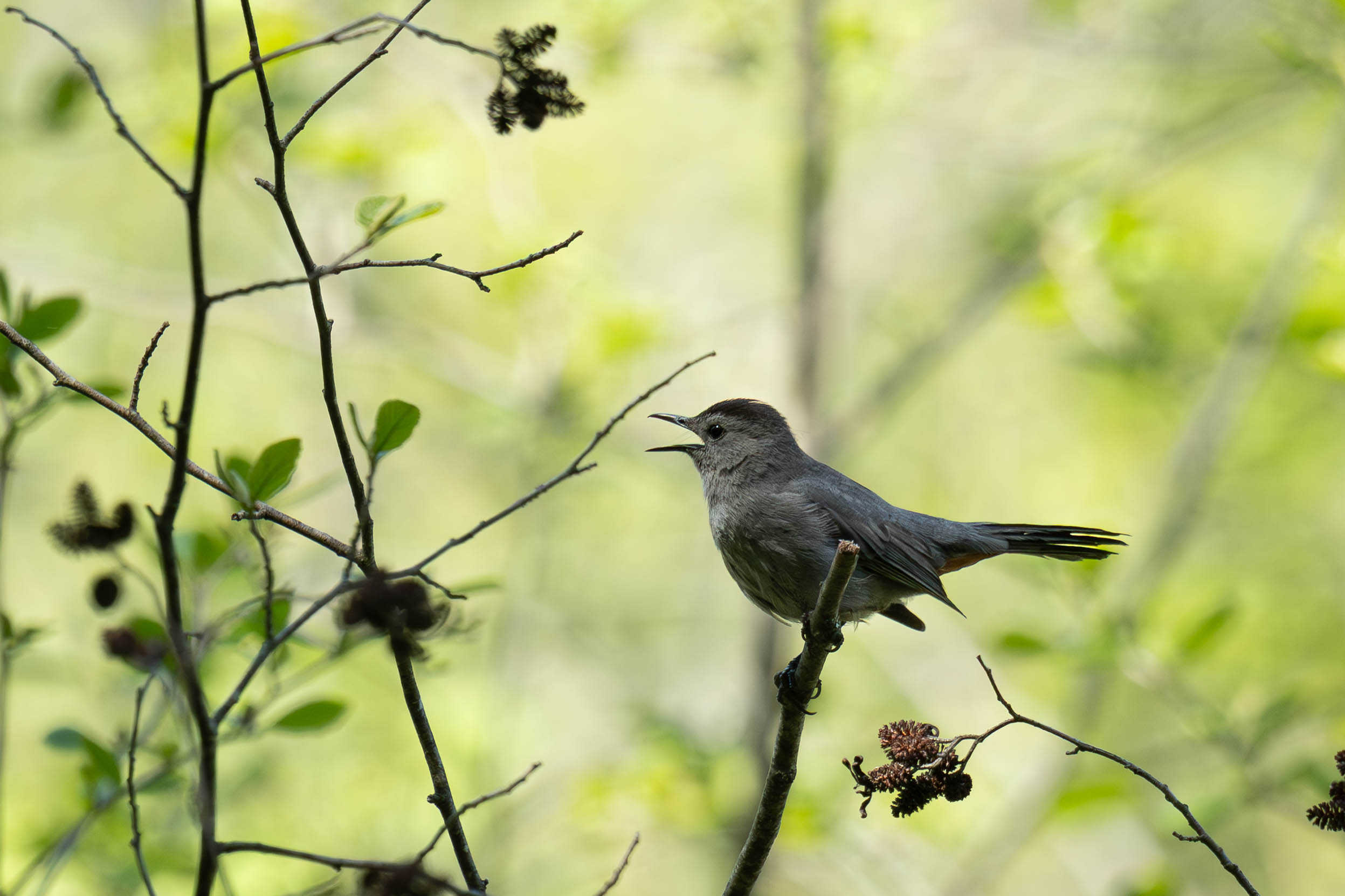
The Gray Catbird is a slim, long-tailed mimid in understated dress — uniform slate grey all over, set off by a neat black cap and, often hidden, a patch of rich chestnut beneath the tail. It is a skulker of dense thickets, more often heard than seen, and the surest clue to its presence is the cat-like "mew" call that gives the bird its name.
Like its relatives the mockingbird and thrashers it is an accomplished mimic, stringing together a long, halting, improvised song of whistles, squeaks and borrowed phrases that can run to a hundred different sounds. It feeds on insects in summer and turns heavily to wild berries and fruit in late summer and autumn, and it builds a bulky cup low in a dense shrub, laying glossy turquoise eggs.
In Maine the Gray Catbird is a common breeder of brushy edges, hedgerows, gardens and damp thickets, where its mewing and rambling song carry from deep cover. It is a bird of the tangle, so the photographer's chance comes when it climbs to sing or slips onto an open twig — learn the call, watch a known thicket, and wait. Soft light keeps the smooth grey from going flat and lets the black cap and chestnut undertail register.
The Gray Catbird is listed as Least Concern and remains common and adaptable across its range, comfortable in the shrubby, second-growth and suburban habitats that human activity creates. It tolerates people well and is a frequent garden bird, though it depends on dense low cover for nesting and on fruiting shrubs through migration. As long as thickets and hedgerows persist, it does too.