Range & Distribution
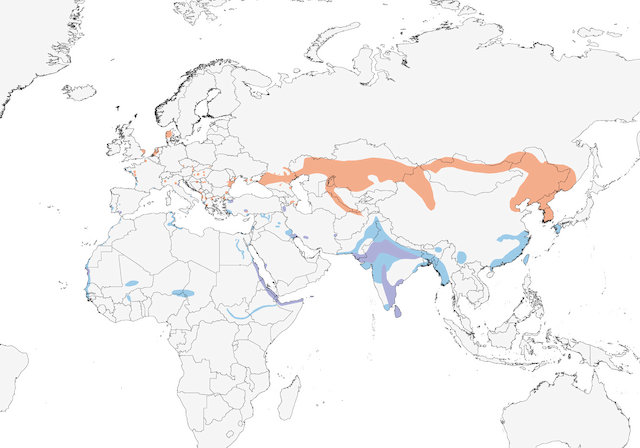
Breeding
Nonbreeding
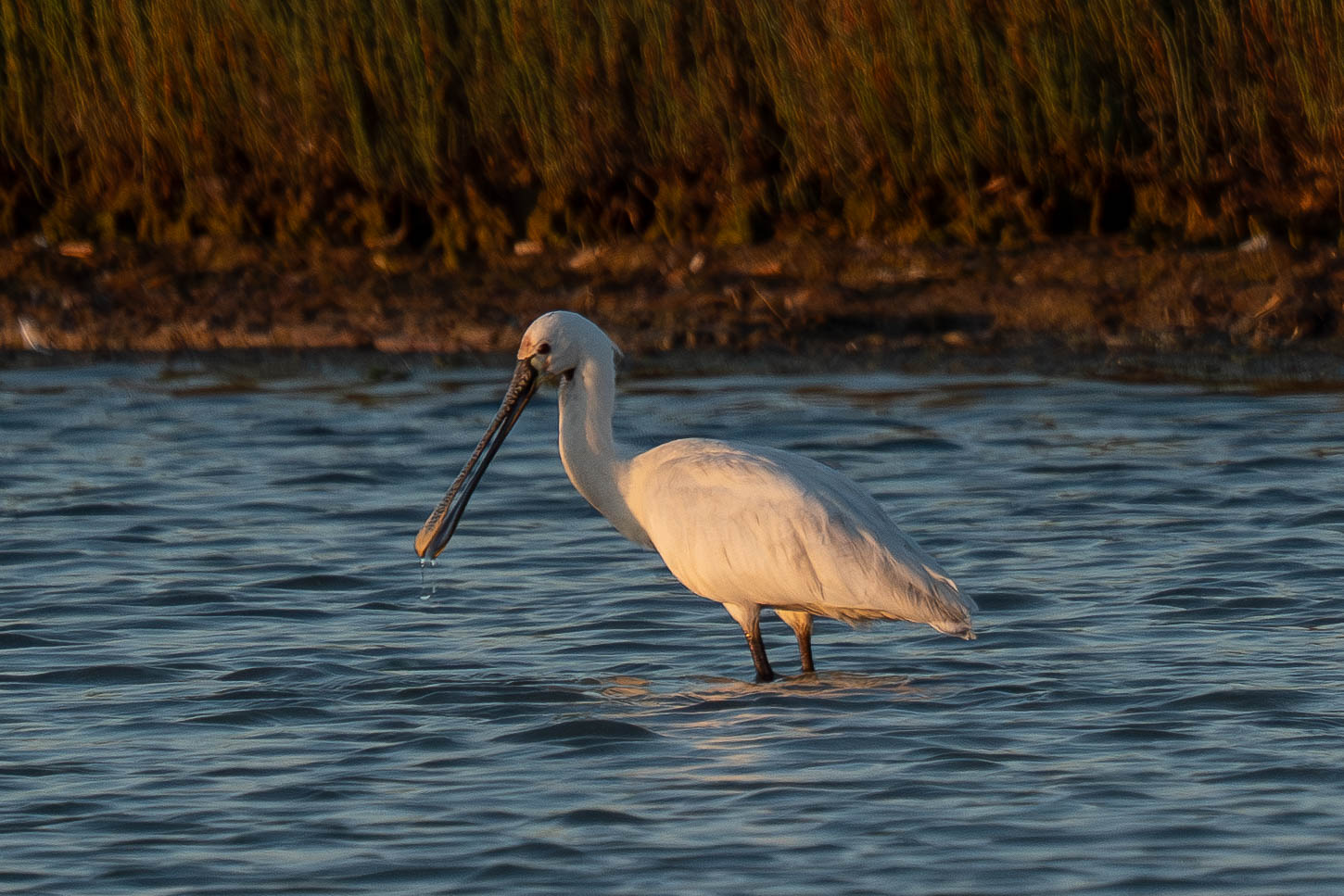
The Eurasian Spoonbill's distinctive spatulate bill — flattened and broadened at the tip into the characteristic spoon shape — is unmistakable in the field and gives the species its name. Adults in breeding plumage develop a bushy yellow-tinged crest on the nape and a yellow wash at the base of the throat. The wholly white plumage and the bill shape make this an easy species to identify even at considerable distance.
Foraging behavior involves the bird wading slowly through shallow water, sweeping the open bill from side to side through the water and mud to detect and snap up prey items by touch. The sweeping motion is rhythmic and distinctive, visible at distance, and is the clearest behavioral field mark. Groups often feed in coordinated lines, moving slowly forward through the shallows together.
Shallow estuaries and coastal lagoons during tidal cycles offer the most consistent foraging activity. As tide recedes and exposes mudflats and shallows, spoonbills move in to feed actively. The white plumage photographs well in most light conditions, though the bill tip detail — a rich dark spot on the pale yellow tip in adults — rewards closer approaches and longer focal lengths.
Having declined significantly across Europe by the mid-20th century — primarily due to wetland drainage and hunting — the Eurasian Spoonbill has staged a notable recovery following legal protections and habitat management at key breeding sites. The Dutch population, historically the most significant in Europe, has recovered strongly and expanded to recolonize former breeding areas in Britain, Ireland, and Scandinavia. Continued management of shallow coastal wetlands and protection of core breeding colonies are essential to maintaining this recovery.