Range & Distribution
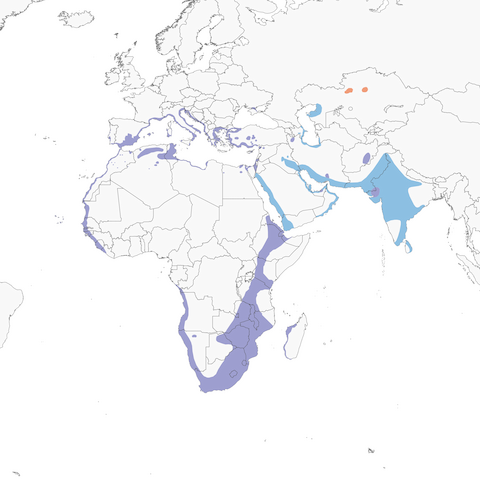
Year-round
Breeding
Nonbreeding
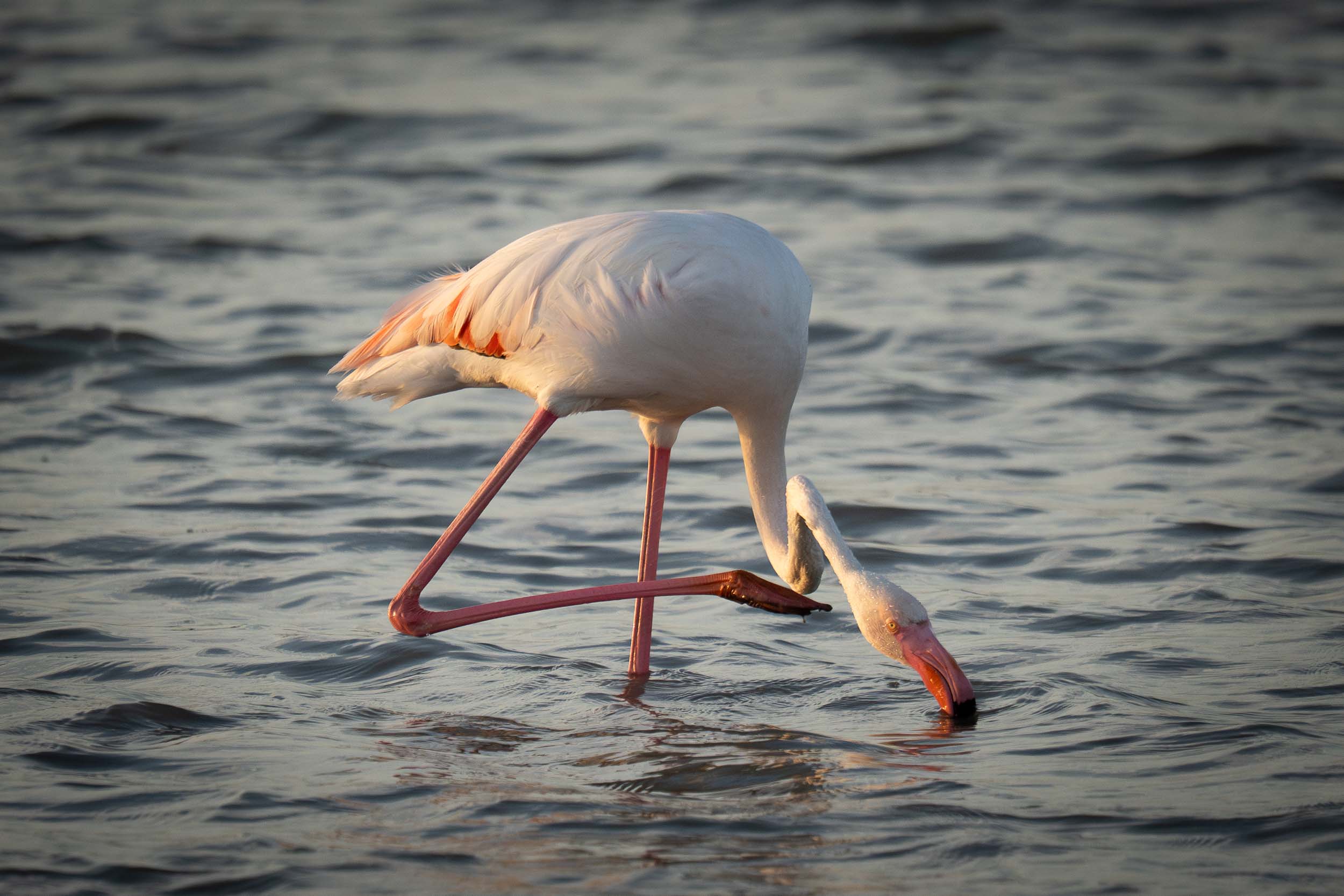
The Greater Flamingo is the largest of the six flamingo species, and the one most commonly encountered across Europe and Africa. The pink coloration — derived entirely from carotenoid pigments in the algae and crustaceans consumed — varies from pale blush to deep salmon depending on diet quality and individual condition. Birds deprived of carotenoid-rich food gradually fade to white.
Feeding behavior is highly distinctive: the bird holds its bill upside down in the water and pumps water through comb-like lamellae to filter food particles. Large flocks feeding in shallow saline lagoons, moving in synchronized patterns across the water surface, are among the most visually compelling wildlife spectacles in the Mediterranean region.
Photographically, the species rewards both landscape-scale work — wide compositions showing the pink mass of a colony against a salt flat — and close individual portraits that reveal the extraordinary detail of the curved pink-and-black bill. Overcast light prevents harsh shadows in the bill's curves and renders the pink tones most accurately.
The Greater Flamingo is globally stable and increasing, benefiting from legal protections across its range. Breeding colonies are highly concentrated at a small number of sites — the Camargue in southern France, Fuente de Piedra in Spain, and Lake Tuz in Turkey among the most significant — making the species vulnerable to site-specific disturbance events. Wetland drainage, water pollution, and human disturbance at breeding colonies are the primary threats.