Range & Distribution
Breeding
Migration
Nonbreeding
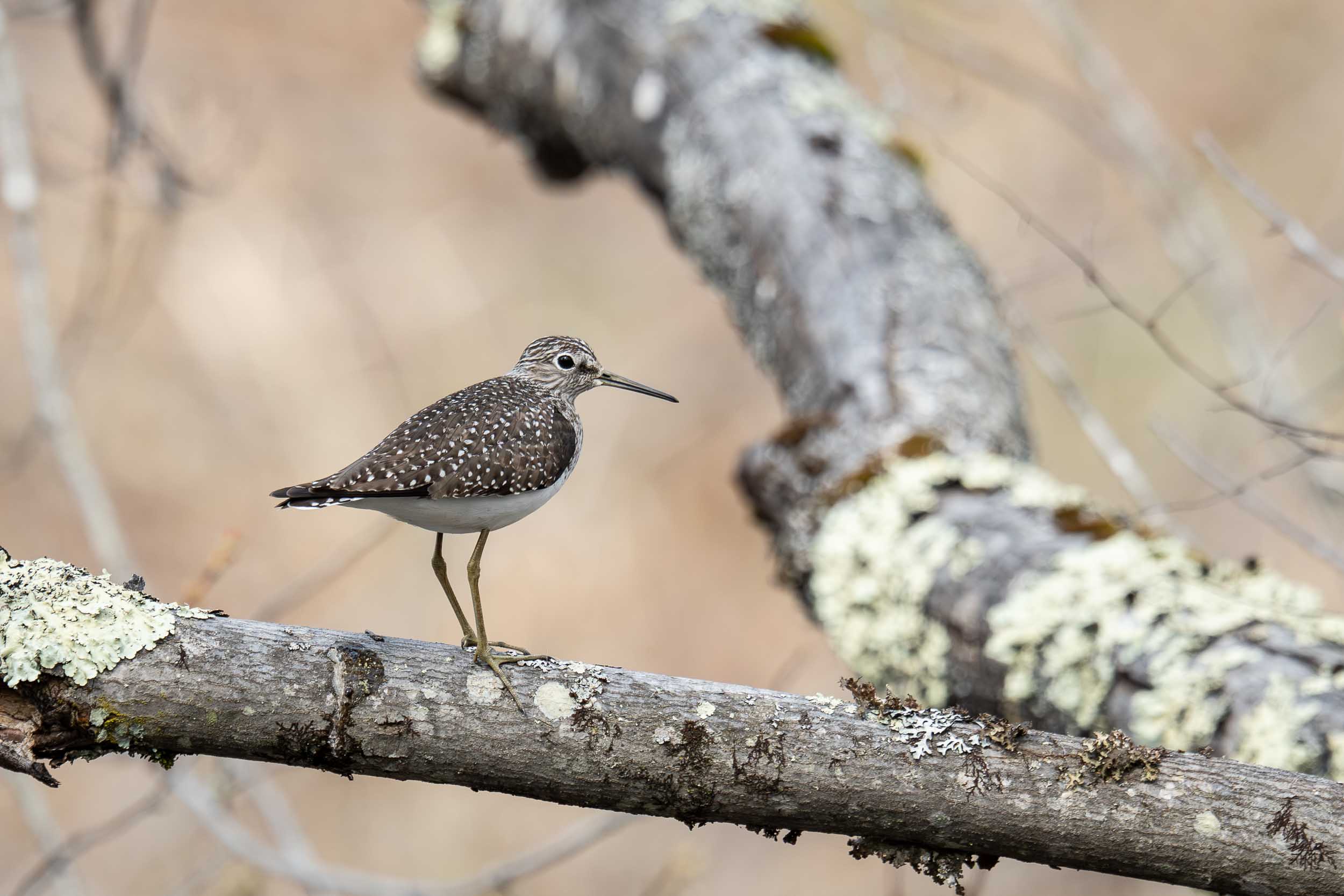
The Solitary Sandpiper is a slim, dark, medium-small wader with a fine straight bill, a bold white eyering on an otherwise dark face, and olive-grey upperparts finely spangled with white. In flight it shows a dark underwing and a barred white tail with a dark centre, and it often flicks its wings up as it lands. As the name says, it is usually met alone, not in the packed flocks of most shorebirds.
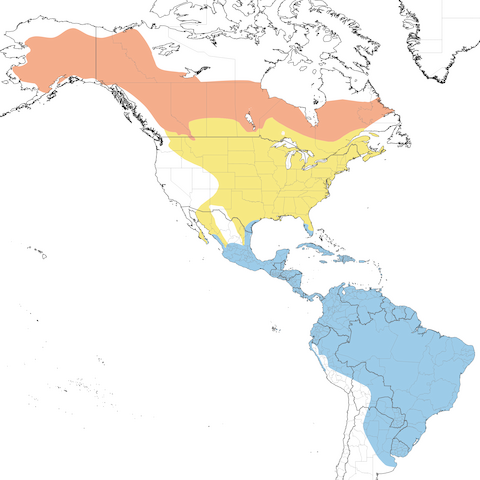
It feeds at the edges of freshwater pools, ditches and wooded ponds, picking and probing for aquatic insects and other invertebrates, and it shuns the open mudflats favoured by other sandpipers. Its breeding is genuinely unusual: rather than nesting on the ground, it lays in the old tree-nests of songbirds — American Robins, Rusty Blackbirds and jays — near northern bogs, the only North American shorebird with this habit. It is a long-distance migrant, wintering from Mexico to South America.
In Maine the Solitary Sandpiper is a passage migrant, met singly at quiet woodland pools, flooded ditches and pond margins in spring and again in late summer rather than on the coast. Because it works the cluttered edges of small water, a low angle and a clean reflection do more than reach — let the bird walk the shoreline toward you and shoot when it pauses. The white eyering is the picture; expose so it and the spangled back hold detail against dark water.
The Solitary Sandpiper is listed as Least Concern, though its boreal breeding grounds are remote and its numbers hard to monitor, so trends are poorly known. Its dependence on northern wetlands — and on the songbirds whose old nests it reuses — ties it to the health of the boreal forest, where industrial activity and a changing climate are the broad concerns. On migration it asks only for undisturbed freshwater edges, the small quiet places most easily drained or developed.